Materia Medica · Dravyaguna
Jyotishmati
Celastrus paniculatus · Celastraceae
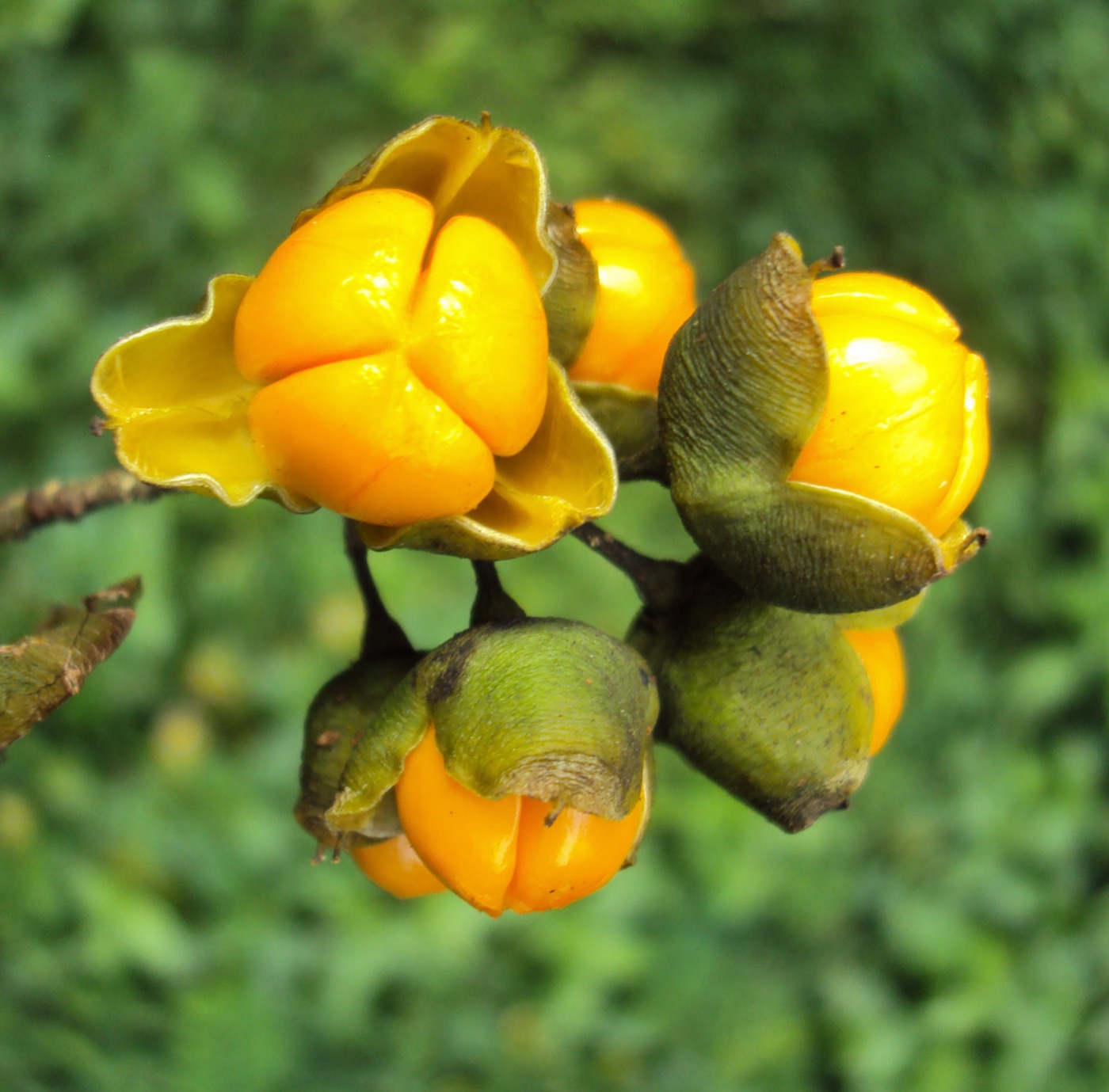

Jyotishmati is the seed of a woody climber, and the oil pressed from that seed. It is a strong, heating substance, placed by the classical texts among the Medhya herbs said to support the intellect, and used with care in Vata disorders and, as an oil, on the joints.
- Botanical name
- Celastrus paniculatus
- Family
- Celastraceae
- Sanskrit
- ज्योतिष्मती
- Part used
- Seed and seed oil
- Taste (rasa)
- Pungent and bitter (katu, tikta)
- Quality (guna)
- Light, dry and penetrating; the oil unctuous (laghu, ruksha, tikshna, snigdha)
- Energy (virya)
- Strongly warming (ushna)
- After digestion (vipaka)
- Pungent (katu)
- Action (karma)
- Supports the intellect, settles Vata, clears worms (medhya, vatahara, krimighna)
- Best known for
- A heating seed and its oil for the mind and the joints
What is Jyotishmati?
Jyotishmati is the seed of a large woody climber, Celastrus paniculatus, that twines its way through the forests and hill country of India. The plant is vigorous and long-lived, with clusters of small flowers that ripen into yellow capsules, and inside each capsule sit seeds wrapped in a bright orange-red coat. It is those seeds, and the reddish-brown oil pressed from them, that Ayurveda has long valued.
The name carries the plant’s reputation within it. Jyotis means light, and mati is the mind or the intellect, so the word means something close to “the light of the mind,” a plain statement of the use for which the tradition best knew the seed. The same idea travels into English, where the plant is called the intellect tree. Its other names are more matter-of-fact: staff tree, for the strong woody stem, and black oil plant or Malkangni for the dark, heating oil. It is worth saying plainly from the start that this is a strong, heating substance, not one of the gentle everyday herbs.
What Ayurveda uses it for
In the classical texts Jyotishmati is counted among the Medhya herbs, the group understood to support the intellect and the seat of the mind, and among the sharp, warming, Vata-settling substances. Its pungent, penetrating nature was read as reaching the finer channels, kindling the digestive fire, and moving the cold, static quality the tradition links with aggravated Vata and Kapha. The oil in particular holds a place in the external treatment of Vata that has settled into the joints.
Within that role the dravyaguna texts describe the seed and its oil as traditionally indicated in a familiar set of conditions, each named here in its classical Sanskrit term with a plain gloss:
- Smriti-daurbalya: weakness of memory, where its standing as a Medhya substance is called upon.
- Vatavyadhi: the broad class of Vata disorders, given its sharp, warming, Vata-settling action.
- Sandhigata Vata: the wind-borne complaints that settle in the joints, for which the oil is applied externally.
- Kushtha: the classical category of stubborn skin disorders.
- Krimi: the classical category of intestinal worms, for which the seed is described as krimighna.
- Gridhrasi: the classical sciatica-type complaint of the lower limb, treated within the Vata group.
These are the traditional textual indications recorded in the classical literature. They set out how Ayurveda has long understood the herb and are given for reference and study, not as statements of medical effect or as advice to treat any condition.
Its qualities, in plain words
Ayurveda describes every herb by a short list of qualities, and for Jyotishmati they line up plainly behind its reputation as a sharp, warming substance.
Its taste is pungent, with a bitter edge, and both are tastes the tradition associates with clearing and drying rather than nourishing. The seed itself is light, dry and penetrating, the last quality, tikshna, describing something that reaches deep and acts quickly, while the pressed oil carries an unctuous quality of its own that suits it to being rubbed into the skin. It is strongly warming, one of the more heating substances in the materia medica, which is why the tradition turns to it against the cold, static quality of Vata and Kapha rather than Pitta. And it finishes pungent after digestion, in keeping with its clearing, moving character. Put together, these qualities describe a hot, sharp, mobile seed, and it is precisely that heat and penetration that place it among the potent substances to be used with measure rather than the mild tonics taken freely.
How it is taken
The seed is used in small measure, and the pressed seed oil, known as Jyotishmati taila, is the form most often named. Because the seed is so heating and penetrating, the classical writers used it sparingly and, in the traditional manner, after proper preparation, the process of cleaning and readying a strong substance that Ayurveda calls shodhana.
Taken internally in the smallest of doses, the seed appears within Medhya formulations, the compounds intended to support the intellect, and within Vata preparations that pair its heat with other moving herbs. Applied externally, Jyotishmati taila is the classical vehicle for the wind-borne pains that settle in the joints and along the course of the limbs, warmed and rubbed in. As with all sharp, heating oils, the tradition matched the small quantity to the aim rather than reaching for more.
Good to know
Jyotishmati is one of the potent, heating substances of the materia medica, not one of the slow, gentle tonics. It is strong and warming, and the classical tradition uses it only in small measure, only after proper preparation, and only under the care of a qualified practitioner who can judge its heat against the person and the season. Its warming, penetrating nature means it is kept well away from conditions of heat, which the texts read as Pitta, and it is never a herb for casual or unsupervised use.
This entry describes the classical Ayurvedic understanding of the herb. It is not medical advice, and anyone with a health condition should speak to a qualified practitioner.
Frequently asked
Why is it called the intellect tree? Because of the use for which the tradition best knew it. The Sanskrit name Jyotishmati, from jyotis (light) and mati (the mind), means “the light of the mind,” and records its standing among the Medhya herbs said to support the intellect. English carries the same idea in the name intellect tree.
Which part of the plant is used? The seed and the oil pressed from it. The reddish-brown seed oil, called Jyotishmati taila, is the form most often named in the classical preparations, taken internally in very small measure or applied externally to the joints.
Why is it used so sparingly? Because it is one of the more heating and penetrating substances in the materia medica. The tradition uses it in small measure, after proper preparation through shodhana, and under the care of a qualified practitioner, matching the quantity carefully to the aim.
Jyotishmati is pungent and warming; it kindles the digestive fire, settles the Vata dosha and is counted among the herbs that support the intellect.
After the Bhavaprakasha Nighantu, on Jyotishmati
The seed is sharp and heating, pacifying Vata and Kapha, and its oil is applied where the wind-borne pains settle in the joints.
After the Raja Nighantu, on the properties of the seed and its oil
Frequently asked questions
What is Jyotishmati used for?
Jyotishmati, from Celastrus paniculatus, is a climbing shrub whose pungent seed and warming seed oil Ayurveda counts among the Medhya, mind-supporting herbs. It is traditionally used to support the intellect, settle the Vata dosha and clear worms, classed as medhya, vatahara and krimighna, and is valued for the mind and the joints alike.
How is Jyotishmati oil used?
The warming seed oil of Jyotishmati is used both internally in very small measured doses for its Medhya, mind-supporting action, and externally over stiff, aching joints and the head, matching its heating, Vata-settling nature. Because the seed and oil are potent and heating, the form and dose are set by, and used under, a qualified practitioner.
What are the benefits of Jyotishmati for the mind?
In tradition Jyotishmati is valued as a Medhya herb that supports the intellect and sharpens the mind, while its warming nature settles Vata. Its pungent, bitter seed and oil are turned to for mental dullness and for the joints. It is used within classical practice, not as a casual supplement, given how heating and potent it is.
Which dosha is Jyotishmati for?
Jyotishmati chiefly settles Vata through its pungent, bitter, heating nature, and supports the mind as a Medhya herb. Being strongly warming, it can aggravate Pitta and is used carefully where heat is high. Its heat suits cold, Vata-type dullness and stiffness. A practitioner confirms the picture and sets a small, careful dose.
Is Jyotishmati safe to take?
Jyotishmati seed and oil are potent and strongly heating, so they belong to classical practice and are used only under a qualified Ayurvedic practitioner who sets the tiny dose. It is not a casual self-care herb, and its heat makes it unsuitable in Pitta and heat conditions and in pregnancy. Speak with your doctor as well.
References
- Charaka Samhita, Sutrasthana, among the herbs described for the mind and the nervous seat of Vata.
- Sushruta Samhita, where the seed and its oil are named among the sharp, warming, Vata-pacifying substances.
- Bhavaprakasha Nighantu, entry on Jyotishmati with its synonyms and warming properties.
- Raja Nighantu, listing the many Sanskrit synonyms of the plant and its seed oil.
- Dhanvantari Nighantu, among the pungent, penetrating herbs used for Vata and the intellect.