Materia Medica · Dravyaguna
Kanchanara
Bauhinia variegata · Fabaceae (Caesalpinioideae)
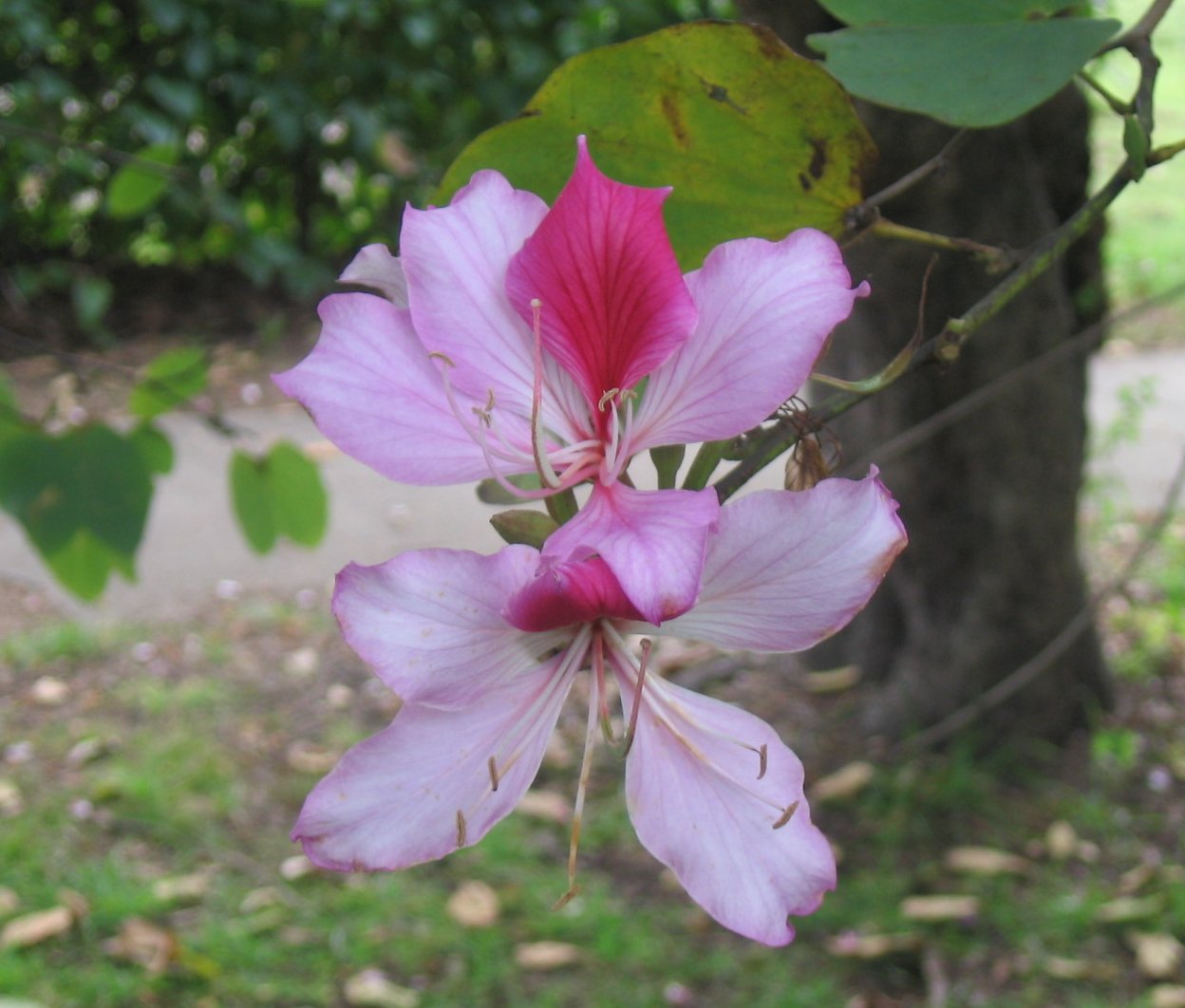

Kanchanara is the bark of a flowering tree that Ayurveda has long linked to the glands and lymphatic tissue of the neck region. Astringent and drying by nature, it is best known as the principal named ingredient of the classical formulation Kanchanara Guggulu.
- Botanical name
- Bauhinia variegata
- Family
- Fabaceae (Caesalpinioideae)
- Sanskrit
- काञ्चनार
- Part used
- Stem bark
- Taste (rasa)
- Astringent (kashaya)
- Quality (guna)
- Light and dry (laghu, ruksha)
- Energy (virya)
- Cooling (sheeta)
- After digestion (vipaka)
- Pungent (katu)
- Action (karma)
- Binds and absorbs, reduces Kapha and Pitta (grahi, kaphahara, pittahara)
- Best known for
- Supporting the glands of the neck in classical Ayurveda
What is Kanchanara?
Kanchanara is the bark of a flowering tree, Bauhinia variegata, that grows across India. In spring the tree is covered in large pink and white blooms, which is where its Sanskrit name comes from: kanchana means gold, and the name carries the sense of a tree bright with flower. In Hindi it is often called Kachnar, a name many people know from the kitchen, since the buds are eaten as a vegetable.
For Ayurveda, though, it is the twak, the stem bark, that matters. The bark is stripped, dried and used as a powder or a decoction. The flowers are also used in some classical preparations, but when the texts speak of Kanchanara as a medicine, they usually mean the bark. It is the bark, not the flower, that goes into the well known formulation Kanchanara Guggulu.
What Ayurveda uses it for
Every classical herb has a prabhava, a special action that the tradition singles it out for, and Kanchanara’s is unusually specific. It is described as gandamala nashana, which points to a traditional affinity for the glandular and lymphatic tissue of the neck region. That is the reputation the bark has carried through the classical texts, and it is the reason it sits at the centre of the formulation named after it.
The older texts place it in good company. The Charaka Samhita lists it among the Vamanopaga dravyas, the herbs that support emesis therapy, one of the classical cleansing methods. The Sushruta Samhita groups it under the astringent substances and among those that carry their action upward. Later, the Bhavaprakasha Nighantu describes it under the name Gandari in its Guduchyadi Varga. Across these sources the picture is consistent: a bark understood to bind, to absorb and to reduce excess.
Its qualities, in plain words
Ayurveda describes each herb by a short list of qualities, and Kanchanara’s list explains how the tradition understands it. Its taste is astringent, the dry, slightly puckering quality of strong tea or unripe fruit. In Ayurvedic thinking astringent things tighten and draw together rather than loosen, and this is the taste the texts return to again and again for Kanchanara.
Its nature is light and dry, so it does not sit heavily or add moisture; if anything it does the opposite. Its potency is cooling, which is why the tradition sees it as settling heat. And after digestion its effect turns pungent. Put together, this is a herb that the classical writers call grahi, binding and absorbent, and one they describe as reducing both Kapha and Pitta, the heavy and the hot qualities in the body.
How it is taken
The simplest classical forms are the oldest. Kanchanara is used as a churna, a plain bark powder, and as a kwatha, a decoction made by simmering the bark in water. Both were the everyday ways of taking it long before compound medicines became common.
Its best known home, though, is the compound formulation Kanchanara Guggulu, given in the Sharangadhara Samhita and also in the Bhaishajya Ratnavali. There the bark is the lead ingredient, combined with supporting dravyas such as Triphala and Trikatu and bound together with guggulu resin. It also appears in the decoction known as Kanchanara Varuna Kwatha. In these preparations the bark is never taken alone but is balanced by the other herbs around it.
Good to know
Kanchanara is a classical Ayurvedic dravya, and in the tradition it is almost always taken as part of a compounded formulation rather than on its own, and under the guidance of someone trained to prescribe it. This entry does not give doses, because dosing is prescriptive and belongs with a practitioner who can judge the person in front of them.
This entry describes the classical Ayurvedic understanding of the herb. It is not medical advice, and anyone with a health condition should speak to a qualified practitioner.
Frequently asked
What does the name Kanchanara mean? It comes from kanchana, meaning gold, and reflects the tree’s bright spring flowering. In Hindi the same tree is widely called Kachnar.
Which part is used in medicine? The stem bark, called twak in Sanskrit. The flowers are used in some classical preparations too, but the bark is the part that goes into Kanchanara Guggulu.
Is Kanchanara the same as Kanchanara Guggulu? Not quite. Kanchanara is the single herb, the bark of the tree. Kanchanara Guggulu is a classical compound formulation in which that bark is the lead ingredient, combined with herbs such as Triphala and Trikatu and guggulu resin.
The bark is grouped among the astringent substances that carry the action upward, used in the tradition to support emesis therapy.
After the Sushruta Samhita, on Kashaya substances
Kanchanara is listed among the substances that support emesis therapy.
After the Charaka Samhita, Sutrasthana
Frequently asked questions
What is Kanchanara used for in Ayurveda?
Kanchanara is the astringent bark of a flowering tree, Bauhinia variegata, traditionally associated in Ayurveda with the glandular and lymphatic tissue of the neck. Its karma is described as grahi, kaphahara and pittahara, binding and reducing Kapha and Pitta, and it is the named ingredient of the classical formulation Kanchanara Guggulu.
What is Kanchanara Guggulu used for?
Kanchanara Guggulu is the classical Guggulu formulation built around Kanchanara bark, long turned to in Ayurveda for the glands of the neck and the lymphatic and Kapha accumulations the tradition read there. It combines Kanchanara's astringent, Kapha-reducing action with purified guggulu resin. Such potent formulations should be taken under a qualified Ayurvedic practitioner.
Which dosha does Kanchanara balance?
Kanchanara chiefly reduces Kapha and Pitta. Its astringent taste (kashaya) and grahi quality bind and dry excess, which is the classical logic behind its use for glandular swellings and Kapha accumulation. Being cooling and drying, it settles Kapha and Pitta rather than Vata, and heavy, cold, dry conditions call for care.
How is Kanchanara taken?
Kanchanara is most often taken within classical formulations, above all Kanchanara Guggulu tablets, and sometimes as a bark decoction. The tradition pairs it with warming, Kapha-clearing herbs to offset its cooling, drying nature. Because it is typically used for glandular concerns, its dose and course are best set by a qualified Ayurvedic practitioner.
Is Kanchanara good for the thyroid or lymph glands?
Ayurveda traditionally associates Kanchanara with the glandular and lymphatic tissue of the neck, which is why it and Kanchanara Guggulu appear in the classical approach to swellings in that region. This is a traditional framing, not a modern diagnosis or treatment. Any thyroid or persistent glandular concern should be assessed by your doctor.
References
- Charaka Samhita, Sutrasthana (listed among Vamanopaga dravyas, herbs supporting emesis therapy).
- Sushruta Samhita, Sutrasthana (grouped under Kashaya varga and Urdhvabhagahara dravyas).
- Bhavaprakasha Nighantu, Guduchyadi Varga (described as Gandari).
- Sharangadhara Samhita, on the compound formulation Kanchanara Guggulu.
- Bhaishajya Ratnavali, on Kanchanara Guggulu.
- Ayurvedic Pharmacopoeia of India, Part I.