Materia Medica · Dravyaguna
Kapikacchu
Mucuna pruriens · Fabaceae
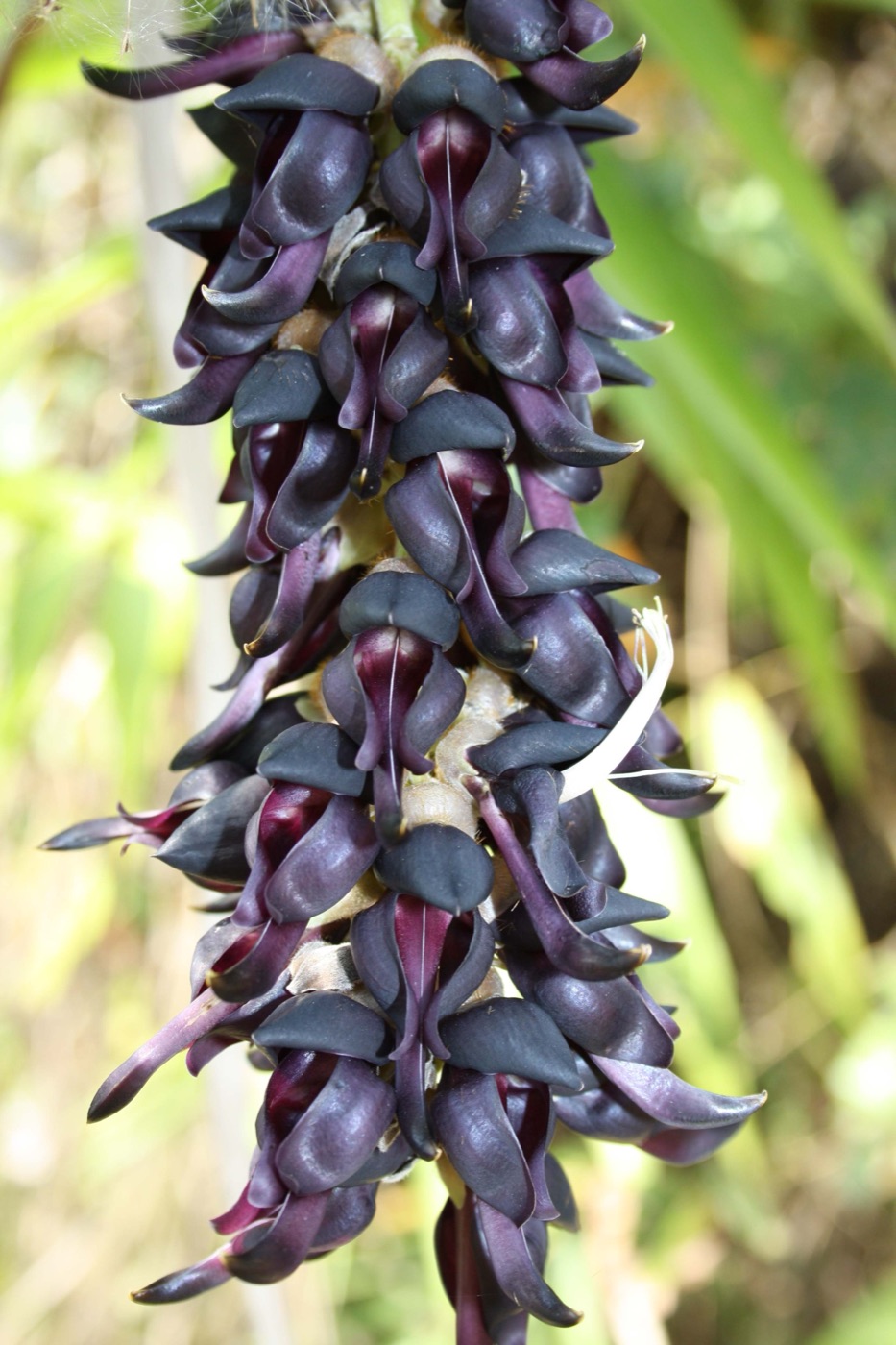

Kapikacchu is the seed of a climbing bean whose pods are covered in fine, itchy hairs. Purified and powdered, the seed is one of Ayurveda's classic nourishing tonics, valued for building strength and steadying the body.
- Botanical name
- Mucuna pruriens
- Family
- Fabaceae
- Sanskrit
- कपिकच्छु
- Part used
- Seed
- Taste (rasa)
- Sweet and bitter (madhura, tikta)
- Quality (guna)
- Heavy and unctuous (guru, snigdha)
- Energy (virya)
- Warming (ushna)
- After digestion (vipaka)
- Sweet (madhura)
- Action (karma)
- Strengthens and nourishes, settles Vata (balya, brimhana, vatahara)
- Best known for
- A nourishing seed for strength and steadiness
What is Kapikacchu?
Kapikacchu is the seed of a climbing bean, Mucuna pruriens, a vigorous vine of the legume family that scrambles over other plants in the warm country of India. The plant itself is easy to overlook. What sets it apart are its pods, which are covered in a coat of fine, bristling hairs. It is the seed inside, cleaned and prepared, that Ayurveda has long valued.
The name tells you a great deal. Kapi means monkey and kacchu means itch, so the word means something close to “monkey-itch,” a plain warning about those hairs on the pod, which sting the skin sharply when touched. The plant carries a gentler name too, Atmagupta, which means “self-protected,” the same idea seen from the other side: a seed the plant guards behind an armour of irritant hairs. In English it is usually called velvet bean or cowhage.
What Ayurveda uses it for
In the classical texts Kapikacchu belongs chiefly to Vajikarana, the branch of Ayurveda concerned with vigour and reproductive vitality, and it is counted among the Rasayana or rejuvenating herbs and the Balya group that builds strength. Its sweet, heavy and unctuous nature was understood to nourish the tissues, an action the tradition calls brimhana, and to steady the restless, drying quality of Vata.
Within that role the dravyaguna texts describe the purified seed as traditionally indicated in a familiar set of conditions, each named here in its classical Sanskrit term with a plain gloss:
- Klaibya and Shukra-daurbalya: weakness of reproductive vitality, the seed’s classical home in Vajikarana.
- Karshya and Daurbalya: thinness and debility, where its building, nourishing quality is called upon.
- Kampavata: the tremor and unsteadiness of aggravated Vata, a state the later texts connect with this seed.
- Vatavyadhi: the broad class of Vata disorders, given its strong Vata-settling action.
- Krimi: the classical category of intestinal worms, for which the seed and root are mentioned.
These are the traditional textual indications recorded in the classical literature. They set out how Ayurveda has long understood the seed and are given for reference and study, not as statements of medical effect or as advice to treat any condition.
The velvet bean also holds a place in modern science as one of the best known plant sources of L-DOPA, a compound the seed produces naturally and is widely studied for. This is noted only as a point of botanical and chemical fact, and places the classical herb in its present-day context.
Its qualities, in plain words
Ayurveda describes every herb by a short list of qualities, and for Kapikacchu they line up neatly behind its reputation as a builder.
Its taste is sweet, with a bitter edge, and in Ayurveda a sweet taste is the taste of nourishment. It is heavy and unctuous, so rather than lightening or drying the body it feeds and grounds it, the way a rich, oily food does. It is warming, which is why it suits the cold, mobile quality of Vata. And it finishes sweet after digestion, a sign that it builds tissue rather than wearing it down. Put together, these qualities describe a heavy, warm, nourishing seed, which is why the tradition settles most firmly on its Vata-steadying action. Because the same heaviness and sweetness can be a little building for Kapha, that Vata-settling role is the one the sources agree on most.
How it is taken
The usual form is the seed powder, or churna. Because the fresh pod is so irritant, the seed is first purified through a process the tradition calls shodhana, for example by boiling and removing the seed coat, before it is used internally. The cleaned seed is then dried and ground.
From that powder the classical writers made a range of nourishing preparations: medicated confections known as modaka, pills such as gutika and vati, and rich tonic pastes. Kapikacchu appears by name in Kapikacchu Churna, in the Vanari preparations such as Vanari Gutika, and in Ashwagandhadi-type strengthening formulas that pair it with other building herbs. As a warm, sweet tonic it was often taken with milk or ghee, the vehicles Ayurveda favours for carrying a nourishing action into the body.
Good to know
Kapikacchu is one of the slow, building herbs, taken as a course over time rather than as a single dose, and it belongs to the nourishing rather than the clearing side of Ayurveda. One point of care is worth repeating: the fine hairs on the fresh pod are strongly irritant to the skin, a fact the classical name itself records, so the raw pod is handled carefully and the seed is always purified before internal use.
This entry describes the classical Ayurvedic understanding of the herb. It is not medical advice, and anyone with a health condition should speak to a qualified practitioner.
Frequently asked
Why is it called monkey-itch? Because the pod is covered in fine hairs that itch and sting sharply on contact with the skin. The Sanskrit name Kapikacchu, from kapi (monkey) and kacchu (itch), records exactly this, and the gentler name Atmagupta, “self-protected,” describes the same hairs as the plant’s own armour.
Which part of the plant is used? Chiefly the seed. The root and the fine hairs of the pod are also described in the classical literature, but the purified seed is the part named for nearly all of its nourishing preparations.
Why is the seed purified before use? Because the fresh pod and its coat are irritant, the tradition cleans the seed first through a process called shodhana, for example by boiling and removing the seed coat. Only the purified seed is taken internally.
Kapikacchu is sweet and warming; it nourishes the tissues, gives strength and steadies the Vata dosha.
After the Bhavaprakasha Nighantu, on the nourishing herbs
Frequently asked questions
What is Kapikacchu used for?
Kapikacchu, from Mucuna pruriens, is a velvet-podded legume whose purified seed Ayurveda values as a nourishing, strengthening tonic. The texts class it as balya, brimhana and vatahara, and it is a classic Vajikarana herb, so it is traditionally used to build strength and steadiness, settle Vata and support reproductive vitality in a depleted body.
Why must Kapikacchu seed be purified?
The raw seed and pod carry irritant properties, and the pod hairs are famously itchy, so the tradition insists the seed be put through Shodhana, classical purification, before use. This step, often done with milk, removes the irritant quality and makes the seed fit as a nourishing tonic. Only properly purified Kapikacchu should be taken, ideally under practitioner guidance.
How do you take Kapikacchu?
Purified Kapikacchu is usually taken as a powder of the seed, and the classical anupana is warm milk, which suits its sweet, nourishing, Vata-settling and Vajikarana intent. It is taken as a steady course rather than a single dose. Because it is potent and reproductive in aim, its amount is best set by a qualified Ayurvedic practitioner.
What is a Vajikarana herb?
Vajikarana is the classical branch of Ayurveda concerned with reproductive vitality, strength and, by extension, vigour and steadiness. A Vajikarana herb such as Kapikacchu is one used to nourish and strengthen the reproductive tissue and the body as a whole. These herbs are traditionally taken as building courses, often with milk, within a considered plan.
Which dosha does Kapikacchu balance?
Kapikacchu chiefly settles Vata, in keeping with its sweet, nourishing, building nature, and its bitter taste rounds it out. As a brimhana, or bulking and nourishing, herb it answers the dryness and depletion of aggravated Vata. Being heavy and building, it suits worn, thin, Vata states rather than heavy Kapha or sluggish digestion.
References
- Charaka Samhita, Sutrasthana, chapter 27 (Annapana-vidhi), among the pulses, and in the Balya group of strengthening herbs.
- Sushruta Samhita, among the Vidarigandhadi gana and the Vata-pacifying (Vatasamshamana) group.
- Bhavaprakasha Nighantu, entry on Kapikacchu (Atmagupta) with its synonyms and properties.
- Raja Nighantu, listing the many Sanskrit synonyms of the plant.