Materia Medica · Dravyaguna
Katphala
Myrica esculenta · Myricaceae
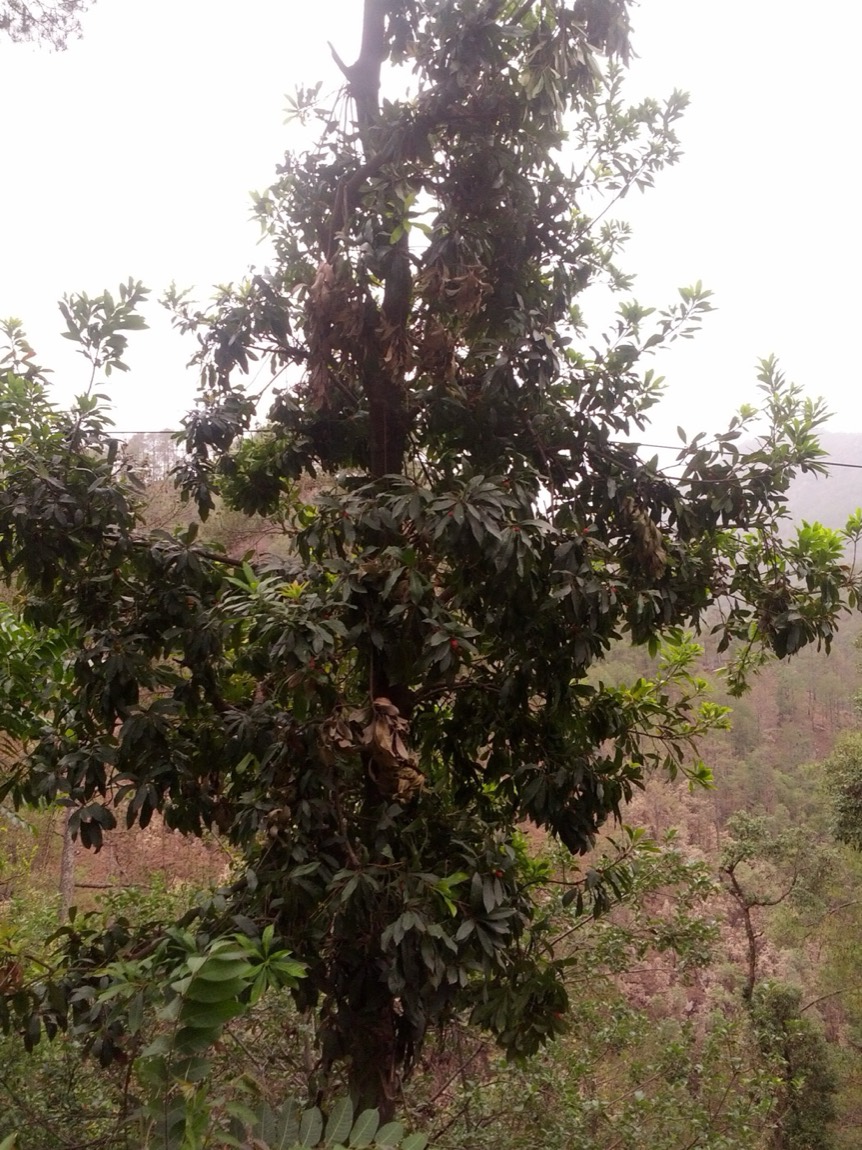

Katphala is the bark of the box myrtle, a hill tree of northern India. Astringent and warming, it is the bark the classical texts turn to for the throat and the breath, given as a powder, a gargle and a snuff.
- Botanical name
- Myrica esculenta
- Family
- Myricaceae
- Sanskrit
- कट्फल
- Part used
- Bark (the stem bark)
- Taste (rasa)
- Astringent, bitter and pungent (kashaya, tikta, katu)
- Quality (guna)
- Light, penetrating and dry (laghu, tikshna, ruksha)
- Energy (virya)
- Warming (ushna)
- After digestion (vipaka)
- Pungent after digestion (katu)
- Action (karma)
- Settles Kapha, supports the throat and breath, holds and binds (kaphahara, grahi)
- Effect on dosha
- Pacifies Kapha and Vata
- Best known for
- A warming bark for the throat and the breath
What is Katphala?
Katphala is the bark of the box myrtle, Myrica esculenta, a small evergreen tree of the temperate hill country of northern India and the Himalayan foothills. The tree bears a reddish edible fruit that gives it its English names, box myrtle and bayberry, but in Ayurveda it is the bark of the trunk, the stem bark, that carries the medicine. Stripped, dried and reduced to a coarse powder, the bark is bitter and drawing to the taste, and it is this bark that the classical texts describe.
The plant answers to several names. The Sanskrit Katphala is joined by Somavalka and Kumbhika in the old synonym lists, and in the hill languages it is widely known as Kaiphal. The botanical synonym Myrica nagi is still met in the older literature and points to the same tree. Whatever the name, it is the astringent stem bark that the tradition has valued, and chiefly for the throat and the breath.
What Ayurveda uses it for
In classical terms Katphala is a warming, astringent bark that settles Kapha, the cold and heavy quality, and steadies Vata. Its pungent and bitter edge, joined to a penetrating, drying nature, is what the texts connect with its work on the throat and the breathing passages, clearing the thick, clinging quality that Kapha brings. The bark is also read as grahi, a substance that holds and binds, a character the astringent taste lends it.
The dravyaguna texts return to the bark in a clear set of settings, each given here in its Sanskrit term with a plain gloss:
- Kasa and Shwasa: cough and laboured, wheezing breath, the bark’s classical home, where its warming, Kapha-clearing nature is called upon.
- Pinasa and Pratishyaya: a blocked, running nose and the settled cold behind it, for which the bark is used as a snuff.
- Kanthroga and Swarabheda: disorders of the throat and the hoarse, roughened voice, for which the bark is chiefly given as a gargle.
- Jwara: fever, where its warming, bitter nature places it among the substances the texts describe for this state.
- Aruchi: loss of appetite and relish for food, for which its pungent, stirring quality is named.
- Arsha: haemorrhoids, the classical setting in which its binding, grahi character is described.
Taken together, these settings place Katphala firmly among the warming, astringent barks that Ayurveda keeps for the throat, the voice and the breath.
These are the traditional textual indications recorded in the classical literature. They set out how Ayurveda has long understood the herb and are given for reference and study, not as statements of medical effect or as advice to treat any condition.
Its qualities, in plain words
Ayurveda sets out every herb by a short list of qualities, and for Katphala they line up neatly with the way it is used.
Its taste is astringent, with bitter and pungent notes behind it, and these are the flavours the tradition ties to drying, clearing and binding rather than to nourishing. It is warming, which is why it settles the cold, heavy quality the texts call Kapha and the cold, dry quality called Vata. It is light, penetrating and dry, so it does not weigh the body down but rather cuts through and scatters the thick, sticky quality that gathers in the chest and the nose. And it finishes pungent after digestion, keeping its warming, stirring character all the way through. Put together, that is a warm, drying, binding bark that clears and holds, which is why the tradition settles most firmly on its work in the throat and the breath. The same warmth and dryness mean the texts count it as one best used with care by those of a heated or already dry constitution.
How it is taken
The plainest form is the bark powder, a churna, and much of the bark’s classical use turns on carrying that powder to the place it is meant to work. For the throat and the hoarse voice it is made into a gargle, the powder or a decoction held and swirled in the mouth. For the blocked nose it is given as a snuff, a fine powder drawn up into the nostrils, a use that shades into Nasya, the Ayurvedic practice of administering medicine through the nose. Taken by mouth as a warm powder, it is used in cough and the complaints of the chest.
Beyond the single bark, Katphala is named among the ingredients of several classical compound preparations for the throat and the breath, where it sits alongside other warming, Kapha-settling substances. In these formulas it lends its astringent, clearing character to powders and decoctions rather than standing alone, and it is this supporting role, steady across many recipes, that has kept the bark in the classical pharmacy.
Good to know
Katphala sits on the clearing, drying side of the Ayurvedic pharmacy rather than the nourishing, tonic side, and it is most at home in the short, active use of a gargle, a snuff or a warming powder rather than as a slow course taken over months. Because it is ushna, warming, and markedly drying, the classical writers treat it as a bark best used in moderation, and with more care by those of a heated constitution or where the body is already dry.
This entry describes the classical Ayurvedic understanding of the herb. It is not medical advice, and anyone with a health condition should speak to a qualified practitioner.
Frequently asked
Which part of the plant is used? The bark of the trunk, the stem bark, is the part Ayurveda values. Although the box myrtle bears an edible fruit that gives the tree its English names, it is the astringent, warming bark that the classical texts name for nearly all of its preparations.
Why is it used as a gargle and a snuff rather than only swallowed? Because much of its classical work is on the throat and the nose, the tradition carries the bark straight to those places. As a gargle the powder or decoction reaches the throat and the voice; as a snuff, a use close to Nasya, it reaches the blocked, running nose. Taken by mouth it is used more for the cough and the chest.
What does it mean that Katphala is warming and drying? It means the bark carries the ushna (warming) and ruksha (dry) qualities, so it suits the cold, thick, clinging conditions the texts group under Kapha. The same warmth and dryness are why the classical writers advise using it in moderation, and with care by those of a heated or already dry constitution.
Katphala is astringent, pungent and warming; it settles Kapha and is valued in cough, laboured breathing and disorders of the throat.
After the Bhavaprakasha Nighantu, Haritakyadi Varga
A warming, binding bark that eases the blocked nose and the hoarse, troubled voice.
After the classical Nighantu literature on Katphala
Frequently asked questions
What is Katphala used for?
Katphala is the astringent stem bark of the box myrtle (Myrica esculenta), a warming Ayurvedic remedy the old texts reach for in cough, a blocked nose and complaints of the throat. It is classed as kaphahara and grahi, settling Kapha and holding and binding, and pacifies both Kapha and Vata.
Is Katphala good for cough and the throat?
Yes, cough, a blocked nose and throat complaints are exactly what the classical texts reach for Katphala to address. Its warming, astringent, pungent bark is understood to settle Kapha and clear the passages, which is the basis of its reputation for the throat and breath. It is offered as traditional support, not a treatment.
What part of the box myrtle is used?
It is the stem bark of the box myrtle, Myrica esculenta, that Ayurveda uses as Katphala, also known as bayberry. This astringent, warming bark carries the herb's kaphahara and grahi actions, and it is the part the classical texts specify for cough, a blocked nose and complaints of the throat.
Which dosha does Katphala balance?
Katphala pacifies Kapha and Vata. Its astringent, bitter and pungent taste (kashaya, tikta, katu) with a warming nature settles the cold, heavy congestion of Kapha and steadies Vata, which is why the tradition uses it where cough and a blocked nose point to disturbed Kapha in the chest and head.
How is Katphala taken?
Katphala bark is used within classical preparations and is often taken as a powder with honey, or made into decoctions and formulas aimed at the throat and breath. Because it is a warming, potent bark, the right form and dose are best set by a qualified Ayurvedic practitioner rather than judged by feel.
References
- Charaka Samhita, Sutrasthana, among the substances that ease disorders of the throat and the breath.
- Sushruta Samhita, on the astringent, Kapha-settling barks used in gargle and snuff.
- Bhavaprakasha Nighantu, Haritakyadi Varga, entry on Katphala.
- Raja Nighantu, listing the Sanskrit synonyms of Katphala, among them Somavalka and Kumbhika.