Materia Medica · Dravyaguna
Kakamachi
Solanum nigrum · Solanaceae
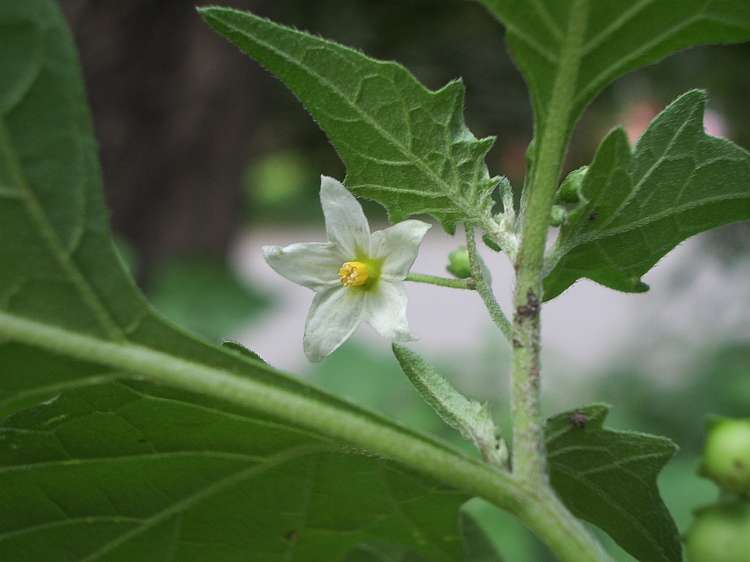

Kakamachi is a modest weed of waste ground whose tiny berries ripen from green to black. Ayurveda reaches for it when there is swelling to settle or heat in the skin, and it is one of the few herbs the tradition counts as a Rasayana while also cooking its leaf as a pot-herb.
- Botanical name
- Solanum nigrum
- Family
- Solanaceae
- Sanskrit
- काकमाची
- Part used
- Whole plant, ripe fruit and leaf
- Taste (rasa)
- Bitter, pungent and astringent (tikta, katu, kashaya)
- Quality (guna)
- Light and unctuous (laghu, snigdha)
- Energy (virya)
- Warming (ushna)
- After digestion (vipaka)
- Pungent (katu)
- Action (karma)
- Rejuvenates, reduces swelling, settles all three doshas (rasayana, shothahara, tridoshahara)
- Best known for
- A cooling herb for swelling and the skin
What is Kakamachi?
Kakamachi is a small, branching herb, Solanum nigrum, that grows freely on waste ground and along field edges across much of India. It is easy to walk past. The plant is low and unremarkable, with soft leaves, tiny white star-shaped flowers, and clusters of small round berries no larger than a pea. Those berries are the plant’s one striking feature, ripening from a hard green through to a glossy black.
The name reaches for that colour. Kaka means crow and machi points to the berry, so the word carries the sense of a fruit dark as a crow, the black berry that gives the plant its character. English speakers call the same herb black nightshade, and across the north of the country it is widely known as makoy or mako. Ayurveda uses the plant broadly: the ripe fruit, the leaf, and the whole herb all have a place in the classical texts.
What Ayurveda uses it for
In the classical texts Kakamachi is valued above all as a cooling, cleansing herb that settles swelling and calms the skin. The dravyaguna writers count it among the Shothahara herbs, those that reduce the swellings and accumulations the tradition groups under that heading, and, unusually for so humble a plant, they also place it among the Rasayana herbs, the ones understood to renew and restore the body over time. Its broadly tridoshahara nature, settling to all three doshas, is part of why the tradition puts it to so many uses.
Within that role the classical literature describes the herb as traditionally indicated in a familiar set of conditions, each named here in its Sanskrit term with a plain gloss:
- Shotha: swelling, and the accumulations the tradition groups under this heading, the herb’s classical home.
- Kushtha: the broad class of skin disorders.
- Jwara: fever.
- Arsha: haemorrhoids.
- Hridroga: where the herb is described as a Hridya support in the classical sense.
- Kandu: itching.
- Vrana: wounds, for which the plant is also applied externally.
These are the traditional textual indications recorded in the classical literature. They set out how Ayurveda has long understood the herb and are given for reference and study, not as statements of medical effect or as advice to treat any condition.
The same plant belongs to the nightshade family, Solanaceae, alongside many familiar food and garden species. This is noted only as a point of botanical fact, and places the classical herb in its wider plant setting.
Its qualities, in plain words
Ayurveda describes every herb by a short list of qualities, and for Kakamachi they explain both its cleansing side and its gentleness.
Its taste is bitter, with pungent and astringent notes, and in Ayurveda a bitter, astringent taste is the taste of clearing and drying rather than feeding. Yet it is light and unctuous in nature, so it works without the harsh dryness of many bitter herbs. It is warming, which is why the tradition puts it to accumulations and heaviness, though some sources describe it as neither strongly warming nor cooling, closer to Anushna. And it finishes pungent after digestion. Put together, these qualities describe a light, clearing herb that settles swelling and cleanses the skin while remaining gentle enough to be counted as a Rasayana, and it is this balance that lets the texts call it settling to all three doshas.
How it is taken
Ayurveda uses several parts of the plant. The juice of the fresh herb, the swarasa, is one classical form, and the whole plant is also dried and powdered. From these the classical writers made a range of preparations, both to take within and to apply outside.
The best known is Kakamachi Ghrita, a medicated ghee in which the plant is cooked into ghee, a form the tradition favours for carrying an action gently into the body. The herb also appears in Rasayana formulations and in preparations for the skin, where its cleansing, swelling-settling nature is called upon. Applied externally, the leaf and the plant paste are described in the classical literature for wounds, Vrana. In several regions the leaf is also cooked and eaten as a pot-herb, a simple food use that sits alongside its medicinal one.
Good to know
Kakamachi belongs to the cleansing, cooling side of Ayurveda rather than the nourishing side, and it is put to swelling and the skin more than to building strength. One point of care is important. Only the ripe fruit and the properly prepared plant are traditionally used. The unripe green berries are regarded as unsuitable, and the classical practice is to set them aside and take only the ripe, blackened fruit and the prepared herb.
This entry describes the classical Ayurvedic understanding of the herb. It is not medical advice, and anyone with a health condition should speak to a qualified practitioner.
Frequently asked
Why is it called the crow-berry? Because of the colour of the ripe fruit. The Sanskrit name Kakamachi, from kaka (crow), reaches for the berry that ripens to a glossy black, the plant’s one distinctive feature. English speakers call the same herb black nightshade for the same reason.
Which part of the plant is used? Several. The ripe fruit, the leaf and the whole plant all appear in the classical texts, taken as juice or powder within and applied as a paste without. The unripe green berries, by contrast, are considered unsuitable.
Is it a nourishing or a clearing herb? Chiefly a clearing one. Its bitter, astringent, warming nature places it with the herbs that settle swelling and cleanse the skin. That it is also counted among the Rasayana herbs is part of what makes this modest plant unusual in the classical literature.
Kakamachi settles swelling and cleanses the skin; it is counted among the herbs that renew the body.
After the Bhavaprakasha Nighantu, on Kakamachi
It calms all three doshas and is applied to wounds as well as taken within.
After the classical Nighantu literature on the properties of Kakamachi
Frequently asked questions
What is Kakamachi used for in Ayurveda?
Kakamachi is a small berried herb (Solanum nigrum) that Ayurveda values for settling swelling and calming the skin. It is counted among the rejuvenating herbs and used both inside and out. The tradition classes it as rasayana, shothahara and tridoshahara, so it rejuvenates, reduces swelling and is regarded as settling all three Dosha. Use it under a qualified practitioner.
Is Kakamachi good for swelling and the skin?
Yes, Kakamachi is best known as a cooling herb for swelling and the skin. Ayurveda classes it as shothahara, meaning it reduces swelling, and uses it both internally and applied outwardly for the skin. Its bitter, pungent and astringent tastes suit these purposes. For a persistent swelling or skin complaint, use it under a qualified Ayurvedic practitioner.
How is Kakamachi used, internally or externally?
Both. Ayurveda uses Kakamachi internally, often as a juice or in classical preparations, and externally on the skin and over swellings. This dual use reflects its shothahara and rasayana nature. Because it is a nightshade and must be correctly prepared and dosed, the method should follow the tradition and a qualified practitioner's guidance rather than home experimentation.
Is Kakamachi a rasayana?
Yes, Ayurveda counts Kakamachi among the rasayana herbs, those regarded as rejuvenating and restoring. Alongside this it is valued as shothahara for swelling and is considered to settle all three Dosha. So it is seen not only as a corrective for swelling and the skin but also as a gently rejuvenating herb when properly prepared and used.
Is Kakamachi (black nightshade) safe?
Kakamachi is a nightshade, so while Ayurveda uses it as a valued rasayana and shothahara herb, it must be the correct species, properly prepared and correctly dosed, since unripe or wrongly handled nightshade can be unsafe. This is not a herb to gather or self-prescribe. Use only properly made preparations under a qualified Ayurvedic practitioner.
References
- Charaka Samhita, Sutrasthana, among the herbs used against Shotha (swelling).
- Sushruta Samhita, on Kakamachi in the management of skin disorders and wounds.
- Bhavaprakasha Nighantu, Guduchyadi Varga, entry on Kakamachi with its synonyms and properties.
- Raja Nighantu, listing the many Sanskrit synonyms of the plant.
- Dhanvantari Nighantu, on the properties and uses of Kakamachi.