Materia Medica · Dravyaguna
Kalmegh
Andrographis paniculata · Acanthaceae
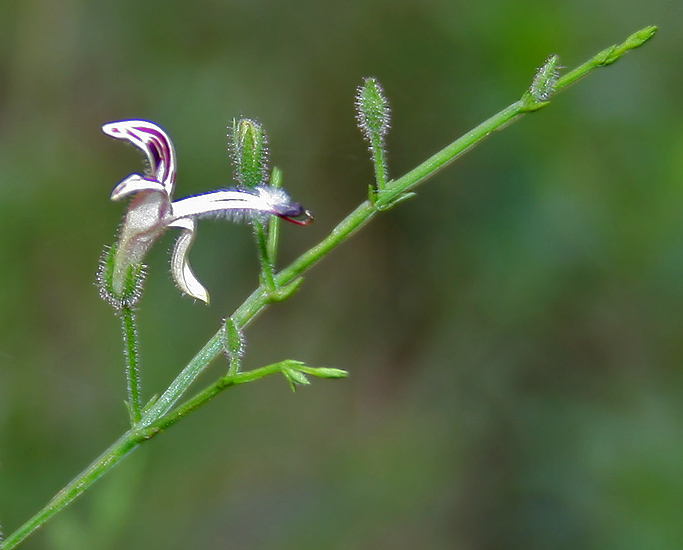
_in_Narshapur_forest%2C_AP_W2_IMG_0867.jpg)
Kalmegh is a small leafy plant whose every part is remarkably bitter, so much so that it is nicknamed the king of bitters. In classical Ayurveda it belongs to the bitter group of herbs and is used as a cleansing tonic for digestion and the liver.
- Botanical name
- Andrographis paniculata
- Family
- Acanthaceae
- Sanskrit
- कालमेघ
- Part used
- Whole plant, especially the leaves
- Taste (rasa)
- Bitter (tikta)
- Quality (guna)
- Light, dry (laghu, ruksha)
- Energy (virya)
- Warming (ushna)
- After digestion (vipaka)
- Pungent (katu)
- Action (karma)
- Kindles digestion and cleanses (dipana, pachana, shodhana)
- Best known for
- A classic intensely bitter cleansing herb
What is Kalmegh?
Kalmegh is a small, upright, leafy plant of the Acanthaceae family, known to botanists as Andrographis paniculata. In Ayurveda the whole plant is used, a portion known as the panchanga, though the aerial parts and especially the leaves are the pieces reached for most often. What sets Kalmegh apart is a single, unmistakable characteristic: every part of it is intensely bitter. There is no mild corner of this plant to hide in.
The Sanskrit name कालमेघ, Kalamegha, translates literally as “dark cloud”, an evocative image for a herb whose reputation is anything but light. It carries several other telling names. Bhunimba, भूनिम्ब, means “neem of the ground”, placing it alongside neem as one of the great bitter cleansers. Mahatikta, महातिक्त, means quite simply “the very bitter”. In English trade it travels under names such as King of Bitters, Kariyat, Creat and, in Tamil and Telugu, Nilavembu. It is sometimes sold under the modern trade name Indian Echinacea, though that label belongs to commerce rather than to the classical texts.
A note on identity is worth keeping in mind. In the older Samhitas, the bitter herb called Kiratatikta or Kirata properly refers to a different plant, Swertia chirata. Andrographis paniculata, as Bhunimba, became a widely accepted later substitute for it, so in everyday practice many of those older bitter references came to be applied to Kalmegh.
What Ayurveda uses it for
Kalmegh is one of the archetypal bitter cleansing herbs of Ayurveda. Classical texts place it firmly in the bitter, or tikta, group, and its whole character flows from that dominant taste. Its traditional role is that of a bitter tonic: a herb taken to kindle a sluggish digestion, to support the liver and the natural flow of bile, and to act as a cleansing herb for the skin and the blood.
In the language of the classical texts, Kalmegh is described as a dipana and pachana herb, meaning it is understood to kindle the digestive fire and to support the body’s processing of food. It sits within the classical categories used for the skin and was traditionally regarded as a herb against intestinal worms. Above all it is a bitter cleanser, a shodhana herb, said to support the liver and the clearing of bile.
Because its bitterness is so pronounced, Kalmegh is also traditionally taken to help the body’s own defences and to bring a sense of internal lightness. In classical thinking, a bitter of this kind reduces excess Pitta and Kapha, and Kalmegh is a well-known component of Ayurvedic bitter-tonic and liver-support preparations.
Its qualities, in plain words
Ayurveda describes a herb through a small set of properties, and for Kalmegh they line up neatly with its taste. Its rasa, or taste, is tikta, bitter, and this is the quality that defines everything else about it. Bitterness in Ayurveda is the taste of cleansing and lightening, the flavour that scrapes and clears rather than nourishes and builds.
Its guna, or qualities, are laghu and ruksha, light and dry. Some dravyaguna sources add tikshna, sharp or penetrating, though this is treated as a variant rather than a settled part of the list. A light and dry herb tends to reduce heaviness and dampness in the body, much as a dry cloth lifts moisture from a surface.
Its virya, the heating or cooling energy it carries, is ushna, warming. Its vipaka, the taste that remains after digestion is complete, is katu, pungent. Taken together, a bitter taste, light and dry qualities, a warming energy and a pungent after-effect describe a herb that reduces Kapha and Pitta while gently stoking the digestive fire. Being so light and dry and heating, it can increase Vata if used in excess, which is one reason the tradition treats it with respect rather than as an everyday staple.
How it is taken
Kalmegh has been prepared in several classical ways. The fresh juice of the leaves, known as svarasa, is one traditional form. The dried whole plant is ground into a powder, or churna. It is also made into a water decoction, a kwatha or kashaya, and into a fermented tonic, an asava.
Because the herb is so markedly bitter, it is often combined with warming spices or given in small quantities rather than taken alone in quantity. As a classical bitter, it is regarded as best suited to short, purposeful courses rather than indefinite daily use.
Kalmegh appears by name in a number of classical formulations. The best known is Kalmeghasava, a classical fermented bitter tonic built around the herb and used traditionally for the liver and digestion. It is also found in the Bhunimbadi group of compounds, the classical “Bhunimba-and-others” bitter preparations such as Bhunimbadi Kashaya and Bhunimbadi churna, and it is one of the ingredients of Gopichandanadi gulika. The exact recipe of preparations like Kalmeghasava varies by manufacturer and edition, so it is fair to describe their general classical character rather than to fix a single formula.
Good to know
Kalmegh is a potent herb, and its very bitterness carries a caution. Being light, dry and warming, it can aggravate Vata if used to excess, so classical practice favours modest amounts and time-limited courses rather than continuous use. Its warming, ushna energy is worth keeping in mind, and the traditional texts treat pungent, heating bitters of this kind with care during pregnancy.
For all these reasons Kalmegh is best used under the guidance of a qualified Ayurvedic practitioner, especially by anyone who is pregnant, breastfeeding, or taking other medicines. This entry describes the classical Ayurvedic understanding of the herb. It is not medical advice, and anyone with a health condition should speak to a qualified practitioner.
Frequently asked
Why is Kalmegh called the king of bitters? Because it is one of the most intensely bitter plants used in Ayurveda, with every part of the plant sharing that quality. Classical texts place it in the bitter, or tikta, group, and it is this pronounced bitterness that gives the herb both its name and its traditional cleansing character.
Is Kalmegh the same as neem? No, though the two are related in spirit. Kalmegh’s name Bhunimba means “neem of the ground”, which places it alongside neem as a great bitter cleanser, but it is a distinct plant, Andrographis paniculata. The name simply signals that it shares neem’s strongly bitter, cleansing nature.
Which doshas does Kalmegh suit? In classical understanding Kalmegh reduces Kapha and Pitta, thanks to its bitter taste and cleansing quality. Because it is so light, dry and warming, however, it can increase Vata if used in excess, which is why the tradition favours careful, short courses.
Kalmegh is listed among the bitter herbs, noted for its bitter taste and heating potency, and for its role in reducing Pitta and Kapha.
After the Bhavaprakasha Nighantu
Fermented and decoction bitter formulations built around Kalmegh are described for supporting the liver and digestion.
After the Bhaishajya Ratnavali
Frequently asked questions
What is Kalmegh used for?
Kalmegh, Andrographis paniculata, is one of Ayurveda's most intensely bitter herbs, traditionally valued as a bitter tonic to kindle digestion and support the liver. The texts class its action as dipana, pachana and shodhana, kindling and cleansing. It is a classic bitter cleansing herb used to clear excess Pitta and Kapha rather than for any named disease.
Why is Kalmegh called the king of bitters?
Kalmegh earns the title from its extreme bitterness, one of the most intense of any Ayurvedic herb. In the tradition, a strong bitter taste (tikta) is held to kindle Agni, scrape away Ama and support the liver and blood. This pronounced tikta quality is exactly what Ayurveda draws on when it uses Kalmegh as a cleansing tonic.
How do you take Kalmegh and how much?
Kalmegh is taken as a powder, tablet or decoction in a small dose because of its potent bitterness, usually as a short course. It is often given before or after meals to kindle digestion. The exact amount depends on the form and the person, so let an Ayurvedic practitioner set the dose and duration.
Is Kalmegh good for the liver?
Ayurveda traditionally associates the intensely bitter Kalmegh with the liver and with settling Pitta, using it as a cleansing tonic (shodhana) to support digestion and clear heat. It is a classical bitter for these purposes, not a treatment for any named liver disease. Anyone with a liver condition should use it only under medical supervision.
Does Kalmegh have side effects?
Being so intensely bitter and cooling, Kalmegh in large or prolonged doses can be drying and may unsettle a delicate stomach or aggravate Vata. It is used with care in pregnancy and where interacting medicines are taken. Kept to a measured short course under guidance, it is generally well tolerated. Stop and consult if it disagrees.
References
- Bhavaprakasha Nighantu, herbal lexicon section (bitter herbs)
- Bhaishajya Ratnavali, section on fermented and decoction bitter formulations
- Raja Nighantu, section on bitter and cleansing dravyas