Materia Medica · Dravyaguna
Kadamba
Neolamarckia cadamba · Rubiaceae
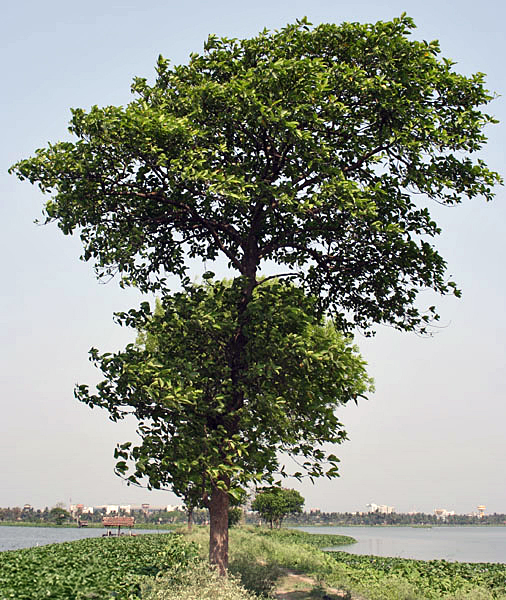

Kadamba is the bark of Neolamarckia cadamba, a tall tree of the Indian countryside known for its round, orange, ball-shaped flower heads and long celebrated in classical poetry. In Ayurveda its bark is valued for a cooling, drawing-together quality, and it is used traditionally as a decoction and in mouth and skin preparations.
- Botanical name
- Neolamarckia cadamba
- Family
- Rubiaceae
- Sanskrit
- कदम्ब
- Part used
- Bark, with fruit and leaf used traditionally
- Taste (rasa)
- Astringent and bitter (kashaya, tikta)
- Quality (guna)
- Light, dry (laghu, ruksha)
- Energy (virya)
- Cooling (sheeta)
- After digestion (vipaka)
- Pungent (katu)
- Action (karma)
- Binds and steadies, with a cooling action (grahi, stambhana)
- Effect on dosha
- Pacifies Kapha and Pitta (kaphapittahara)
- Best known for
- an astringent, cooling tree bark used traditionally in mouth and skin preparations
What is Kadamba?
Kadamba is the bark of Neolamarckia cadamba, a tall, fast-growing tree of the coffee family, Rubiaceae, that is found across the warm country of the Indian subcontinent. It is known in English as the burflower tree or the Leichhardt pine, and in the older botanical literature it carries the names Anthocephalus cadamba and Anthocephalus indicus. Its most striking feature is the flower: dense, round, orange heads that sit among the leaves like small golden globes, each one packed with tiny blooms.
In Sanskrit the tree is कदम्ब, and it holds a place in classical Indian poetry and legend quite apart from its use in medicine, celebrated for the beauty of its flowering and its association with the rains. It carries other names too, such as Priyaka and Halipriya, and is commonly called Kadam. The part most used in Ayurveda is the bark, while the fruit and the leaf are also described in traditional practice.
What Ayurveda uses it for
In classical Ayurveda, Kadamba bark is treated as an astringent, cooling material. Its qualities place it among the barks that draw together and steady the tissues, an action the tradition calls grahi, and its cooling energy makes it suited to conditions marked by heat and irritation. The Nighantu literature groups it with the plants that pacify the Kapha and Pitta doshas.
Within that role the dravyaguna texts describe the bark as traditionally indicated in a familiar set of conditions, each named here in its classical Sanskrit term with a plain gloss:
- Prameha: the classical group of urinary and metabolic disorders.
- Atisara: diarrhoea, where its binding, drawing-together quality is called upon.
- Mukharoga: disorders of the mouth, for which the bark is used in washes and gargles.
- Vrana: wounds, where its astringent, settling character is applied to the surface.
- Daha: burning sensations, met by its cooling energy.
- Raktapitta: a classical bleeding tendency associated with heat in the blood.
- Jwara: fever, given its cooling nature.
- Kandu: itching, addressed in skin preparations.
These are the traditional textual indications recorded in the classical literature. They set out how Ayurveda has long understood the herb and are given for reference and study, not as statements of medical effect or as advice to treat any condition.
Its qualities, in plain words
Ayurveda describes each plant by its taste, its qualities, its energy and its post-digestive effect, and for Kadamba these come together in a clear picture.
Its rasa, or taste, is astringent with a bitter edge. Astringent is the taste that puckers the mouth and feels drying, the sensation of strong tea or an unripe fruit, and in Ayurvedic thinking it tends to draw things together and firm up soft, loose surfaces. The bitter note adds a light, cleansing character.
Its guna, or qualities, are light and dry, which fit an astringent bark that has a steadying, mopping-up nature rather than a heavy or spreading one. Its virya, or energy, is cooling, soothing to heat and irritation much as a cool cloth calms a warm surface. Its vipaka, the taste that remains after digestion, is pungent. Taken together, these qualities explain why the tradition treats Kadamba as a cooling, astringent, binding bark, and why it is understood to pacify the warmer, heavier tendencies of Kapha and Pitta rather than to stimulate the body.
How it is taken
In the classical texts Kadamba is most often prepared as a bark decoction, a Kashaya, made by simmering the bark in water. This decoction is the usual starting point, from which the bark’s astringent, cooling character is carried into use.
Kadamba appears especially in mouth and skin preparations. For disorders of the mouth the decoction is used traditionally as a wash or gargle, where its drawing-together quality meets the soft tissues of the mouth. For the surface of the skin it is applied in external preparations, working alongside its cooling energy. The bark is the principal material for these uses, while the fruit and leaf are also noted in traditional practice. As with the astringent barks generally, any use in a personal setting is best guided by a qualified practitioner, who can advise on preparation and proportion.
Good to know
Kadamba is understood in the classical tradition as a cooling, astringent bark whose character is steady and binding rather than warming or stimulating. It is a tree far better known to most people for its beauty, its round orange flowers and its place in poetry, than for its use in medicine, and it is worth holding both pictures together: the celebrated flowering tree and the quiet, astringent bark of the dravyaguna texts.
Because its main described uses are external and local, in washes for the mouth and in preparations for the skin, timing and course in traditional practice follow the preparation being made rather than a fixed schedule for the single bark. This entry describes the classical Ayurvedic understanding of the herb. It is not medical advice, and anyone with a health condition should speak to a qualified practitioner.
Frequently asked
Why is the kadam tree so well known? Chiefly for its flowers. The kadam bears dense, round, orange flower heads that appear among its leaves like small golden globes, and the tree has long been celebrated in classical Indian poetry and legend, quite apart from the use of its bark in Ayurveda.
Which part of the plant is used? The bark is the principal part used in classical Ayurveda. The fruit and the leaf are also described in traditional practice, but the bark is the main material named for Kadamba’s astringent, cooling preparations.
How is the bark usually prepared? Most often as a decoction, a Kashaya, made by simmering the bark in water. This decoction is then used traditionally as a wash or gargle for the mouth and in external preparations for the skin.
Kadamba bark is astringent and cooling, counted among the barks that draw together and steady the tissues.
After the Bhavaprakasha Nighantu, on the astringent barks
Kadamba is named among the cooling, astringent trees whose bark is used in washes and mouth preparations.
After the classical Nighantu literature
Frequently asked questions
What is Kadamba used for in Ayurveda?
Kadamba (Neolamarckia cadamba) is the bark of the cluster-flowered kadam tree, valued in classical Ayurveda as an astringent, cooling material. It is used traditionally in decoctions and in mouth and skin preparations, its action classed as grahi and stambhana, binding and steadying. Ayurveda notes it pacifies Kapha and Pitta, so it suits cooling, astringent local uses.
Which dosha does Kadamba balance?
Kadamba is classed as kaphapittahara, meaning it pacifies Kapha and Pitta. Its astringent and bitter taste (kashaya, tikta) and cooling, binding nature make it suited to conditions of heat and looseness rather than to Vata and dryness, which its astringency can aggravate. This cooling, consolidating character underlies its traditional use in mouth and skin care.
How is Kadamba bark used?
Traditionally the bark is prepared as a decoction and used in mouth rinses and skin preparations, drawing on its astringent, cooling, grahi and stambhana qualities to bind and soothe. It is a material for external and local classical uses rather than a casual internal remedy. For any specific application, a qualified practitioner or reliable source should guide preparation and use.
Is Kadamba cooling or heating?
Kadamba is regarded as cooling and astringent in Ayurveda, which is why it is classed as kaphapittahara and used where heat and looseness need settling. Its cooling, binding character (grahi, stambhana) is the basis for its traditional place in mouth and skin preparations. Being astringent and cool, it is used more cautiously where Vata and dryness dominate.
What part of the Kadamba tree is used?
It is chiefly the bark of the kadam tree that Ayurveda uses, valued for its astringent, cooling character and worked into decoctions for mouth and skin preparations. The bark carries the grahi and stambhana actions the texts describe. Also known by names such as Priyaka, Kadamba is used mainly through this bark rather than its flowers or leaves.
References
- Bhavaprakasha Nighantu, entry on Kadamba with its synonyms and properties among the trees.
- Raja Nighantu, listing the Sanskrit synonyms of the plant, including Priyaka and Halipriya.
- Dhanvantari Nighantu, on Kadamba among the astringent, cooling barks.
- Kaiyadeva Nighantu, entry on Kadamba and its qualities.