Materia Medica · Dravyaguna
Amalaki
Phyllanthus emblica · Phyllanthaceae
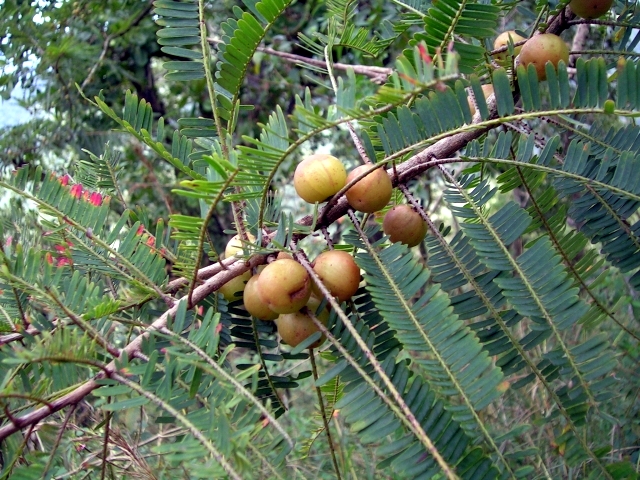

Amalaki is the fruit of a small tree, sour to taste but cooling in effect, which Ayurveda counts among its foremost rejuvenating substances. It is one of the three fruits in Triphala and the main ingredient of Chyawanprash.
- Botanical name
- Phyllanthus emblica
- Family
- Phyllanthaceae
- Sanskrit
- आमलकी
- Part used
- Fruit
- Taste (rasa)
- Sour, and also sweet, bitter, astringent and pungent (amla, with five of the six tastes)
- Quality (guna)
- Heavy, dry and cooling (guru, ruksha, shita)
- Energy (virya)
- Cooling (shita)
- After digestion (vipaka)
- Sweet (madhura)
- Action (karma)
- Rejuvenates and steadies all three doshas, settles Pitta (rasayana, tridoshahara)
- Best known for
- The cooling rejuvenating fruit at the heart of Triphala
What it is
Amalaki is the fruit of Phyllanthus emblica, a modest tree that grows across India. The fruit is round and pale green, about the size of a small plum, with faint grooves running down its sides. It is the fruit that Ayurveda values, dried and powdered, or pressed for its juice.
People who know it by its other name, amla or Indian gooseberry, will know its taste first. It is sharply sour, with a bitter edge, and then a slow sweetness that follows. That single fruit carries five of the six tastes the tradition recognises, which is rare, and part of why the old texts gave it such standing.
What Ayurveda uses it for
Amalaki is a rasayana, a substance taken over time to rebuild and steady the body rather than to act in a single day. The Charaka Samhita gives it a chapter of its own and names it first among the rejuvenating fruits. It is also called vayasthapana, which means age-steadying.
What sets it apart from other strengthening herbs is its coolness. Most things that build the body up are warming. Amalaki builds while it cools, which is why the tradition reaches for it when there is heat to settle as well as strength to restore. It is the classic fruit for a Pitta constitution, the fiery, sharp quality that runs hot.
It is also one of the three fruits of Triphala, alongside Haritaki and Bibhitaki, and the leading ingredient of Chyawanprash, the well-known herbal jam of the rejuvenation group.
Its qualities in plain words
Ayurveda describes every substance by a short list of qualities, and amalaki’s are unusual enough to be worth reading slowly.
It is sour to taste, which would normally make a thing warming, yet amalaki is cooling in its effect. The texts treat this as a prabhava, a special action that the taste alone does not explain. It is heavy and slightly dry, so it grounds rather than stimulates, and it finishes sweet after digestion, which in Ayurveda means it feeds and builds tissue. Put together: a fruit that cools, grounds and rebuilds, and settles all three doshas at once. Few substances do all of that, which is why this one is named so often.
How it is taken
The simplest way is the powder, a teaspoon stirred into warm water or honey, taken once or twice a day. The fresh juice is also used, taken in small measures. The anupana, the thing it is carried in, is chosen to suit the purpose: honey, warm water, or ghee.
Amalaki rarely travels alone. It is most often met inside named preparations, above all Triphala, the three-fruit powder, and Chyawanprash, the rejuvenating jam where it is the principal fruit. It also appears in many medicated oils and ghees.
Good to know
Amalaki belongs to the slow, building side of Ayurveda. It is taken as a course, over weeks, not as a single dose. The tradition considers it suited to the warmer parts of the year and to constitutions that run hot, since its great virtue is to cool while it nourishes.
This entry describes the classical Ayurvedic understanding of the fruit. It is not medical advice, and anyone with a health condition should speak to a qualified practitioner.
Frequently asked
Is amalaki the same as amla? Yes. Amla is the common name, amalaki the Sanskrit. Indian gooseberry is the English name for the same fruit.
Why is a sour fruit described as cooling? Because in Ayurveda taste and effect are not always the same. Amalaki’s cooling action is treated as a special property, a prabhava, that runs against what its sour taste would suggest.
Which part is used? The fruit, dried and powdered or pressed for juice. It is the only part that enters its classical preparations.
Of all the rejuvenating fruits the amalaki is the foremost, for it lengthens life and settles all three doshas.
After the Charaka Samhita, on rasayana therapy
Frequently asked questions
What is Amalaki used for?
Amalaki (Phyllanthus emblica), the small sour Indian gooseberry, is one of Ayurveda's great rejuvenators. It is a Rasayana that steadies all three Dosha and especially settles Pitta, so it is traditionally used to cool the body while still building it up. It supports digestion, the eyes, the skin and healthy ageing, and it is the cooling heart of the Triphala trio.
What are the benefits of Amalaki?
Ayurveda associates Amalaki with rejuvenation and cooling at once, a rare pairing. As a tridoshahara Rasayana it is traditionally taken to settle Pitta, support strong digestion, nourish the tissues and promote clear skin, bright eyes and steady ageing. It is unusually rich in the sour taste while carrying five of the six tastes, which is part of why the texts prize it so highly.
How do you take Amalaki?
Amalaki is taken as fresh fruit or juice, as dried powder (Churna), or within formulas like Triphala and Chyawanprash. A common approach is a small measure of powder with warm water or honey, often in the morning. As a gentle Rasayana it is suited to daily use, though a qualified practitioner should guide dose and duration for any specific aim.
Is Amalaki good for hair and skin?
Yes, Ayurveda values Amalaki for both. Its cooling, Pitta-settling and Rasayana nature is traditionally linked with a clear complexion and with dark, strong hair, and it appears in many classical hair and skin preparations. It is understood to work from within by settling heat in the blood. It is classical supportive care rather than a cure for any named condition.
Can you take Amalaki every day?
Yes, as a gentle, cooling Rasayana, Amalaki is well suited to daily use and is one of the herbs the tradition considers safe for regular, long-term intake, which is why it sits in daily tonics like Chyawanprash. Being sour it is used a little more carefully where there is high acidity. A practitioner can set the right daily measure for you.
References
- Charaka Samhita, Chikitsasthana, the chapter on Amalaki Rasayana.
- Sushruta Samhita, on Amalaki among the cooling and rejuvenating fruits.
- Bhavaprakasha Nighantu, Haritakyadi Varga, entry on Amalaki.