Materia Medica · Dravyaguna
Ashwagandha
Withania somnifera · Solanaceae

Ashwagandha is a root that Ayurveda uses to rebuild strength when someone is run down. It is the herb traditionally reached for after illness, overwork, or a long stretch of stress, when the body needs to be slowly built back up.
- Botanical name
- Withania somnifera
- Family
- Solanaceae
- Sanskrit
- अश्वगन्धा
- Part used
- Root
- Taste (rasa)
- Bitter, astringent and sweet (tikta, kashaya, madhura)
- Quality (guna)
- Light and slightly oily (laghu, snigdha)
- Energy (virya)
- Warming (ushna)
- After digestion (vipaka)
- Sweet (madhura)
- Action (karma)
- Rebuilds strength, settles Vata (rasayana, balya)
- Best known for
- Rebuilding strength when the body is run down
What is Ashwagandha?
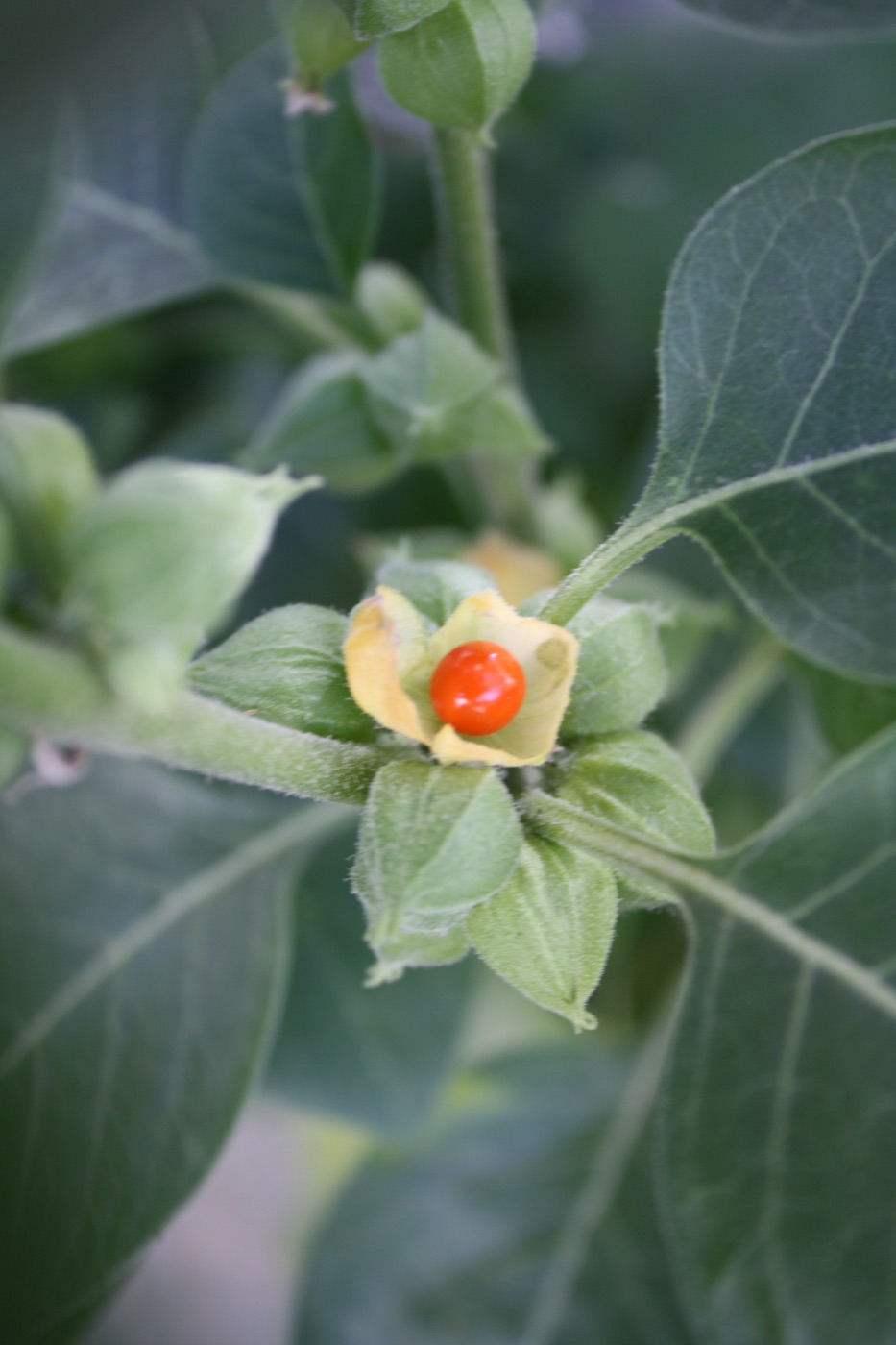
Ashwagandha is the root of a small shrub, Withania somnifera, that grows in the dry parts of India. The plant is unremarkable to look at: knee-high, with dull leaves and a small red berry. It is the root, dried and powdered, that Ayurveda values.
The name is worth knowing, because it tells you what the herb is for. Ashwa means horse, and gandha means smell. The fresh root has a faint horsey smell, but the classical writers meant something more by the name: the strength and vitality of a horse. That is the reputation Ashwagandha has carried for two thousand years.
What Ayurveda uses it for
In Ayurvedic terms, Ashwagandha is a rasayana. A rasayana is a herb taken not for a quick fix but to rebuild the body over time, the way you might rebuild your savings rather than spend a windfall. It is also a balya herb, which simply means strengthening.
So the texts reach for it in the same situation again and again: when a person is depleted. After an illness, after a hard season of work, after long worry or broken sleep, when someone is tired in a way that rest alone does not seem to fix. Ayurveda’s idea is not to stimulate such a person, but to feed and steady them until their own strength returns.
Its qualities, in plain words
Ayurveda describes every herb by a short list of qualities. For Ashwagandha they are unusual, and they explain why it works the way the tradition says it does.
It is warming, which is why it suits the cold, dry, jittery quality the texts call Vata. It is slightly oily and nourishing, so rather than drying the body out it feeds it. And although it begins with a bitter edge, it finishes sweet after digestion, and in Ayurveda a sweet finish means it builds tissue rather than wearing it down. Put together: a herb that warms, calms and rebuilds at the same time. Few herbs do all three, which is why this one is so often named.
How it is taken
The classic way is the simplest. A teaspoon of the root powder is stirred into a cup of warm milk, often with a little ghee, and taken once or twice a day. The warm, sweet milk is not just a delivery method; in Ayurvedic thinking it carries the nourishing action of the root and softens its warmth.
Ashwagandha is also the main ingredient in named preparations such as Ashwagandharishta, a gently fermented tonic, and in the medicated ghees of the rejuvenation group.
Good to know
Ashwagandha is taken as a course, over weeks, not as a single dose for a single day. It belongs to the slow, building side of Ayurveda. The tradition pairs it with milk for a reason, and it is classically considered most useful in the colder months and in the second half of life, when the dry, depleting quality of Vata naturally rises.
This entry describes the classical Ayurvedic understanding of the herb. It is not medical advice, and anyone with a health condition should speak to a qualified practitioner.
Frequently asked
Why is Ashwagandha taken with milk? Because the tradition sees milk as carrying the herb’s nourishing, strength-building action, and because the warm sweet vehicle balances the root’s natural warmth. It is the classical pairing.
Is it the same as ginseng? No. It is sometimes called “Indian ginseng” because both are used to restore vitality, but they are unrelated plants. Ashwagandha belongs to the nightshade family.
Which part of the plant is used? The root. The berry and leaf are not part of its classical preparations.
Taken with milk or ghee, the root restores the body that has been worn down.
After the Charaka Samhita, on rasayana therapy
Frequently asked questions
What is Ashwagandha used for?
Ashwagandha (Withania somnifera) is a root used in Ayurveda to rebuild strength and steady the nerves, the classic remedy for someone depleted, tired or wired-but-exhausted. The texts class it as rasayana and balya, so it is traditionally reached for to restore a run-down body and settle aggravated Vata rather than to treat any single named condition.
What are the benefits of Ashwagandha?
Ayurveda associates Ashwagandha with rebuilding strength when the body is run down (balya), settling Vata, and acting as a rejuvenating rasayana that steadies the nerves. It is traditionally valued for the depleted, over-stretched state where a person is exhausted yet unable to rest. Its benefit is framed as restorative and cumulative, drawn out over a steady course.
How do you take Ashwagandha?
The classic way is Ashwagandha churna in warm milk, the milk being a nourishing, Vata-settling anupana that suits the root's warming, rasayana nature; it is also taken as a tablet. A small measured dose is usual, ideally as a steady course. A qualified practitioner can set the amount and duration to fit your constitution.
Can I take Ashwagandha every day?
Ashwagandha is a rasayana traditionally taken as a daily course over weeks to rebuild a depleted, Vata-aggravated state. Being warming, it suits some constitutions more than others and is used more carefully in high Pitta. For regular daily use, a qualified practitioner should confirm the dose and how long to continue, and keep your doctor informed.
Which dosha is Ashwagandha good for?
Ashwagandha is chiefly a Vata-settling herb. Its warming nature and rasayana, balya action make it well suited to Vata-driven depletion, tiredness and unsteady nerves, and it can also support Kapha in the sense of building strength. Being warming, it is used more cautiously where Pitta is high. Matching it to your constitution is best done with guidance.
Is Ashwagandha safe to take?
Ashwagandha is one of the gentler, widely used Ayurvedic tonics, but it is warming, so it suits some constitutions better than others and is used carefully in high Pitta and generally avoided in pregnancy. If you take other medicines, particularly for the thyroid or sedatives, tell your doctor. For a safe course, work with a qualified practitioner.
References
- Charaka Samhita, Chikitsasthana, chapter on rasayana (rejuvenation) therapy.
- Bhavaprakasha Nighantu, Guduchyadi Varga, entry on Ashwagandha.
- Ashtanga Hridayam, on balya (strengthening) substances.