Materia Medica · Dravyaguna
Ativisha
Aconitum heterophyllum · Ranunculaceae
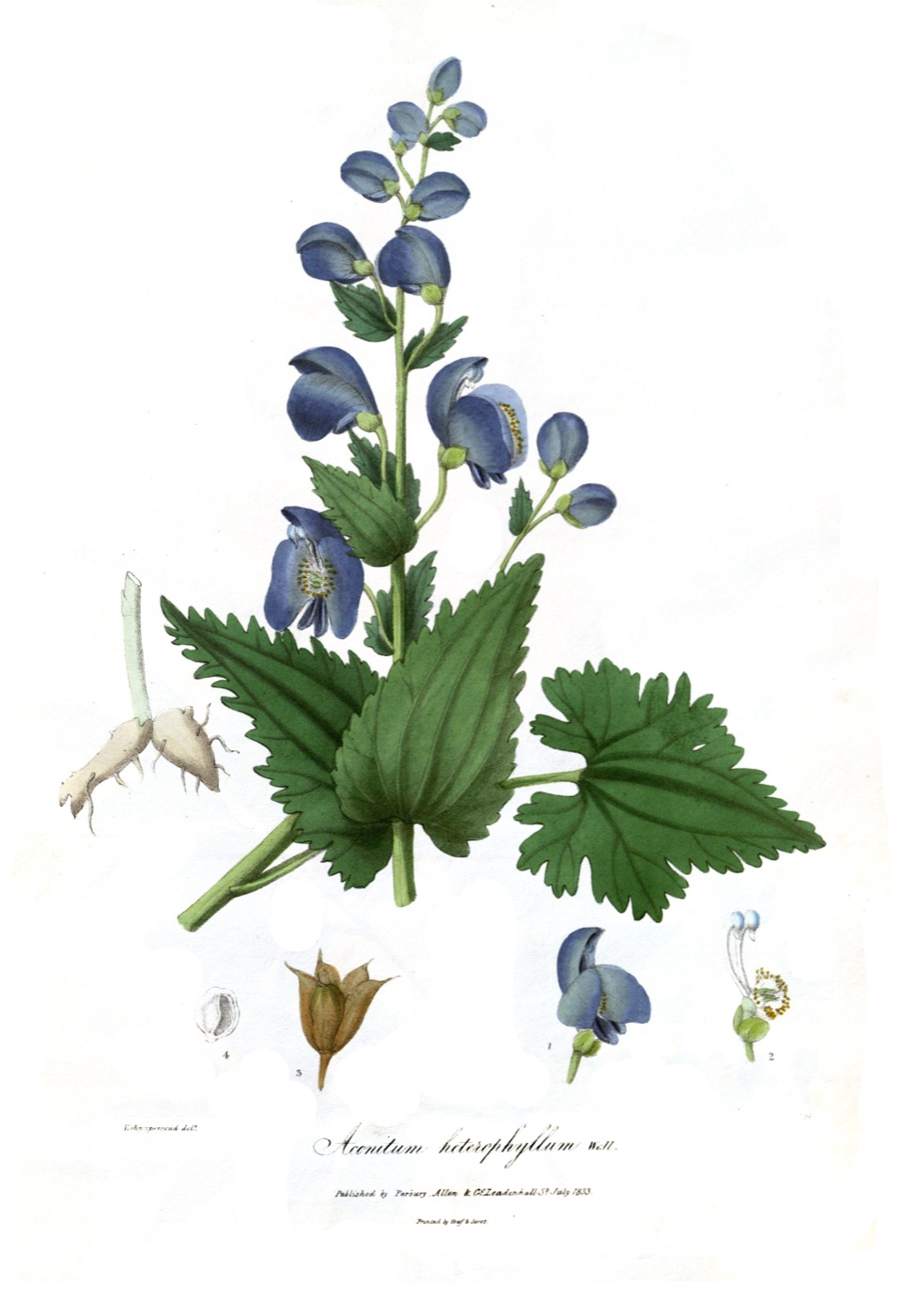

Ativisha is the root of a Himalayan plant of the aconite family, yet unlike its poisonous cousins the tradition counts it as non-poisonous and safe. It is a bitter, warming, digestive root, and one of the herbs Ayurveda trusts most readily in the care of children.
- Botanical name
- Aconitum heterophyllum
- Family
- Ranunculaceae
- Sanskrit
- अतिविषा
- Part used
- Root (tuber)
- Taste (rasa)
- Bitter and pungent (tikta, katu)
- Quality (guna)
- Light and dry (laghu, ruksha)
- Energy (virya)
- Warming (ushna)
- After digestion (vipaka)
- Pungent (katu)
- Action (karma)
- Kindles digestion and digests ama, holds and settles the belly, quietens fever (deepana, pachana, amapachana, grahi, jwaraghna)
- Effect on dosha
- Settles all three, especially Kapha and Pitta (tridoshahara)
- Best known for
- A safe bitter root that settles digestion and fever, favoured for children
What is Ativisha?
Ativisha is the root of Aconitum heterophyllum, a herb of the buttercup family that grows in the high meadows of the Himalaya. Above the ground it is an unremarkable mountain plant, with divided leaves and small hooded flowers. What Ayurveda values is the tuberous root below, which is dug, dried and used.
The name carries a paradox worth stating plainly. Ati means “very” and visha means “poison,” so the word reads as something like “very poisonous,” a name it shares with its family. The aconites are famous poisons: relatives such as Vatsanabha (Aconitum ferox) are among the most powerful toxic plants known to the tradition, and are used only after careful purification. Ativisha stands apart. The classical texts single it out as avisha, non-poisonous, and treat it as one of the gentler roots in the whole materia medica. So mild is its reputation that it became a favourite in the care of children, a place few strong herbs are given. In English it is usually called Atis or Indian atees.
What Ayurveda uses it for
Ativisha belongs above all to the digestion. The classical writers place it among the deepana herbs that kindle the digestive fire and the pachana herbs that help the body break food down, and they name it readily when the belly is loose, sour or clogged with what the tradition calls ama, the undigested residue left behind by weak digestion. Because it both warms the digestion and holds the belly, it sits in the small group of roots the texts trust in looseness of the bowels without wearing the body down.
Two features set Ativisha apart. The first is its safety: being counted as avisha, it is the bitter digestive root the tradition reaches for in the treatment of the child, Balaroga, where a gentler hand is called for. The second is its reach beyond the belly alone, for the texts also name it as jwaraghna, a herb that quietens fever.
Within that role the dravyaguna texts describe the root as traditionally indicated in a familiar set of conditions, each named here in its classical Sanskrit term with a plain gloss:
- Atisara: diarrhoea, the loose or repeated stool where its holding, settling action is called upon.
- Ama and Amatisara: digestion clogged with undigested residue, and the looseness that comes with it, which its warming, digesting nature is meant to clear.
- Jwara: fever, for which it is named among the fever-easing herbs.
- Krimi: the classical category of intestinal worms.
- Aruchi: loss of appetite, where its bitter, kindling quality is meant to revive the wish to eat.
- Chardi: nausea and the urge to vomit, which the settling root is said to calm.
- Kasa: cough.
It is especially named in Balaroga, the care of children, where its safety and its gentle digestive action make it one of the first roots the tradition turns to.
These are the traditional textual indications recorded in the classical literature. They set out how Ayurveda has long understood the herb and are given for reference and study, not as statements of medical effect or as advice to treat any condition.
Its qualities, in plain words
Ayurveda describes every herb by a short list of qualities, and for Ativisha they line up neatly behind its reputation as a gentle digestive root.
Its taste is bitter, with a pungent edge, and in Ayurveda a bitter taste is the taste that scrapes and clears rather than feeds. It is light and dry, so instead of weighing the body down it helps lift the dampness and heaviness the tradition links with clogged digestion and Kapha. It is warming, the quality that kindles the digestive fire and turns undigested residue back into something the body can handle. And it finishes pungent after digestion, a sign in keeping with its clearing, kindling nature. Put together, these qualities describe a light, warm, bitter root that dries excess, sharpens the appetite and settles the belly. Because bitter and light herbs answer the damp heaviness of Kapha and the heat of Pitta, the texts describe it as settling all three doshas, tridoshahara, while leaning most toward Kapha and Pitta.
How it is taken
The usual form is the root powder, or churna. The dried tuber is cleaned and ground, and because Ativisha is counted as non-poisonous it does not call for the elaborate purification that the toxic aconites demand before use.
From that powder the classical writers built a range of digestive and paediatric preparations. Ativisha appears by name in Ativishadi Churna, a bitter digestive powder built around the root, and it is a frequent companion in the formulas the tradition kept for children and for looseness of the bowels. As a bitter, warming powder it was commonly given with warm water or honey, the vehicles Ayurveda favours for carrying a light, clearing action into the body. Because it is gentle, it is one of the roots most often reached for when a soft, dependable digestive herb is wanted rather than a forceful one.
Good to know
The single point worth repeating about Ativisha is the one its name hides. Although it is called ati-visha, “very poison,” and belongs to the aconite family, the tradition is clear that this root is the exception: it is avisha, non-poisonous, and is trusted where the truly toxic aconites never would be, including in the care of children. That distinction matters, because the name alone could mislead. It is a light, dry, bitter root, taken to sharpen digestion and settle the belly rather than to nourish or build, and it belongs to the clearing rather than the strengthening side of Ayurveda.
This entry describes the classical Ayurvedic understanding of the herb. It is not medical advice, and anyone with a health condition should speak to a qualified practitioner.
Frequently asked
If it is an aconite, is Ativisha poisonous? No. This is the point the tradition takes care to make. Although Ativisha shares its family and its very name with the poisonous aconites such as Vatsanabha, the classical texts single it out as avisha, non-poisonous, and it is one of the roots trusted most readily, including in children. The toxic aconites are a separate matter and are used only after careful purification.
Which part of the plant is used? The root, the tuber dug from below the ground, dried and ground to powder. It is the part named for nearly all of the herb’s digestive and paediatric preparations.
Why is it given to children? Because Ayurveda counts it as gentle and non-poisonous, Ativisha is one of the bitter digestive roots the tradition kept for Balaroga, the care of children, where a milder herb is preferred. This describes its classical place in the texts and is not advice to treat a child; a qualified practitioner should be consulted for any health concern.
Ativisha is non-poisonous though it bears the name of poison; bitter and warming, it kindles the digestion, holds the belly and is fit even for children.
After the Bhavaprakasha Nighantu, on Ativisha
It digests the undigested residue, quietens fever and clears worms, settling the belly without weakening it.
After the classical dravyaguna sense of the digestive and fever-easing herbs
Frequently asked questions
What is Ativisha used for in Ayurveda?
Ativisha (Aconitum heterophyllum) is a bitter mountain root the tradition treats as non-poisonous and gentle. It is valued for settling the digestion, easing fever and clearing ama. The texts class its action as deepana, pachana, amapachana, grahi and jwaraghna, and it is a favourite in the care of children.
Is Ativisha safe, given it is an Aconitum?
Yes, this is the key point. Although Aconitum species include toxic ones, Ayurveda specifically treats Ativisha (Aconitum heterophyllum) as Abhaya, non-poisonous, and safe when properly sourced and prepared, which is why it is trusted even for children. Correct identification and sourcing matter, so use it through a qualified practitioner and reliable supply.
Why is Ativisha good for children?
Ayurveda favours Ativisha in children because it is a gentle, non-poisonous bitter that settles the digestion, clears ama and quietens fever without harshness. Its grahi action helps hold and settle a loose belly. This mild, balancing character is why the tradition long counted it a favourite root in the care of the young.
Which dosha does Ativisha balance?
Ativisha settles all three doshas (tridoshahara), and especially Kapha and Pitta. Its bitter and pungent tastes (tikta, katu) kindle and clear, so it suits the ama-laden, heated or congested digestion Ayurveda links with those doshas. This broad balancing action is part of why it is used so widely and gently.
How is Ativisha taken for digestion and fever?
Traditionally the root powder is given in small measures with warm water or honey, and it appears in classical digestive and fever (Jwara) formulas rather than always alone. Because doses are small and vary with age, especially for children, the amount is best set by a qualified Ayurvedic practitioner alongside proper care in fever.
References
- Charaka Samhita, Sutrasthana, among the digestive (deepana, pachana) and fever-easing herbs, and named in the treatment of the child (Balaroga).
- Sushruta Samhita, among the herbs that hold and settle the belly in diarrhoea (grahi) and among the Vata-pacifying group.
- Ashtanga Hridaya, on the care of the child (Balaroga) and the treatment of fever (Jwara) and diarrhoea (Atisara).
- Bhavaprakasha Nighantu, entry on Ativisha, noting that it is non-poisonous (avisha) and suited to children.
- Raja Nighantu, listing the Sanskrit synonyms of the plant.