Materia Medica · Dravyaguna
Bhringaraj
Eclipta prostrata · Asteraceae
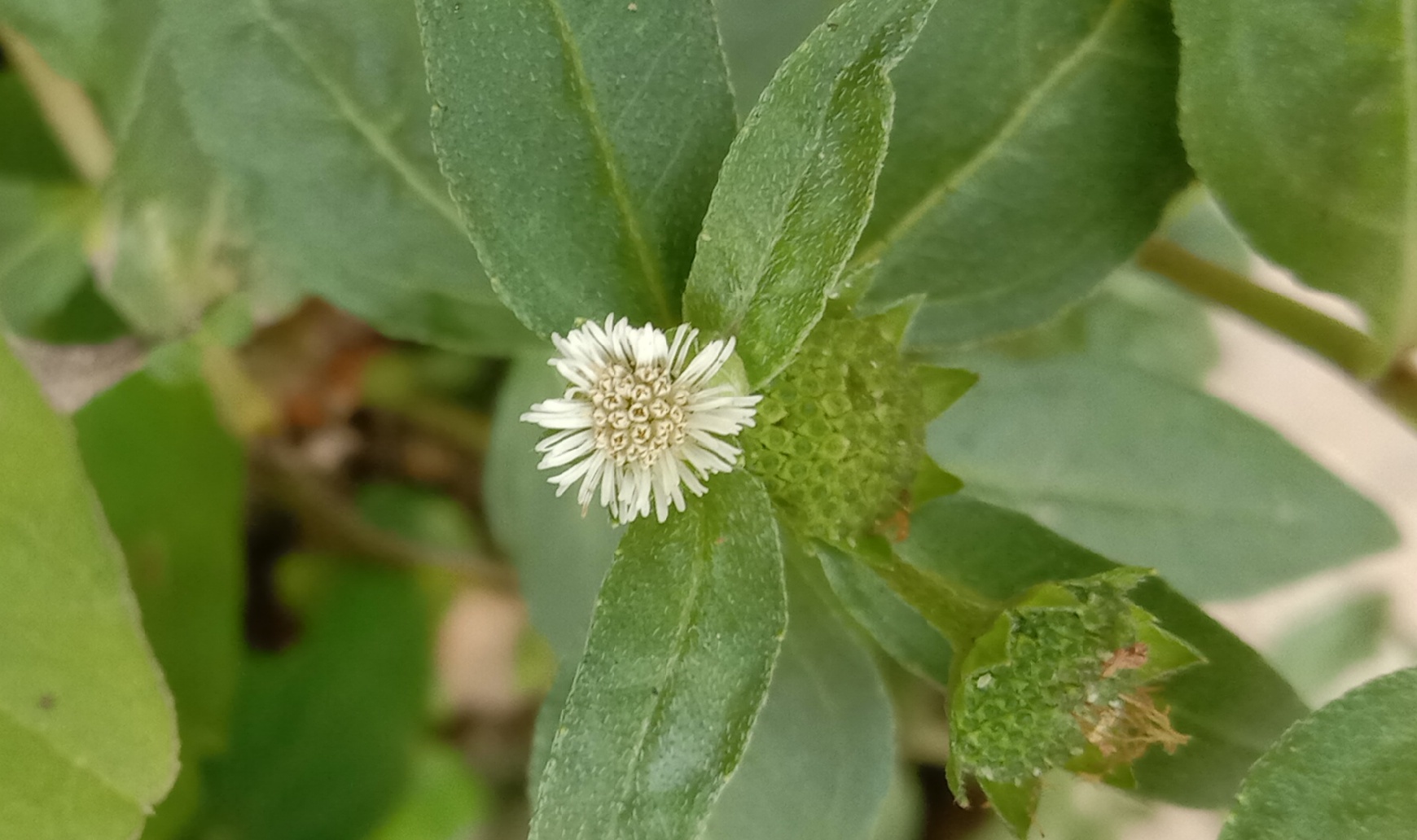
_flower.jpg)
Bhringaraj is a low, spreading herb that Ayurveda has always linked with the hair. Its name means king of the hair, and it is the plant the tradition reaches for to keep the scalp healthy and the hair dark and full.
- Botanical name
- Eclipta prostrata
- Family
- Asteraceae
- Sanskrit
- भृंगराज
- Part used
- The whole plant
- Taste (rasa)
- Bitter and pungent (tikta, katu)
- Quality (guna)
- Light and dry (laghu, ruksha)
- Energy (virya)
- Warming (ushna)
- After digestion (vipaka)
- Pungent (katu)
- Action (karma)
- Cares for the hair, settles Kapha and Vata (keshya)
- Best known for
- Caring for the hair and scalp
What is Bhringaraj?
Bhringaraj is a small herb, Eclipta prostrata, that grows low to the ground in the wet, marshy places of India: the edges of fields, ditches and riverbanks. It is easy to miss. It has dull green leaves, a creeping reddish stem and tiny white flower heads. The one part that is hard to miss is the dark juice the plant gives up when it is crushed, almost black, and it is this that the tradition fixed on.
The name tells the story. Bhringa means a black bee, and raja means king. The classical writers heard in it both the colour black and the idea of a king, and they made it the king of the hair. For that reason the herb is also called Kesharaja, which means the same thing in plainer Sanskrit. The whole plant is used, leaf, stem, root and all.
What Ayurveda uses it for
Bhringaraj is, above everything, the hair herb. In Ayurvedic terms it is keshya, which simply means hair-supporting. The texts name it again and again for the care of the scalp, for keeping the hair dark, and for the strength and fullness of the hair. This is why it turns up in almost every classical hair oil.
Beyond the hair, the tradition also treats it as a rasayana, a herb that rebuilds the body over time rather than for a single day, and it has a long reputation for the care of the liver. But it is the hair that made its name, and the hair that most people come to it for.
Its qualities, in plain words
Ayurveda describes each herb by a short list of qualities, and for Bhringaraj they sit together in a useful way.
It is bitter and slightly pungent, the tastes the tradition links with cooling and clearing. It is light and dry, so it does not sit heavily, and it is warming in its overall effect. Put together, the texts read it as a herb that settles the heavy, sluggish quality they call Kapha and the cold, dry quality they call Vata, while keeping a gentle warmth of its own. That mix is exactly what the tradition wants for a scalp that needs to be kept cool, clear and well fed.
How it is taken
The classic use is external. Fresh Bhringaraj juice, or the dried herb, is cooked into sesame or coconut oil to make a hair oil, and that oil is worked into the scalp. The most famous of these is simply called Bhringaraja Thailam, and the herb is also paired with Amalaki in a much-loved hair oil. The oil is left on for a while before washing, often overnight.
Bhringaraj is also taken internally, as a powder of the dried plant or as the fresh juice, usually as a course over weeks rather than a single dose. Internal use belongs more properly with a practitioner, who will judge the amount and the pairing.
Good to know
Bhringaraj is a herb of patience. Whether oiled into the scalp or taken as a course, the tradition treats it as something done steadily over time, not a quick fix. The old writers also describe more than one variety of the plant, told apart by the colour of the flower, with the white-flowered kind held in the highest regard for the hair.
This entry describes the classical Ayurvedic understanding of the herb. It is not medical advice, and anyone with a health condition should speak to a qualified practitioner.
Frequently asked
Why is Bhringaraj linked with the hair? Because the whole tradition treats it as the first of the hair herbs, the keshya plant above all others. Its dark juice and its cooling, clearing qualities are why the classical hair oils are built around it.
Is it used on its own? It can be, but classically it is most often paired, above all with Amalaki, in oils made for the scalp and hair. The two are a long-standing combination.
Which part of the plant is used? The whole plant, leaf, stem, flower and root together. In Sanskrit this is called panchanga, meaning all five parts.
Among the herbs that care for the hair, Bhringaraja is held the foremost.
After the Bhavaprakasha Nighantu, on hair-supporting herbs
Frequently asked questions
What is Bhringaraj used for?
Bhringaraj (Eclipta prostrata) is the herb Ayurveda treats as first for the hair. Classed as keshya, it is traditionally used to keep the scalp cool and the hair dark and strong, and it also settles Kapha and Vata. Bitter and pungent in taste, it is the cornerstone of many classical hair oils and is valued as a supportive Rasayana for the head.
Is Bhringaraj good for hair growth?
Bhringaraj is the classical keshya herb, meaning it is the one the tradition names above all for the hair, so it is traditionally used to nourish the scalp, support thickness and keep the hair dark. It is usually applied as a medicated oil and sometimes taken internally. It is framed as classical hair support rather than a guaranteed cure for hair loss.
How do you use Bhringaraj for hair?
Most commonly Bhringaraj is used as a hair oil, its herb cooked into a base such as coconut or sesame and massaged into the scalp, often left overnight before washing. It is also taken internally as powder or juice for deeper support. Regular, gentle scalp massage is the traditional way to apply it. A practitioner can guide internal use.
Does Bhringaraj help with grey hair?
Ayurveda traditionally links Bhringaraj with keeping the hair dark, and it is a classic ingredient in oils used for premature greying, which the texts often connect with heat and Pitta at the roots. Its cooling, keshya nature is why it is chosen. It is supportive classical care, not a promise to reverse greying, and results vary with the person and the cause.
Can Bhringaraj be taken internally?
Yes, besides its use as a hair oil, Bhringaraj is taken internally as a powder (Churna) or fresh juice, where the tradition values it for the liver, the blood and as a gentle Rasayana as well as for the hair. Because internal use is more potent than external, the dose and suitability should be set by a qualified practitioner.
References
- Bhavaprakasha Nighantu, Guduchyadi Varga, entry on Bhringaraja.
- Charaka Samhita, Chikitsasthana, chapter on rasayana (rejuvenation) therapy.
- Raja Nighantu, on the varieties of Bhringaraja.