Materia Medica · Dravyaguna
Brahmi
Bacopa monnieri · Plantaginaceae
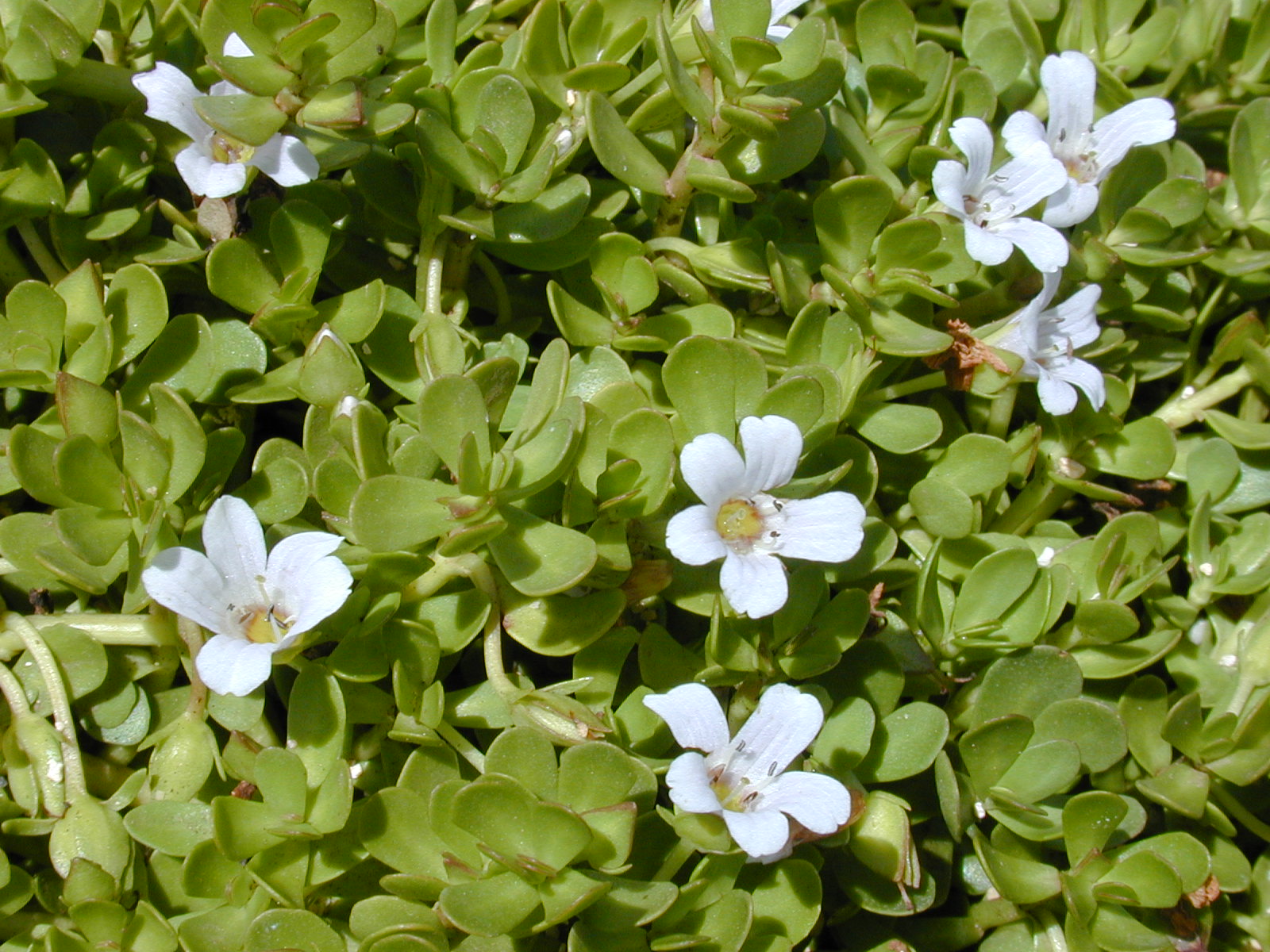

Brahmi is a low creeping plant that grows in shallow water, and Ayurveda values it for the mind. It is the herb the texts name first when they speak of memory, learning and a settled head.
- Botanical name
- Bacopa monnieri
- Family
- Plantaginaceae
- Sanskrit
- ब्राह्मी
- Part used
- The whole plant
- Taste (rasa)
- Bitter and astringent (tikta, kashaya)
- Quality (guna)
- Light and flowing (laghu, sara)
- Energy (virya)
- Cooling (shita)
- After digestion (vipaka)
- Sweet (madhura)
- Action (karma)
- Steadies the mind, supports the memory (medhya, rasayana)
- Best known for
- Steadying a tired, overworked mind
What is Brahmi?
Brahmi is a small, soft plant, Bacopa monnieri, that creeps along wet ground at the edge of ponds, ditches and flooded fields. It carries thick little leaves and tiny pale flowers, and it does best with its roots in water. The whole plant is used: gathered, dried and powdered, or pressed fresh for its juice.
The name carries the old idea of the herb. Brahmi derives from Brahma, and the classical writers tied the plant to the intellect and to awareness itself. From the very beginning, then, it was a herb for the head and not the body.
One point is worth settling at the outset. In some regions the name Brahmi is given to a different creeping plant, Centella asiatica, which this encyclopaedia lists separately under its own name. Here, following the herbal of Bhavaprakasha, Brahmi means Bacopa monnieri.
What Ayurveda uses it for
Brahmi is the leading medhya herb. Medhya means good for the medha, the faculty of intellect and memory. Charaka gathers a small handful of herbs under that heading, and Brahmi stands at the front of them.
The situation the tradition reaches for it in is a familiar one: a mind that is tired, scattered, restless, or worn thin by too much thinking. Brahmi is not meant to stir such a mind up. The aim is the opposite, to settle and feed it, so that attention and memory grow steady of their own accord.
It is also counted a rasayana, a herb taken over time to renew rather than to act in a single dose. And because it is cooling, the texts favour it for a head that runs hot, one quick to irritation and slow to quiet.
Its qualities, in plain words
Ayurveda sums up each herb in a short list of qualities, and for Brahmi they fit the use closely.
It is bitter with a touch of astringent, the tastes the texts tie to clearing and calming rather than to heating. It is cooling, which is why it suits a restless, overheated mind and settles the sharp, fiery quality called Pitta. It is light and flowing, so it moves easily and does not sit heavy. And though it begins bitter, it finishes sweet after digestion, and in Ayurveda a sweet finish marks a herb that feeds the tissues rather than wearing them down. A cooling, calming herb that still nourishes: that is the picture the texts draw.
How it is taken
The oldest way is the plainest. The fresh juice of the plant, Brahmi svarasa, is taken on its own, a small measure at a time. Where the fresh plant is not at hand, the dried powder stands in, usually stirred into warm milk or taken with a little ghee. Ghee is the classical partner here, since the tradition holds that it carries the herb’s action to the mind.
Brahmi is also the heart of named preparations. Brahmi Ghritham is a medicated ghee built around it, and the herb appears in the gently fermented tonic Saraswatarishtam and in medicated oils used for head massage and for the slow pouring of oil on the forehead.
Good to know
Like other rasayana herbs, Brahmi is taken as a course over weeks, not as a single dose. It belongs to the slow, building side of Ayurveda. The pairing with milk or ghee is deliberate, and its cooling nature means it suits warm weather and warm constitutions especially well.
This entry sets out the classical Ayurvedic understanding of the herb. It is not medical advice, and anyone with a health condition should speak to a qualified practitioner.
Frequently asked
Why is Brahmi linked with the memory? Because the classical texts place it first among the medhya herbs, the small group named for supporting medha, the faculty of intellect and memory. That reputation is two thousand years old.
Is Brahmi the same as Gotu Kola? Not in this encyclopaedia. The name Brahmi is sometimes given to Centella asiatica, which is listed here separately. Following the herbal of Bhavaprakasha, Brahmi here means Bacopa monnieri.
Which part of the plant is used? The whole plant. Brahmi is a small creeping herb, and its leaves and stems together are dried, powdered, or pressed for juice.
Taken in season, the herb gives steadiness to the mind and keeps the memory sharp.
After the Charaka Samhita, on the medhya group of herbs
Frequently asked questions
What is Brahmi good for?
Brahmi, from Bacopa monnieri, is the first of Ayurveda's named herbs for the head, kept to steady the mind and support the memory. The texts class it as Medhya and Rasayana, so it is turned to for a tired, overworked mind, to support recall and concentration, and to settle an unsettled Manas over a course of use.
How do you take Brahmi?
Brahmi is traditionally taken as a powder in warm milk or water, as a medicated Ghritham, or as juice and formulated tablets, once or twice a day. Warm milk suits its steadying, nourishing aim. Being a Medhya Rasayana it builds up over time. Follow the form and dose your Ayurvedic practitioner recommends.
What are the benefits of Brahmi for the mind?
In tradition Brahmi is valued for steadying a busy, overworked mind, supporting memory and focus, and calming mental restlessness, in line with its Medhya, Rasayana classing. Its bitter, astringent nature is seen as cooling to an over-active Manas. It is used as a mind-nourishing tonic over weeks rather than as a quick pick-me-up.
How long does Brahmi take to work?
As a Medhya Rasayana, Brahmi is slow and cumulative rather than a stimulant, so Ayurveda uses it over weeks to months for its steadying effect on memory and the mind to build. It is often paired with a calm daily routine. A qualified practitioner can set the course and adjust to how you respond.
Which dosha is Brahmi for?
Brahmi's bitter, astringent, cooling nature makes it especially settling for Pitta and for an over-active, heated mind, while its Medhya, Rasayana action supports all constitutions. It is well suited where thought runs hot and restless. Being cooling, very cold, Vata-dominant people often take it in warm milk or within balanced formulas.
Can I take Brahmi every day?
Brahmi is classically taken daily as a course to nourish the mind and memory, and is generally well tolerated. Even so it is used at a suitable dose, and those who are pregnant, on medication, or managing a health condition should take advice first, since it may interact. A qualified practitioner can judge duration and dose.
References
- Charaka Samhita, Chikitsasthana, chapter on rasayana therapy, on the medhya (mind-supporting) herbs.
- Bhavaprakasha Nighantu, Guduchyadi Varga, entry on Brahmi.
- Ashtanga Hridayam, Uttarasthana, on preparations for the mind.