Materia Medica · Dravyaguna
Chavya
Piper chaba · Piperaceae
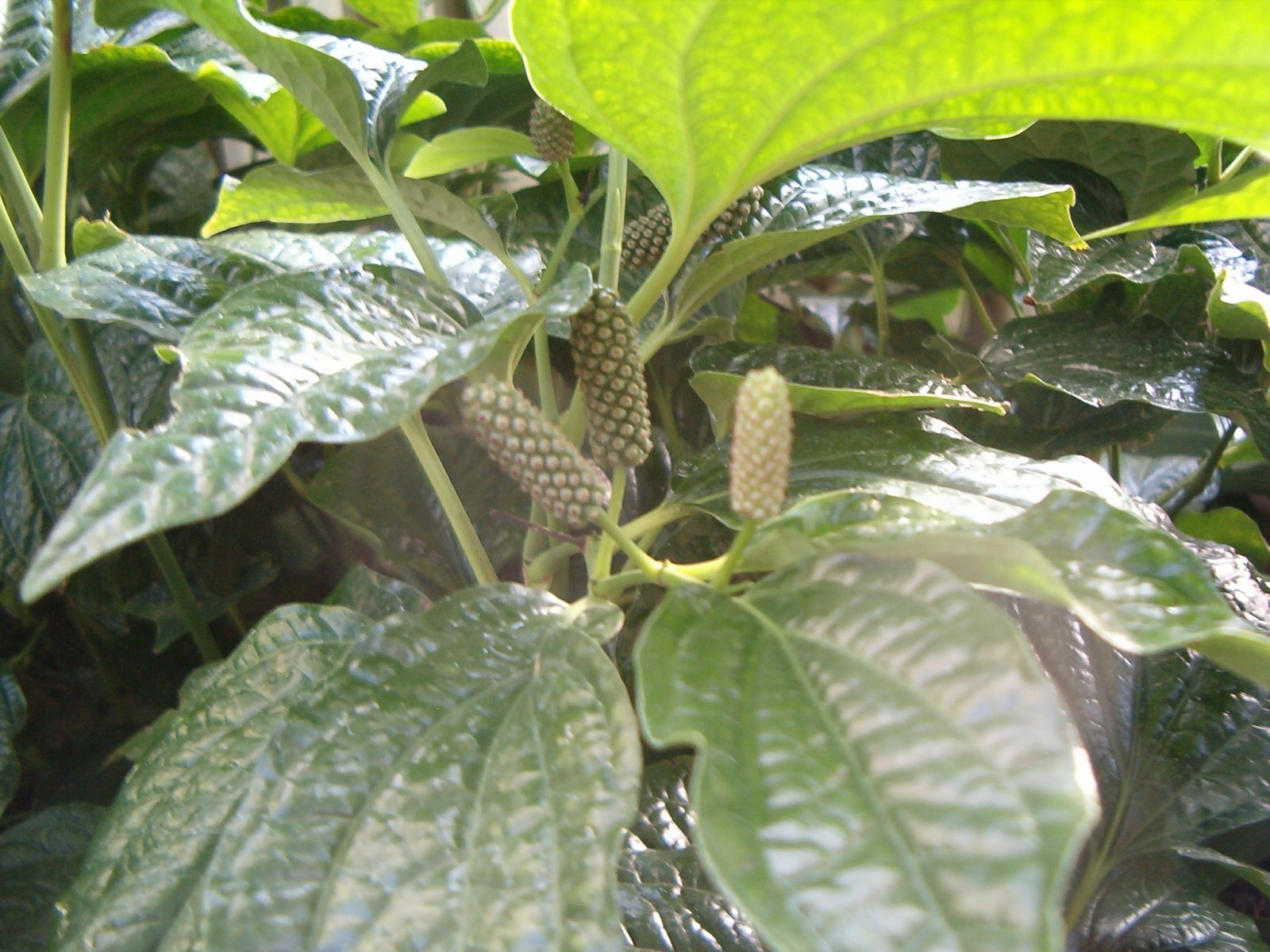

Chavya is the stem of a climbing pepper vine, a warm and pungent member of the pepper family. It is one of the Panchakola group of digestives that Ayurveda reaches for to kindle the digestive fire and to ease a heavy, sluggish belly.
- Botanical name
- Piper chaba
- Family
- Piperaceae
- Sanskrit
- चव्य
- Part used
- Stem (and root)
- Taste (rasa)
- Pungent (katu)
- Quality (guna)
- Light, dry and penetrating (laghu, ruksha, tikshna)
- Energy (virya)
- Warming (ushna)
- After digestion (vipaka)
- Pungent after digestion (katu)
- Action (karma)
- Kindles and digests, clears worms (deepana, pachana, krimighna)
- Effect on dosha
- Settles Kapha and Vata; may raise Pitta in excess
- Best known for
- A warming stem that kindles the digestive fire
What is Chavya?
Chavya is the stem of a climbing pepper, Piper chaba, a woody vine of the pepper family that scrambles over other plants in the warm country of India and further east. It is a close cousin of the more familiar peppers, and like them it carries a sharp, warming pungency. What the texts chiefly use, and what the trade knows it by, is the dried stem, cut into short pieces, though the root is described alongside it.
The plant is sometimes catalogued under the older botanical name Piper retrofractum, and in English it is often called Java long pepper. The Sanskrit Chavya, with its variant Chavika, has followed the plant for a very long time and sits beside its everyday names of Chai and Chab. It is easy to confuse in the market with its relatives, and the classical writers were careful to name it in its own right, for it holds a fixed place among the warming digestives.
What Ayurveda uses it for
In classical terms Chavya is a warming digestive substance, a deepana and pachana herb: deepana meaning it kindles agni, the digestive fire, and pachana meaning it helps that fire do its work so food is digested comfortably rather than sitting heavy. Its standing in the tradition is fixed by the company it keeps. Chavya is one of the Panchakola, the five pungent digestives, which it forms together with Pippali, Pippalimula, Chitraka and Shunthi, and it belongs as well to the Shadushana group of warming digestives. To be named in these groupings is to be counted among the herbs Ayurveda turns to first for a weak or sluggish digestion.
Within that role the dravyaguna texts describe the stem as traditionally indicated in a familiar set of conditions, each named here in its classical Sanskrit term with a plain gloss:
- Agnimandya: a weak digestive fire, the stem’s classical home among the deepana herbs.
- Adhmana and Anaha: bloating and distension of the belly, eased by its warm, downward-settling action.
- Udara: the classical group of belly and abdominal disorders described under this term.
- Aruchi: loss of appetite, for which the pungent stem is said to lend relish to food.
- Gulma: the abdominal masses and firm swellings the texts group under this name.
- Shula: the colic and griping pain of the belly.
- Pliha: the classical category of spleen complaints and enlargement.
- Arsha: the group of conditions described under haemorrhoids.
- Krimi: the classical category of intestinal worms, against which its krimighna action is named.
- Kasa and Shwasa: the cough and breathlessness of a Kapha character, where its warm, drying nature is called upon.
These are the traditional textual indications recorded in the classical literature. They set out how Ayurveda has long understood the herb and are given for reference and study, not as statements of medical effect or as advice to treat any condition.
Its qualities, in plain words
Ayurveda describes every herb by a short list of qualities, and for Chavya they line up neatly behind its reputation as a kindler of the digestion.
Its taste is pungent, and pungent flavours are the ones the tradition ties to warming and stirring rather than to cooling. It is light, dry and penetrating, so it does not weigh the body down and is understood to reach and open the channels that a heavy, sluggish state has blocked. It is warming, which is why it settles the cold, heavy quality the texts call Kapha and the cold, mobile quality called Vata. And it finishes pungent even after digestion, keeping its warming, stirring character all the way through. Put together, that is a warm, light, penetrating stem that wakes a slow digestion up. The same warmth means the texts count it as one that can raise Pitta, the hot, sharp quality, if it is used to excess.
How it is taken
The usual form is the dried stem cut into pieces and reduced to a powder, or churna, for the pungency of Chavya is drawn out most readily when it is ground fine and combined with other warming herbs. It is rarely used alone. Its natural home is the compound preparation, where it works alongside its fellow digestives.
Chief among these is Panchakola Churna, the powder of the five pungent digestives, in which Chavya stands with Pippali, Pippalimula, Chitraka and Shunthi. It is named as well in a range of other digestive formulations, in fermented preparations known as arishta and asava, and in medicated ghee and warming powders where a kindling, channel-opening action is wanted. As a warm and pungent substance it is characteristically taken with honey or with warm water, the vehicles the tradition favours for carrying a warming, digestive action into the body.
Good to know
Chavya sits on the warming, digestive side of the Ayurvedic pharmacy rather than the cooling or nourishing side, and it is most at home in a compound preparation taken around the time of a meal. Because it is ushna, warming, and tikshna, penetrating, the classical writers treat it as a heating substance best used in moderation, and one better suited to a cold, heavy, sluggish state than to a heated constitution in which it may aggravate Pitta.
This entry describes the classical Ayurvedic understanding of the herb. It is not medical advice, and anyone with a health condition should speak to a qualified practitioner.
Frequently asked
Which part of the plant is used? Chiefly the stem, cut into short pieces and dried. The root is described alongside it in the classical literature, but it is the stem that is named for nearly all of the digestive preparations and that the trade knows as Chavya.
What is the Panchakola? It is the classical group of five pungent digestives: Chavya, Pippali, Pippalimula, Chitraka and Shunthi. Ayurveda counts these together as warming substances that kindle the digestive fire, and Chavya is one of the five.
Is Chavya the same as ordinary pepper? It is a close relative rather than the same plant. Chavya is Piper chaba, sometimes catalogued as Piper retrofractum and called Java long pepper, and the tradition treats it as its own herb with its own fixed place among the warming digestives.
Chavya is pungent and warming; it kindles the digestive fire, helps food be digested and eases the swollen, heavy belly.
After the Bhavaprakasha Nighantu, on the warming digestive substances
Counted among the Panchakola, the five pungent digestives, and among the Shadushana warming group.
After the classical Nighantu tradition, on the digestive groupings
Frequently asked questions
What is Chavya used for in Ayurveda?
Chavya (Piper chaba) is the warming, pungent stem of a climbing pepper and one of Ayurveda's Panchakola digestives. The old texts name it for kindling the digestive fire and easing the belly. Its action is classed as deepana, pachana and krimighna, meaning it kindles, digests and helps clear worms.
What is Panchakola and where does Chavya fit?
Panchakola is a classical group of five pungent digestive dravyas: Pippali, Pippalimula, Chavya, Chitraka and Shunthi. Chavya is one of these five. Together they form a warming digestive combination Ayurveda uses to kindle a weak Agni, and Chavya contributes its own pungent, fire-lighting stem to that group.
Which dosha does Chavya balance?
Chavya settles Kapha and Vata, the doshas Ayurveda links with a cold, slow or heavy digestion, thanks to its pungent taste (katu) and warming nature. Because it is heating, in excess it may raise Pitta, so it is used more carefully where there is already a burning or acidic tendency.
How do you take Chavya?
Chavya is used chiefly as the stem powder in small measures and, more often, within classical compound formulas such as the Panchakola group rather than alone. Because it is pungent and heating, it is taken in modest amounts to kindle a weak Agni. A qualified practitioner can set the right dose and combination.
Is Chavya the same as long pepper?
No, though they are related. Chavya (Piper chaba) is a distinct climbing pepper, valued for its pungent stem, while long pepper is Pippali (Piper longum), valued for its fruit. Both belong to the Panchakola group of pungent digestives and share a warming, Agni-kindling nature, but they are different plants and parts.
References
- Charaka Samhita, Sutrasthana, among the Deepaniya (digestion-kindling) substances and the group that eases abdominal disorders.
- Sushruta Samhita, on the Pippalyadi gana of warming, pungent substances.
- Bhavaprakasha Nighantu, Haritakyadi Varga, entry on Chavya.
- Ashtanga Hridayam, on the Panchakola and the warming digestive preparations.
- Raja Nighantu, listing the Sanskrit synonyms of Chavya and its place among the pungent stems.