Materia Medica · Dravyaguna
Chitrak
Plumbago zeylanica · Plumbaginaceae
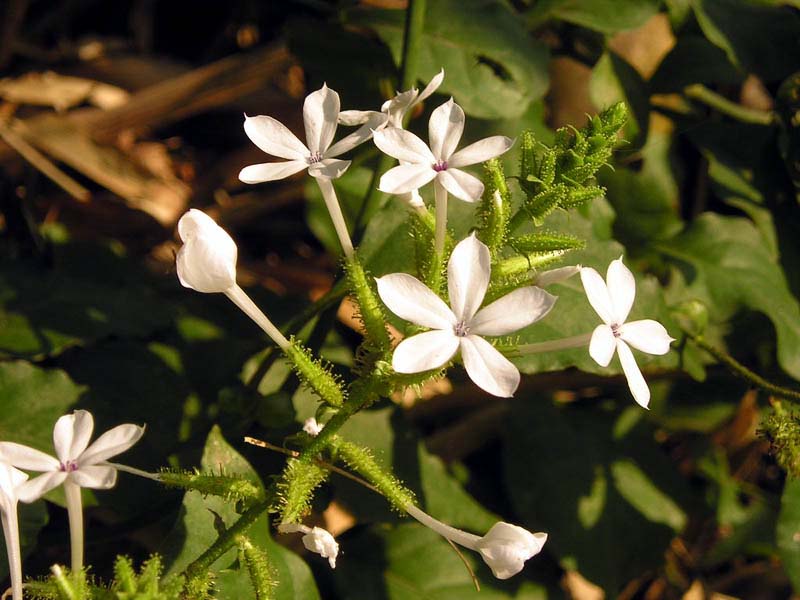

Chitrak is a root that Ayurveda uses to kindle the digestive fire. It is the herb the classical texts name first when the fire of digestion has burned low.
- Botanical name
- Plumbago zeylanica
- Family
- Plumbaginaceae
- Sanskrit
- चित्रक
- Part used
- Root
- Taste (rasa)
- Pungent (katu)
- Quality (guna)
- Light, dry and sharp (laghu, ruksha, tikshna)
- Energy (virya)
- Warming (ushna)
- After digestion (vipaka)
- Pungent after digestion (katu)
- Action (karma)
- Kindles the digestive fire, clears heaviness (deepana, pachana)
- Best known for
- Kindling a weak digestive fire
What is Chitrak?
Chitrak is the root of a small shrub, Plumbago zeylanica, that grows wild across the warmer parts of India and Sri Lanka. The plant is modest to look at, with slender stems and small white flowers, but it is the root, dried and used in careful measure, that Ayurveda values.
The Sanskrit name is Chitraka, which means “the bright one” or “the spotted one.” The name is fitting twice over. It points to the markings on the root, and it points to what the herb is said to do: to make the digestive fire shine brightly again.
What Ayurveda uses it for
Chitrak is, above all, a deepana herb, a kindler of agni, the digestive fire. Ayurveda treats the strength of digestion as the centre of health. When that fire burns low, the texts say, food is left half-cooked and a sticky residue called ama builds up, bringing heaviness, dullness and a loss of appetite. The remedy is to rekindle the fire.
For this work the classical authors give Chitrak the highest place. Charaka lists it among the ten foremost fire-kindling herbs, and the later writers go further still, calling it the supreme kindler of agni. So the tradition reaches for it in the same situation again and again: a weak, slow digestion, a poor appetite, and the heaviness that comes when the fire is low.
It is also a pachana herb, which means it helps to digest and clear that accumulated residue once the fire is lit.
Its qualities in plain words
Ayurveda describes every herb by a short list of qualities, and for Chitrak they are all of one mind. It is pungent, the hot, sharp taste of pepper and ginger, which the tradition links most strongly to kindling the fire. It is warming and sharp and penetrating, so it does not act gently but cuts through cold and stagnation. And it is light and dry, so it lifts heaviness rather than adding to it.
Put together, this is a hot, sharp, drying herb, and that is exactly why it is reserved for cold, slow, heavy states. The same heat that makes it so useful against a weak fire is the reason the tradition is firm that it must be used in small amounts, and used carefully in anyone who already runs hot, since it can stir up Pitta.
How it is taken
Chitrak is rarely taken alone in any quantity. Because the root is so sharp and heating, the classical texts use it in small, measured doses, and far more often as one ingredient inside a balanced compound than on its own.
It is a central herb in several named preparations. It gives its name to Chitrakadi Vati, a much-used digestive tablet, and to Chitraka Haritaki, a confection in which it is paired with the milder fruit Haritaki. In all of these, the herb’s intensity is tempered by the other ingredients around it.
When the powdered root is used, it is taken in a small measure with a suitable carrier such as warm water or honey, which the tradition uses to soften and direct its action.
Good to know
Chitrak is a strong herb, and Ayurveda treats it as one. The texts are unusually clear that it should be kept to small doses and used with caution, and they set it aside for cold, sluggish states rather than for anyone with heat, acidity or sensitivity, or during pregnancy. It belongs to the careful, measured side of the pharmacy.
This entry describes the classical Ayurvedic understanding of the herb. It is not medical advice, and anyone with a health condition should speak to a qualified practitioner.
Frequently asked
What is Chitrak best known for? For kindling the digestive fire. Ayurveda treats it as its foremost deepana herb, the one reached for when digestion has grown weak, slow and heavy.
Why is it used in such small amounts? Because the root is intensely hot, sharp and penetrating. A little is held to do the work, and too much is held to disturb the body, particularly in anyone who already runs hot.
Which part of the plant is used? The root, dried and used in careful measure, usually inside a balanced compound rather than alone.
Chitraka is the foremost kindler of the digestive fire.
After the Ashtanga Hridayam, on digestive substances
Frequently asked questions
What is Chitrak used for in Ayurveda?
Chitrak is a pungent, heating root that Ayurveda treats as its supreme kindler of the digestive fire. Botanically Plumbago zeylanica, its karma is described as deepana and pachana, and the tradition turns to it above all for a weak Agni, heaviness and the sluggish, cold digestion linked to accumulated Ama and Kapha.
Is Chitrak the strongest digestive herb in Ayurveda?
Ayurveda holds Chitrak in especially high regard as a dipana, a kindler of Agni, and it is often described as chief among the fire-rousing herbs. Its intensely pungent, heating quality (katu, ushna) makes it a powerful choice for a cold, dull digestion, which is also why it must be used carefully and in small measure.
How do you take Chitrak?
Chitrak is used in small doses, often as the root powder or within classical formulations such as Panchakola and various Guggulu and Vati preparations, taken before or with meals to kindle Agni. Because it is potent and heating, the traditional dose is modest. Its dose and form should be guided by a qualified Ayurvedic practitioner.
Does Chitrak increase Pitta?
Yes, Chitrak is strongly heating and pungent, so it readily aggravates Pitta if overused and can cause burning, acidity or irritation. It best suits cold, Kapha-heavy, sluggish digestion with weak Agni. Those with high Pitta, hyperacidity or ulcers, and anyone pregnant, should avoid or use it only under a qualified Ayurvedic practitioner.
Which dosha does Chitrak balance?
Chitrak chiefly reduces Kapha and settles the cold heaviness behind a weak digestion, kindling Agni through its deepana and pachana action. Being hot and pungent it can increase Pitta, so the tradition reserves it for Kapha and Ama conditions with a dull fire rather than for heat-led states.
References
- Charaka Samhita, Sutrasthana, among the ten foremost fire-kindling herbs (Deepaniya).
- Sushruta Samhita, on Chitraka in the Pippalyadi group of herbs.
- Bhavaprakasha Nighantu, Haritakyadi Varga, entry on Chitraka.