Materia Medica · Dravyaguna
Haritaki
Terminalia chebula · Combretaceae
_leafless_tree_at_23_Mile%2C_Duars%2C_WB_W_IMG_5905.jpg)
Haritaki is a dried fruit that Ayurveda treats with great respect. It is the herb the texts reach for to keep digestion in order and the bowels moving gently, and it is the first of the three fruits in the famous combination Triphala.
- Botanical name
- Terminalia chebula
- Family
- Combretaceae
- Sanskrit
- हरीतकी
- Part used
- Dried fruit
- Taste (rasa)
- Five of the six tastes, led by astringent, with bitter, pungent, sour and sweet (kashaya pradhana)
- Quality (guna)
- Light and dry (laghu, ruksha)
- Energy (virya)
- Warming (ushna)
- After digestion (vipaka)
- Sweet after digestion (madhura)
- Action (karma)
- Settles all three doshas, keeps things moving downward (tridoshahara, anulomana)
- Best known for
- Gently keeping the digestion and the bowels in order
What is Haritaki?
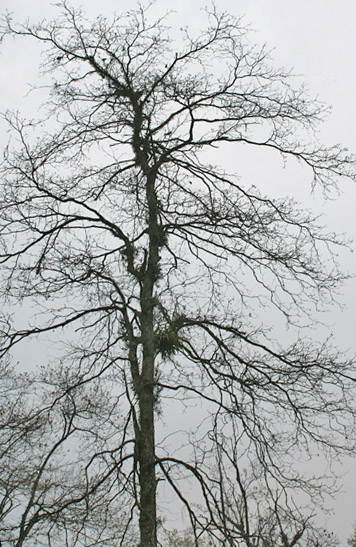
Haritaki is the dried fruit of a tall tree, Terminalia chebula, that grows across the forests of India. The fruit is small and ovoid, about the size of a date, with faint ridges running down its length. Picked green or left to ripen brown, then dried, it becomes one of the most used remedies in the whole of Ayurveda.
The tradition holds it in unusual regard. One classical writer calls it “the mother”, in the sense that a mother looks after the body the way she looks after a child. Another of its names is Abhaya, which means “free from fear”, a hint at how dependable the old texts found it to be.
What Ayurveda uses it for
Haritaki is best known for keeping the digestion in order. The texts describe it as anulomana, a word that means “moving things in their proper downward direction”. This is the gentle side of the herb: rather than forcing the bowels, it coaxes the natural downward movement that Ayurveda calls Apana Vata back into rhythm. Used this way it is mild, not harsh.
It also kindles the digestive fire, the agni, and helps the body deal with what Ayurveda calls ama, the residue left when food is not fully digested. And like Amalaki, it is counted among the rasayana herbs, the rebuilding group taken over time to restore the body.
A charming classical instruction pairs Haritaki with a different companion in each season: with rock salt in the rains, with sugar in autumn, with ginger in early winter, with Pippali in late winter, with honey in spring, and with jaggery in summer. The point is that the same fruit is adjusted to the time of year.
Its qualities, in plain words
Haritaki is remarkable for carrying five of the six tastes. Only the salty taste is missing. The astringent taste leads, which is the drawing, tightening quality you feel from strong tea, and behind it sit bitter, pungent, sour and sweet. Few herbs hold so many tastes at once, and Ayurveda reads this as a sign of how broadly the fruit acts.
It is light and dry, so it clears rather than weighs down. It is warming, which is why it suits the cold, dry quality the texts call Vata. And although it begins astringent and sharp, it finishes sweet after digestion, and a sweet finish in Ayurveda means a herb that nourishes rather than depletes. Warming and clearing, yet sweet at the end: that balance is why the fruit settles all three doshas instead of only one.
How it is taken
The simplest way is as a powder of the dried fruit, a few grams stirred into warm water, or taken with one of the seasonal companions above. It is also the leading fruit in Triphala, the three-fruit powder where Haritaki is joined by Bibhitaki and Amalaki. Within Triphala, the tradition gives each fruit a leaning: Haritaki towards Vata, Bibhitaki towards Kapha, Amalaki towards Pitta.
Haritaki appears in many named preparations too, among them a self-fermenting tonic built around the fruit and several of the rebuilding lehyam pastes.
Good to know
Haritaki belongs to the steady, everyday side of Ayurveda, taken in small amounts over time rather than in a single large dose. The tradition adjusts both the companion it is taken with and the season it is taken in, which is part of why it has stayed in such constant use.
This entry describes the classical Ayurvedic understanding of the herb. It is not medical advice, and anyone with a health condition should speak to a qualified practitioner.
Frequently asked
Which part of the plant is used? The dried fruit. Picked and dried, it is the only part used in the classical preparations.
Is Haritaki the same as Triphala? No. Triphala is a combination of three fruits, and Haritaki is the first of them. The other two are Bibhitaki and Amalaki. On its own, Haritaki is a single herb.
Why is it taken with a different companion each season? Because the tradition adjusts the herb to the time of year, pairing it with rock salt, sugar, ginger, Pippali, honey or jaggery as the seasons turn. The fruit stays the same; the companion changes with the conditions.
Haritaki is wholesome in every season and is foremost among the herbs that rebuild the body.
After the Bhavaprakasha Nighantu, on Haritaki
Frequently asked questions
What is Haritaki good for?
Haritaki is a small dried fruit that Ayurveda uses to keep the digestion moving and the body clear, and it is the first of the three fruits in Triphala. Its karma is described as tridoshahara and anulomana, settling all three doshas and keeping things moving gently downward, which is why the tradition prizes it for regular, comfortable elimination.
Can I take Haritaki every day?
Haritaki is traditionally suited to regular use as a gentle Rasayana that keeps the bowels and digestion in order, and it settles all three doshas. The classics vary the anupana by season and aim. Even so, dose matters and it is not for everyone, so if using it daily, do so under a qualified Ayurvedic practitioner.
What is the difference between Haritaki and Triphala?
Haritaki is a single fruit, Terminalia chebula, while Triphala is the classic blend of three: Haritaki, Bibhitaki and Amalaki. Haritaki leads with its downward-moving, tridoshic action, whereas Triphala balances the three fruits together for a gentler, broadly toning effect on digestion and elimination. Haritaki alone is the more actively moving of the two.
How do you take Haritaki for digestion?
Haritaki is usually taken as the fruit powder, roughly 3 to 6 grams, often at night with warm water to support easy morning elimination; the classics also pair it with honey, ghee or rock salt for different aims. As its taste and anupana are chosen to the season and person, a practitioner's guidance is helpful.
Who should not take Haritaki?
Haritaki is best avoided in pregnancy and used with care during heavy Pitta states, dehydration, extreme weakness, or diarrhoea, since it moves things downward. It is a gentle but active preparation, not a casual laxative. If you are pregnant, unwell or on medication, speak with a qualified Ayurvedic practitioner and your doctor before taking it.
References
- Charaka Samhita, Chikitsasthana, on Haritaki among the rasayana herbs.
- Bhavaprakasha Nighantu, Haritakyadi Varga, entry on Haritaki.
- Sushruta Samhita, on Haritaki within the Triphala group.