Materia Medica · Dravyaguna
Ingudi
Balanites aegyptiaca · Zygophyllaceae
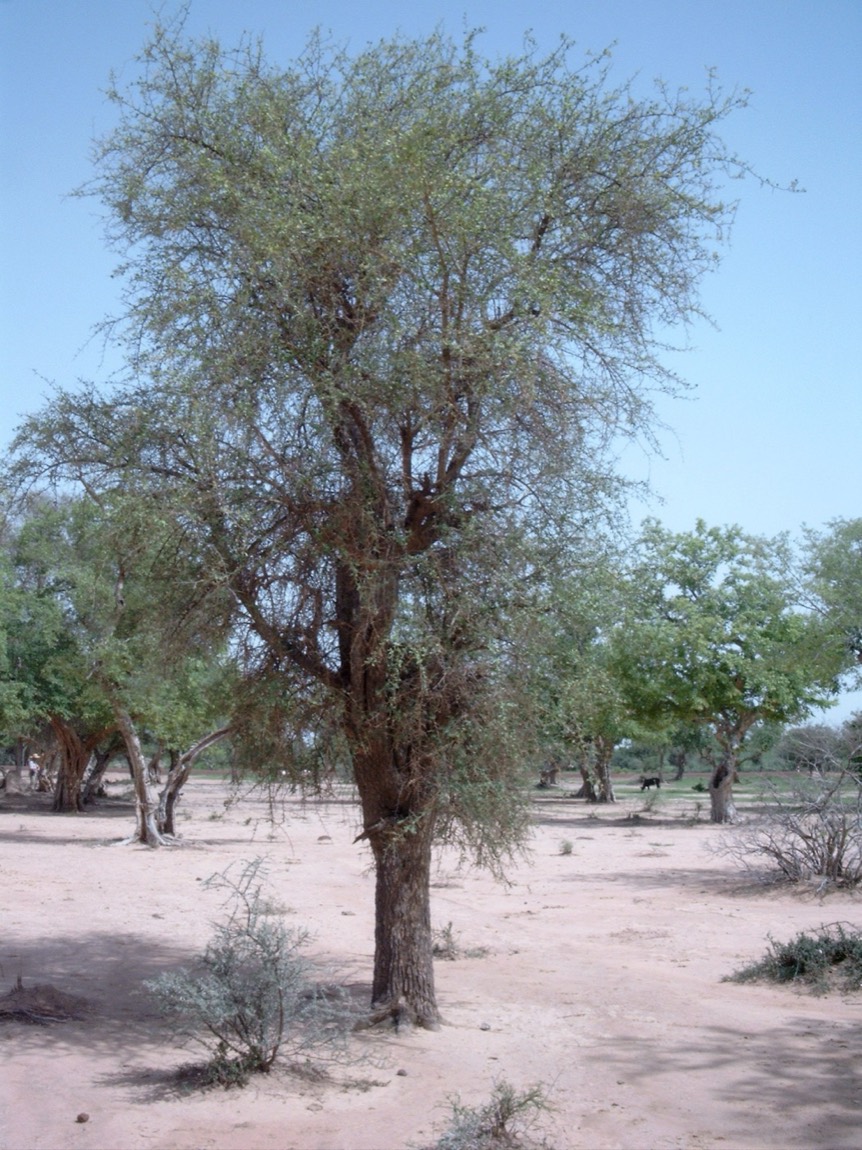

Ingudi is a thorny tree of the desert whose seed yields a warming oil. Ayurveda values that oil for the skin and for wounds, where its bitter, cleansing qualities are traditionally used to keep the surface clean and clear.
- Botanical name
- Balanites aegyptiaca
- Family
- Zygophyllaceae
- Sanskrit
- इङ्गुदी
- Part used
- Fruit, seed and its oil, bark
- Taste (rasa)
- Bitter and pungent (tikta, katu)
- Quality (guna)
- Light, unctuous and penetrating (laghu, snigdha, tikshna)
- Energy (virya)
- Warming (ushna)
- After digestion (vipaka)
- Pungent after digestion (katu)
- Action (karma)
- Clears worms, purifies the skin, cleanses wounds (krimighna, kushthaghna, vrana-shodhana)
- Best known for
- A warming seed oil, used on the skin and wounds
What is Ingudi?
Ingudi is a hardy, thorny tree, Balanites aegyptiaca, that grows in the dry, open country of India and across the warm belt beyond it. It is a plant built for hard ground, armed with long, straight thorns and able to hold its own where little else will grow. It carries small greenish flowers and a fruit that ripens to a date-like shape, which is why English speakers know it as the desert date.
The names the tradition gives it tell their own story. Angarapushpa speaks of its flower, while Taapasa-taru, “the ascetic’s tree,” records its old association with the forest hermits, who knew the tree and its uses well. What Ayurveda reaches for, above all, is what the fruit holds: inside sits a hard seed, and that seed is pressed to yield Ingudi taila, a warming oil. The fruit and the bark have their own place in the texts, but Ingudi is, first and foremost, a tree of the seed and its oil.
What Ayurveda uses it for
In the classical texts Ingudi is counted among the cleansing and clearing herbs. It belongs to the group named for worms, the Krimighna herbs, and it is valued for its work on the skin and on wounds. Its bitter, pungent, warming nature was understood to cut through impurity and stagnation, and its oil in particular is the part the tradition applies to the surface of the body.
Within that role the dravyaguna texts describe the seed, its oil and the bark as traditionally indicated in a familiar set of conditions, each named here in its classical Sanskrit term with a plain gloss:
- Krimi: the classical category of intestinal worms, a foremost use of the seed and its oil.
- Kushtha: the broad class of skin disorders, where its purifying quality is called upon.
- Vrana and Dushta-vrana: wounds and non-healing wounds, chiefly the oil applied to the surface.
- Shotha: swelling, for which its penetrating, clearing nature is described.
- Arsha: the classical category of haemorrhoids, named among its traditional uses.
- Kaphaja disorders: conditions of aggravated Kapha, given its warming, drying action.
These are the traditional textual indications recorded in the classical literature. They set out how Ayurveda has long understood the herb and are given for reference and study, not as statements of medical effect or as advice to treat any condition.
Its qualities, in plain words
Ayurveda describes every herb by a short list of qualities, and Ingudi’s explain its character cleanly.
Its taste is bitter, with a pungent edge, and these are the two tastes the tradition trusts to cleanse and clear. It is light, unctuous and penetrating, an unusual pairing: light and sharp enough to cut through stagnation, yet oily enough to spread and to soften the surface it is laid on. It is warming, which is why it suits cold, damp, sluggish conditions and settles the heavy quality of Kapha. And it finishes pungent after digestion, in keeping with its clearing, drying character. Put together, these qualities describe a bitter, warm, penetrating seed and oil, which is why the tradition settles most firmly on its worm-settling and wound-cleansing work, and why it is said to pacify both Kapha and Vata.
How it is taken
The classic form is the seed oil, Ingudi taila, which is the part the older texts reach for most. The oil is applied to the skin and to wounds, worked gently into the surface, where its bitter, warming nature lends its cleansing character to the work. The texts pair it often with other clearing herbs in medicated oils, where Ingudi adds its sharp, penetrating quality to the blend.
The fruit and the bark have their own uses. The fruit is described among the seed’s companions, and the bark appears in decoctions and pastes in the classical literature. But the seed oil, applied externally, is the heart of how Ingudi is used.
Good to know
Ingudi oil is a bitter, warming, penetrating preparation meant above all for the surface of the body, the skin and the wound, rather than as a gentle everyday massage oil. The tradition uses it where the picture is cold, damp and in need of clearing, and it counts the tree among the cleansing rather than the nourishing herbs. It is used as a measured course rather than indefinitely, and the classical texts set its companions and its strength to the person.
This entry describes the classical Ayurvedic understanding of the herb. It is not medical advice, and anyone with a health condition should speak to a qualified practitioner.
Frequently asked
Which part of the tree is used? Chiefly the seed, which is pressed for its warming oil, Ingudi taila. The fruit and the bark have their own smaller uses in the classical texts, but the seed oil is the main one.
Is Ingudi oil for the skin or for taking by mouth? In the classical texts it is above all an external oil, applied to the skin and to wounds. Its cleansing, wound-settling work is described chiefly as a use of the surface rather than a tonic taken by the spoonful.
Why is it called the ascetic’s tree? Because of its old name Taapasa-taru, which records the tree’s association with the forest hermits, the taapasa, who knew it and its uses. The tree grows in the dry, open country where such ascetics lived, and the name has stayed with it in the classical literature.
The seed of Ingudi is bitter and warming; its oil cleanses the wound and settles the worms that trouble the body.
After the Bhavaprakasha Nighantu, on the cleansing herbs
Ingudi grows in the dry country, and the ascetics of the forest know its tree well.
Classical tradition, on the many synonyms of the plant
Frequently asked questions
What is Ingudi used for in Ayurveda?
Ingudi, from Balanites aegyptiaca, is a hardy thorny tree of dry country whose bitter, warming seed oil Ayurveda uses on the skin and wounds. The texts class it as krimighna, kushthaghna and vrana-shodhana, so it is valued for clearing worms, purifying the skin and cleansing wounds. Its use is mostly external, drawing on that cleansing nature.
What is Ingudi oil good for?
Ingudi seed oil is traditionally applied to the skin and to wounds for its cleansing, purifying action, in keeping with the herb's kushthaghna and vrana-shodhana classing. Being bitter and warming, it is used where the texts read impure or unclean skin. It is an external preparation used as support, best guided by a practitioner for any real skin or wound problem.
What is another name for Ingudi?
Ingudi is also called Angarapushpa in the classical tradition, and the tree, Balanites aegyptiaca, is known in English as the desert date. All three names point to the same hardy, thorny desert tree whose bitter, warming seed oil Ayurveda uses on the skin and wounds and to clear worms.
Which dosha does Ingudi balance?
Ingudi is warming and bitter with a pungent edge, qualities that settle Kapha and Vata and make it well suited to the cold, damp, sluggish states the tradition links with impure skin and worms. Its warming, penetrating, cleansing nature is what underlies its krimighna and kushthaghna uses. Being heating, it is used with care where Pitta is high.
Is Ingudi used for worms?
Yes, the texts class Ingudi as krimighna, a herb that clears worms or Krimi, drawing on its bitter, warming, cleansing nature. This sits alongside its use on the skin and wounds. Any such use, especially internally, should follow the guidance of a qualified Ayurvedic practitioner, and a persistent problem deserves proper diagnosis from your doctor.
References
- Charaka Samhita, Sutrasthana, among the herbs named for worms (Krimighna) and in the care of the skin.
- Sushruta Samhita, on oils and herbs used in the cleansing of wounds (Vrana-shodhana).
- Bhavaprakasha Nighantu, entry on Ingudi with its synonyms and properties.
- Raja Nighantu, listing the many Sanskrit synonyms of the plant, including Taapasa-taru.