Materia Medica · Dravyaguna
Jatiphala
Myristica fragrans · Myristicaceae
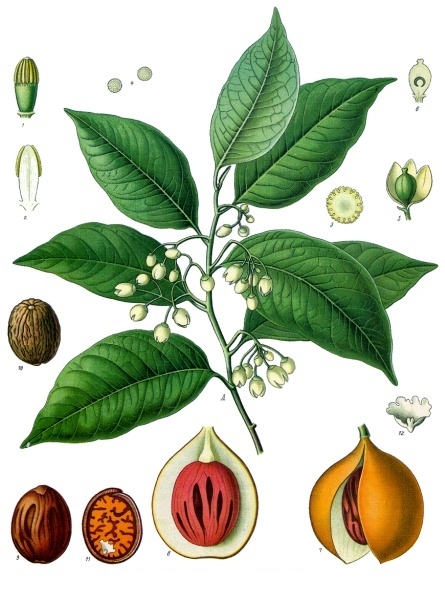

Jatiphala is the nutmeg, the hard, fragrant seed kernel of a tropical evergreen tree. In classical Ayurveda it is grouped among the pungent, aromatic dravyas and is used sparingly because it is considered strong and heating.
- Botanical name
- Myristica fragrans
- Family
- Myristicaceae
- Sanskrit
- जातीफल
- Part used
- Seed kernel (the nutmeg)
- Taste (rasa)
- Pungent and bitter (katu, tikta)
- Quality (guna)
- Light and penetrating (laghu, tikshna)
- Energy (virya)
- Warming (ushna)
- After digestion (vipaka)
- Pungent (katu)
- Action (karma)
- Kindles and supports the digestive fire, absorbent and binding, freshens the mouth (dipana, pachana, grahi, mukhavaishadyakara)
- Best known for
- A warming, grounding aromatic seed used in very small amounts
What is Jatiphala?
Jatiphala is the Sanskrit name for nutmeg, the seed kernel of Myristica fragrans, a tropical evergreen tree of the Myristicaceae family. The fruit of this tree splits open to reveal a hard, brown, oval seed wrapped in a lacy scarlet coat. That inner seed kernel is the nutmeg, and it is what Ayurveda calls Jatiphala. The bright red aril around it is a separate spice in its own right, known in Sanskrit as Jatipatri or Javitri and in English as mace. In Ayurveda the two are treated as related but distinct drugs.
The name itself is telling. In Sanskrit, jati points to something noble or of fine class, and phala means fruit, so Jatiphala can be read as the noble fruit. The herb also travels under many other names, including Jatiphalam, Jatikosha and Malatiphala, which reflects how widely it has been known across the classical texts.
Alongside the whole seed, Ayurveda also makes use of a fixed and volatile oil pressed from the kernel, which finds a place in oil-based preparations.
What Ayurveda uses it for
In the classical Ayurvedic texts, Jatiphala sits firmly among the pungent, aromatic dravyas, the warming, fragrant substances that are prized for their liveliness on the tongue and their heating character. The nighantus, the traditional lexicons of medicinal substances, place it in the aromatic company of camphor and sandalwood.
Its traditional role, as the dravyaguna sources describe it, is that of a warming and grounding seed. It is spoken of as supporting the digestive fire, described in the texts by the paired terms Dipana and Pachana, meaning that it kindles the fire and helps the process of digestion along. It is also called Grahi, an absorbent, binding quality, and Vatanulomana, which refers to encouraging the settled, downward movement of Vata. These are the classical descriptive categories the texts use, rather than statements of clinical effect.
Beyond digestion, Jatiphala is traditionally described as Hridya, agreeable to the heart, and as Mukhavaishadyakara, freshening to the mouth and improving the palatability of food, which is one reason it has long been valued as much in the kitchen as in the medicine chest. The texts also speak of it as a grounding, calming, sleep-favouring dravya, described by the term Nidrajanana, and as Vrishya, a reproductive tonic. In every case it is used in very small quantities, because the tradition regards it as strong and decidedly heating.
Its qualities, in plain words
Ayurveda reads every substance through a small set of qualities, and Jatiphala’s profile is a warming, drying one softened a little by its oil content.
Its rasa, or taste, is pungent and bitter (katu and tikta). Think of the sharp, peppery bite of freshly grated nutmeg, followed by a faint bitterness. Some nighantu-based sources add astringent (kashaya) to this list.
Its guna, or quality, is light and penetrating (laghu and tikshna). Penetrating here means it does not sit heavily but works its way in, rather like a warm spice that spreads quickly through a dish. Because the seed is rich in oil, some sources also note an unctuous (snigdha) quality for it.
Its virya, the energy it carries, is warming (ushna). This is the heat you feel from the spice, and it is the main reason the tradition insists on using it in tiny amounts.
Its vipaka, the taste that remains after digestion, is pungent (katu), which keeps the warming, mobilising character going through the later stages of digestion.
Taken together, this warming and penetrating nature is why Jatiphala is traditionally classed as Kapha-Vata shamaka, understood in the texts to settle both Vata and Kapha. The same heat, however, means it is regarded as capable of increasing Pitta if used in excess.
How it is taken
Jatiphala is most often used as a finely powdered seed, a churna, in very small amounts, and it is frequently combined with other aromatic spices rather than used alone. Because a little goes a long way, only the smallest quantity is called for.
Beyond the plain powder, it appears in a range of classical preparations. It is folded into medicated ghees and oils, worked into lehyas, the semisolid herbal confections, and applied externally in pastes, known as lepa. The oil pressed from the seed carries it into oil-based preparations.
Jatiphala also lends its name to, or takes its place within, several named formulations of the classical tradition. Among these are Jatiphaladi Churna, Jatiphaladi Vati and Jatiphaladi Taila, all built around the seed, as well as Jati Lavangadi Churna. It also features as one ingredient among many in compound preparations such as Mrita Sanjivani Gulika and Dadimavaleha.
Good to know
Jatiphala is one of those substances the classical tradition treats with genuine respect for its strength. It is regarded as strong and heating, which is exactly why it is used only in very small quantities and usually in the company of other herbs that round off its character. More is emphatically not better here.
Both the traditional texts and modern sources caution against its use during pregnancy and lactation, and note that taking it in excess can cause serious adverse effects. Where a warming, aromatic seed like this is concerned, the guiding principle across the tradition is restraint.
This entry describes the classical Ayurvedic understanding of the herb. It is not medical advice, and anyone with a health condition should speak to a qualified practitioner.
Frequently asked
Is Jatiphala the same as the nutmeg in my spice rack? Yes. Jatiphala is simply the Sanskrit and Ayurvedic name for the seed kernel of Myristica fragrans, the very same nutmeg used as a culinary spice. Ayurveda values it as a warming, aromatic dravya, but botanically it is the same seed.
What is the difference between Jatiphala and Javitri? They come from the same fruit but are different parts. Jatiphala is the inner seed kernel, the nutmeg. Javitri, also called Jatipatri, is the lacy red coat that wraps around that seed, known in English as mace. Ayurveda treats them as related but distinct drugs.
Why is it always used in such small amounts? Because the tradition regards Jatiphala as strong, penetrating and heating. Its warming energy (ushna virya) is powerful, so the classical texts call for it in very small quantities, and both traditional and modern sources caution that excess can cause serious adverse effects.
Jatiphala is placed among the camphor and aromatic group, described as fire-kindling and absorbent in nature.
After the Bhavaprakasha Nighantu, Karpuradi Varga
It is enumerated among the sandal and fragrant dravyas.
After the Dhanvantari Nighantu, Chandanadi Varga
Frequently asked questions
What is Jatiphala (nutmeg) used for in Ayurveda?
Jatiphala is the seed kernel of the nutmeg tree (Myristica fragrans), valued as a warming, aromatic dravya used in very small quantities. The texts class it as dipana and pachana, kindling and supporting the digestive fire, as grahi, absorbent and binding, and as mukhavaishadyakara, freshening the mouth. Its taste is pungent and bitter (katu, tikta).
How much nutmeg is safe to take?
Ayurveda uses Jatiphala only in very small amounts, a mere pinch, because nutmeg is potent and heating and can be overwhelming in excess. The tradition itself signals restraint by grouping it among substances used sparingly. Keep to culinary or a practitioner-set dose, and speak with your doctor before regular use, especially in pregnancy.
Is Jatiphala good for digestion and diarrhoea?
Yes, the tradition classes Jatiphala as dipana and pachana, kindling and aiding digestion, and importantly as grahi, absorbent and binding, which is why it is reached for in loose, unformed motions. It is warming and drying. This is traditional support in small amounts; persistent digestive trouble should also be checked with a doctor.
Does nutmeg help with sleep in Ayurveda?
Jatiphala's warming, grounding, aromatic nature has long given it a calming reputation, and a pinch in warm milk at night is a traditional way it is taken. Ayurveda values it as a grounding aromatic. Because it is potent, keep the amount tiny and take a practitioner's advice for regular use.
Which dosha does Jatiphala balance?
Jatiphala is warming and grounding and is generally directed at Kapha and Vata, settling the cold heaviness of Kapha and the mobile dryness of Vata in digestion. Being pungent and heating, it can aggravate Pitta if overused, so those with a hot constitution should keep to very small amounts.
References
- Bhavaprakasha Nighantu, Karpuradi Varga
- Dhanvantari Nighantu, Chandanadi Varga
- Raja Nighantu, Chandanadi Varga
- Kaiyadeva Nighantu, Aushadhi Varga
- Ashtanga Hridaya, Chikitsa and Uttara Sthana