Materia Medica · Dravyaguna
Chandana
Santalum album · Santalaceae
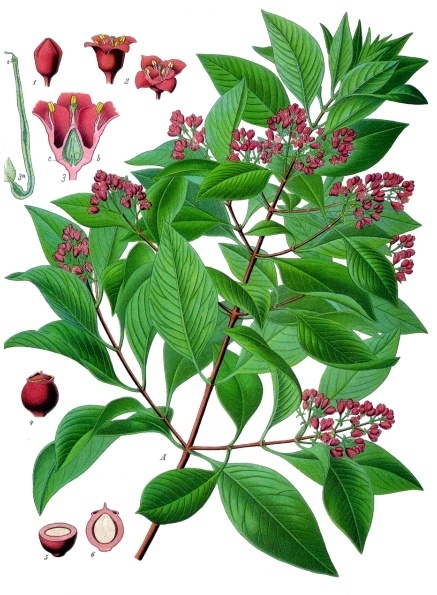

Chandana is sandalwood, the cool, sweet-smelling heartwood that Ayurveda turns to for heat. It is the wood the old texts reach for when the skin burns or the head will not settle.
- Botanical name
- Santalum album
- Family
- Santalaceae
- Sanskrit
- चन्दन
- Part used
- Heartwood
- Taste (rasa)
- Bitter and astringent (tikta, kashaya)
- Quality (guna)
- Light and slightly oily (laghu, snigdha)
- Energy (virya)
- Cooling (shita)
- After digestion (vipaka)
- Pungent after digestion (katu)
- Action (karma)
- Cools heat, soothes the skin (pittahara, dahaprashamana)
- Best known for
- Its cool, fragrant heartwood for hot skin and a restless head
What is Chandana?
Chandana is sandalwood, the heartwood of a small tree called Santalum album. The tree itself is easy to pass by. It is the pale, dense wood at its centre that Ayurveda values, ground to a smooth paste or a fine powder. You know good sandalwood by its smell. A true piece holds its sweet, cool scent for years.
The Sanskrit names carry the meaning. Chandana is read as “the cool one”, and Malayaja, another old name, means “born of the Malaya hills”, the southern ranges where the finest wood was once found. From the oldest texts onward, sandalwood is the herb against which every other cooling herb is measured.
One thing is worth keeping straight from the start. The Chandana of this entry is white sandalwood, Santalum album. A separate red wood, Pterocarpus santalinus, is called red sandalwood, and the texts treat it as a different herb with its own uses.
What Ayurveda uses it for
Chandana is the foremost cooling herb of the tradition, a pittahara substance, meaning it settles the hot, sharp quality the texts call Pitta. Charaka places it among the ten leading Pitta-pacifying herbs, and that single fact sits behind almost every use it has.
Two settings come up again and again. The first is the skin. A sandalwood paste is the classical answer to skin that feels hot, that burns, that is irritated or breaking out. It cools and it soothes, and it is light and a little oily, so it sinks in rather than sitting heavy. The second is the head. The same coolness is turned on a mind that runs hot, a person who is irritable, restless or quick to anger, and the texts hold that sandalwood quiets that heat.
It is also reached for wherever the body carries a sense of burning, and it is a herb of the hot season, worn and applied to keep the heat of summer at bay.
Its qualities, in plain words
A short list of qualities explains why sandalwood is used the way it is.
It is bitter and astringent in taste, the flavours Ayurveda ties to cooling and clearing rather than to heating. Above all it is cooling, the one quality the texts return to over and over, which is why it suits hot skin, a hot head and the fiery quality of Pitta. And it is light and slightly oily, so it penetrates and soothes without weighing the body down. A cool, soothing, fragrant herb with a real liking for the skin: that is the picture, and it stays remarkably steady across the old herbals.
How it is taken
Most often Chandana is used on the outside of the body. The wood is rubbed with a little water on a stone until it gives up a smooth, cool paste, the lepa, which is laid on hot or irritated skin and left to dry. This is the oldest and most direct use, part remedy and part cosmetic.
Taken inwardly, the fine powder is stirred into cool liquids such as rose water, or set into named preparations. It is the leading note in Chandanasavam, a gently fermented cooling tonic, and it gives its name to Chandanadi Thailam, a cooling medicated oil. It appears too in the cooling medicated ghees.
Good to know
Because sandalwood is so strongly cooling, the tradition favours it in the heat of summer and for warm constitutions, and is more careful with it in cold weather or for someone already chilled and dry. True sandalwood keeps its fragrance for a long time, and a fading scent is the old sign that the wood has lost its strength.
This entry sets out the classical Ayurvedic understanding of the herb. It is not medical advice, and anyone with a health condition should speak to a qualified practitioner.
Frequently asked
Is white sandalwood the same as red sandalwood? No. White sandalwood, Santalum album, is the Chandana of this entry. Red sandalwood is a different wood, Pterocarpus santalinus, with its own classical uses. The texts treat them as two separate herbs.
Why is sandalwood always called cooling? Because that is the quality the classical writers stress above every other. It is the standard cooling herb of Ayurveda, named first among the Pitta-pacifying substances, and it is reached for wherever there is heat or burning.
Which part is used? The heartwood, the dense pale wood at the centre of the tree. It is ground to a paste or a powder, and a fragrant oil is also drawn from it.
The fragrant wood is cool, and is used wherever there is burning in the body.
After the Bhavaprakasha, on the fragrant cooling woods
Frequently asked questions
What is Chandana used for in Ayurveda?
Chandana, the fragrant heartwood of sandalwood, Santalum album, is the herb Ayurveda names first whenever the skin or the mind runs hot. The tradition classes it as pittahara and dahaprashamana, cooling heat and soothing burning. It is used above all for hot, irritated skin and a restless, overheated head, both externally and internally.
Is sandalwood good for the skin?
Ayurveda values Chandana highly for the skin, especially skin that runs hot, red or irritated, since it is cooling and soothing (pittahara). A paste of sandalwood is a classical application for the complexion and for heat on the face. It is a traditional cooling skin care herb; patch test any paste and stop if irritation appears.
How do you use Chandana on the face?
Classically Chandana is used as a paste, the heartwood ground with a little water or rose water and applied thinly to the skin to cool and soothe, then washed off once dry. It is prized for hot, irritated or blemish prone skin. Use genuine sandalwood, patch test first, and avoid it on broken skin.
Is Chandana cooling or heating?
Chandana is strongly cooling. Its bitter and astringent taste (tikta, kashaya) and cool nature make it a leading pittahara, a herb Ayurveda reaches for to quiet heat in the body and mind. This is why it is used for burning skin, thirst and a restless head, and why it suits Pitta rather than cold, Kapha states.
Can Chandana calm the mind?
Yes. Beyond the skin, Ayurveda associates the cool, fragrant Chandana with a settled, quiet head, using it where heat leaves the mind restless. Its scent has long been part of practices for calm and clarity. It is used as a cooling, soothing support for a hot mind rather than as a treatment for any disorder.
References
- Charaka Samhita, Sutrasthana, on the leading Pitta-pacifying substances.
- Sushruta Samhita, on the cooling woods for the skin and the blood.
- Bhavaprakasha Nighantu, Karpuradi Varga, entry on Chandana.