Materia Medica · Dravyaguna
Draksha
Vitis vinifera · Vitaceae
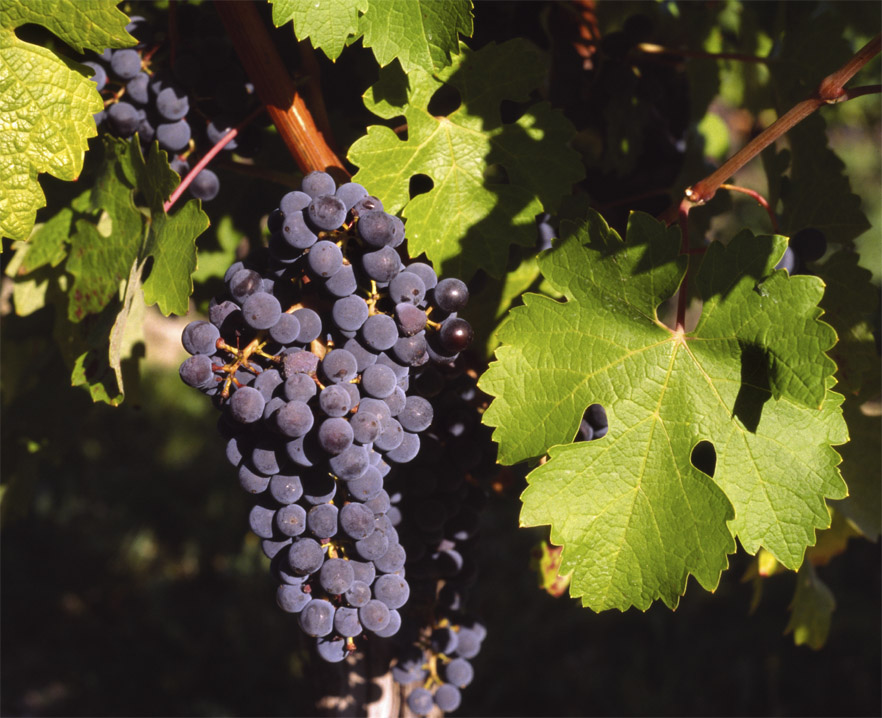

Draksha is the grape, and in medicine chiefly the dried grape or raisin. Ayurveda praises it as one of the finest of fruits, a sweet and cooling nourisher that soothes thirst and heat while quietly building the body's strength.
- Botanical name
- Vitis vinifera
- Family
- Vitaceae
- Sanskrit
- द्राक्षा
- Part used
- Fruit, chiefly dried (raisins)
- Taste (rasa)
- Sweet (madhura)
- Quality (guna)
- Heavy and unctuous (guru, snigdha)
- Energy (virya)
- Cooling (sheeta)
- After digestion (vipaka)
- Sweet (madhura)
- Action (karma)
- Good for the heart, nourishes, restores, and gently loosens, settling Vata and Pitta (hridya, brimhana, vrishya, rechana)
- Effect on dosha
- Settles Vata and Pitta, may increase Kapha
- Best known for
- A sweet, cooling fruit that soothes and nourishes
What is Draksha?
Draksha is the grape, the fruit of Vitis vinifera, the woody climbing vine of the grape family that has been grown across the warm and temperate world for a very long time. The vine is familiar enough: broad lobed leaves, curling tendrils, and hanging bunches of small round fruit. In Ayurveda, however, it is not so much the fresh grape as the dried one, the raisin, that the classical texts reach for most often.
The name carries the tradition’s high regard for the fruit. Ayurveda counts Draksha among the phalottama, the finest of fruits, a plant singled out for praise where most are simply listed. In everyday speech across the Indian subcontinent the dried fruit goes by several names, Munakka for the larger seeded raisin and Kishmish for the small seedless kind, while the fresh fruit is Angur. English speakers know the same plant as grape, and its dried fruit as raisin.
What Ayurveda uses it for
Draksha belongs to the sweet, cooling and nourishing side of Ayurveda. The classical writers describe it as hridya, wholesome and pleasing to the heart, and as brimhana, a fruit that nourishes and fills out the tissues. Because it is sweet and cooling by nature, it was understood to soothe thirst and inner heat, and because it is heavy and unctuous it was seen to feed and steady the body rather than dry it. The tradition also notes a gentle rechana action, a mild loosening that eases the bowels, and counts the fruit among the restoratives, a quality it calls vrishya.
Within that role the dravyaguna texts describe Draksha as traditionally indicated in a familiar set of conditions, each named here in its classical Sanskrit term with a plain gloss:
- Trishna: excessive thirst, which its sweet, cooling and moistening nature was held to relieve.
- Daha: burning sensation, the inner heat the tradition links with aggravated Pitta.
- Kasa and Shwasa: cough and laboured breathing, where its soft, unctuous quality was thought to soothe.
- Raktapitta: a classical bleeding tendency associated with heat in the blood, in which the fruit is a long-standing ingredient.
- Kshaya: wasting and depletion, where its building, nourishing quality is called upon.
- Jwara, in convalescence: the recovering stage after fever, when a light yet nourishing fruit was favoured.
- Madatyaya: the classical care taken after over-indulgence in drink.
- Mutrakrichra: difficult or uncomfortable urination.
- Vibandha, mild: constipation, for which its gentle loosening action was noted.
These are the traditional textual indications recorded in the classical literature. They set out how Ayurveda has long understood the fruit and are given for reference and study, not as statements of medical effect or as advice to treat any condition.
Its qualities, in plain words
Ayurveda describes every herb by a short list of qualities, and for Draksha they line up neatly behind its reputation as a gentle nourisher.
Its taste is sweet, and in Ayurveda a sweet taste is the taste of nourishment and ease. It is heavy and unctuous, so rather than lightening or drying the body it feeds and moistens it, the way a soft, rich food does. It is cooling, which is why the texts turn to it for thirst, burning and the heat they link with Pitta. And it finishes sweet after digestion, a sign that it builds tissue rather than wearing it down. Put together, these qualities describe a sweet, cool, moistening fruit, which is why the tradition settles most firmly on its power to soothe and to steady both Vata and Pitta. Because that same heaviness and sweetness can be a little building for Kapha, it is Vata and Pitta that the fruit settles most, while it may increase Kapha if taken freely.
How it is taken
The plainest classical form is the dried fruit itself, the raisin, eaten as it is or first soaked in water so that it softens and swells. The larger seeded Munakka is often used this way, its seeds removed, while the small seedless Kishmish needs no such trouble. A sweet infusion or decoction of the soaked fruit is another simple preparation the texts describe.
Draksha is also a named ingredient in several classical preparations. It gives its name to Drakshadi Kashaya, a decoction built around the fruit, and it is the base of the well-known fermented tonics Draksharishta and Drakshasava, in which the grape’s own sweetness carries the medicine. It also appears in Draksha Avaleha, a soft confection or leha in which the fruit is cooked down to a nourishing paste. Being sweet and cooling by nature, it was often paired with honey or sugar, or taken with milk, the vehicles Ayurveda favours for a soothing, nourishing action.
Good to know
Draksha is one of the gentle, everyday fruits of Ayurveda, valued as much for daily wholesomeness as for any single use, and it belongs firmly to the nourishing and soothing side of the tradition rather than the clearing one. Two small points of care are worth repeating: because the fruit is sweet and heavy it is the kind the texts count as building for Kapha, and the larger Munakka is usually soaked and its seeds removed before it is used.
This entry describes the classical Ayurvedic understanding of the herb. It is not medical advice, and anyone with a health condition should speak to a qualified practitioner.
Frequently asked
Is it the fresh grape or the raisin that Ayurveda uses? Both are described, but in medicine it is chiefly the dried fruit, the raisin, that the classical preparations call for. The tradition distinguishes the larger seeded Munakka from the small seedless Kishmish, and the fresh fruit, Angur, is treated as its own sweet, cooling food.
Why is Draksha called one of the finest of fruits? The classical texts single it out with the term phalottama, foremost among fruits, praising it as sweet, cooling, wholesome to the heart and restoring to a depleted body. Few fruits are given such standing in the literature.
Which doshas does it suit? Draksha is described as settling Vata and Pitta, since its sweet, cooling and moistening nature answers the dryness of Vata and the heat of Pitta. Because it is also sweet and heavy, it may increase Kapha if taken in quantity.
Draksha is sweet and cooling; it eases thirst and burning, nourishes the body and steadies both Vata and Pitta.
After the Bhavaprakasha Nighantu, on Draksha
Among the fruits, Draksha is held the foremost, wholesome to the heart and restoring to the depleted.
After the classical Nighantu tradition, on the finest of fruits
Frequently asked questions
What is Draksha in Ayurveda?
Draksha is the grape, and above all the dried grape or raisin (Vitis vinifera), which Ayurveda counts among the finest of fruits. It is valued as a sweet (madhura), cooling nourisher that settles Vata and Pitta. The texts class it as hridya, good for the heart, brimhana and vrishya, nourishing and restoring, and gently rechana.
What are the benefits of Draksha or raisins?
The tradition prizes Draksha as a sweet, cooling, nourishing fruit that settles Vata and Pitta, supports the heart (hridya), restores and rebuilds (brimhana, vrishya), and gently loosens the bowels (rechana). Munakka, the large raisin, is the form often used. It is offered as classical nourishing support rather than a treatment for any illness.
How are raisins used in Ayurveda?
Draksha is often soaked in water overnight and eaten in the morning, or the soak water drunk, so its sweet, cooling, nourishing quality can be taken gently. Munakka, the plump raisin, is the classic form. It also appears in many Ayurvedic preparations. Amounts are modest, and a practitioner can advise for your constitution.
Which dosha is Draksha good for?
Draksha settles both Vata and Pitta, making it one of the friendlier fruits for those two Doshas, thanks to its sweet, cooling and nourishing nature. Because it is sweet and heavy, it may increase Kapha, so those with high Kapha or sluggish digestion should take it in modest amounts.
Is Draksha good for constipation?
Ayurveda classes Draksha as gently rechana, meaning it softly loosens the bowels, and soaked raisins are a traditional, mild support for easy motion, especially where dryness and Vata are involved. It works gently rather than strongly. For ongoing constipation, this is one everyday support, and persistent trouble should be checked with a doctor.
References
- Charaka Samhita, Sutrasthana, among the fruits wholesome for daily use and in the treatment of Raktapitta and Kshaya.
- Sushruta Samhita, on the sweet, cooling fruits and their use in thirst and burning.
- Bhavaprakasha Nighantu, entry on Draksha with its synonyms and properties, praising it as foremost among fruits.
- Ashtanga Hridaya, on the wholesome fruits and their place in convalescence.
- Raja Nighantu, listing the several Sanskrit synonyms of the grape.