Materia Medica · Dravyaguna
Gokshura
Tribulus terrestris · Zygophyllaceae
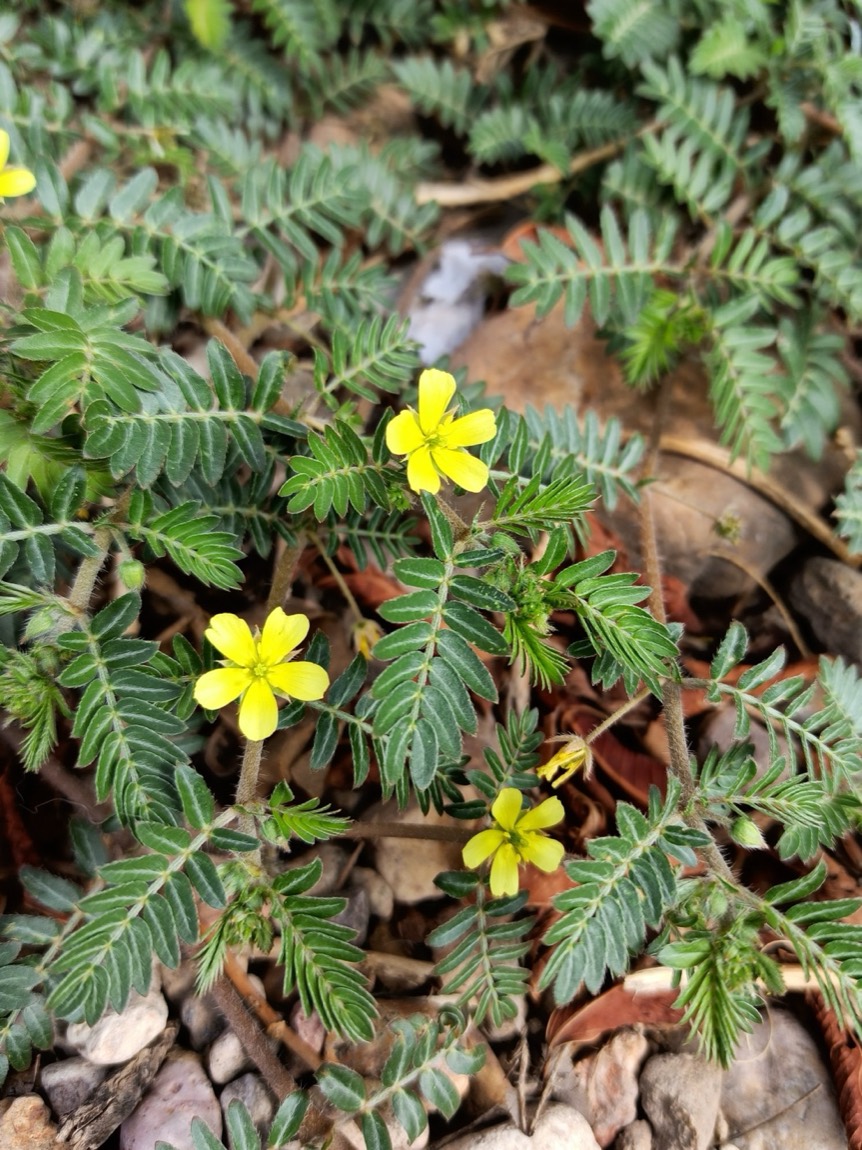
.jpg)
Gokshura is a small spiny fruit that grows low along the ground. Ayurveda reaches for it when the flow of urine needs easing, and it is one of the rare herbs the tradition counts as both cleansing and strengthening at once.
- Botanical name
- Tribulus terrestris
- Family
- Zygophyllaceae
- Sanskrit
- गोक्षुर
- Part used
- Fruit (root used occasionally)
- Taste (rasa)
- Sweet (madhura)
- Quality (guna)
- Heavy and slightly oily (guru, snigdha)
- Energy (virya)
- Cooling (shita)
- After digestion (vipaka)
- Sweet (madhura)
- Action (karma)
- Eases urine, strengthens the lower body, settles all three doshas (mutrala, balya)
- Best known for
- Easing the flow of urine and steadying the lower body
What is Gokshura?
Gokshura is the spiny fruit of a small creeping plant, Tribulus terrestris, that spreads flat along the dry ground. The plant is easy to miss: low leaves, small yellow flowers, and a hard five-sided fruit covered in sharp little spines.
Those spines gave it its name. Go means cow and kshura means hoof, and the fruit is said to leave a mark like a cow’s hoofprint, or to prick the foot the way a stone might. English speakers call the same plant puncture vine, for the same reason. It is the dried fruit that Ayurveda uses, ground into powder.
What Ayurveda uses it for
Gokshura belongs above all to the waterworks. The classical writers place it among the mutrala herbs, the ones that ease and free the flow of urine, and it is the herb they name first when that flow feels held back, scant, or uncomfortable. The texts describe it as gently clearing the passage rather than forcing it.
What sets Gokshura apart is that it does this without wearing the body down. Most cleansing herbs are drying and reducing. Gokshura is balya, strengthening, at the same time. That double action, clearing and building together, is rare, and it is why the tradition holds the humble fruit in such high regard. It is also counted as a rasayana for the lower body, a herb that quietly restores it over time.
Its qualities, in plain words
Ayurveda describes every herb by a short list of qualities, and for Gokshura they explain its gentle nature.
It is sweet, both in taste and in its finish after digestion, and in Ayurveda a sweet finish means a herb feeds and builds tissue rather than stripping it. It is cooling, so it suits the heat and irritation the texts link to Pitta. And it is slightly heavy and oily, which is what keeps it from drying the body out. Put together: a herb that cools, soothes and strengthens while it clears. The texts call it tridoshahara, settling to all three doshas, though it leans most toward Vata and Pitta.
How it is taken
The simplest classical way is the powder of the dried fruit, a few grams stirred into warm water or milk, often once or twice a day. The vehicle matters: warm water carries its clearing action, while milk leans the herb toward its nourishing, strengthening side.
Gokshura is also a key part of named preparations. The best known is Gokshuradi Guggulu, a classical tablet that pairs the fruit with the resin Guggulu. The fruit is also one of the laghupanchamula, the five lesser roots, which sit inside the famous ten-root group Dashamula.
Good to know
Gokshura is a slow, building herb, taken as a course over weeks rather than as a single dose. It belongs to the steady, restorative side of Ayurveda.
This entry describes the classical Ayurvedic understanding of the herb. It is not medical advice, and anyone with a health condition should speak to a qualified practitioner.
Frequently asked
Which part of the plant is used? Mainly the dried fruit, ground to powder. The root is used now and then, but the fruit is the part the classical preparations call for.
Is Gokshura cooling or warming? Cooling. This is unusual for a strengthening herb, and it is why the tradition reaches for it when there is heat or irritation alongside weakness.
Why is it taken with milk? Milk leans the herb toward its nourishing, strength-building side, while warm water leans it toward clearing the waterworks. The tradition chooses the vehicle to match the aim.
It clears the passage of urine and gives strength, cooling without weakening the body.
After the Bhavaprakasha Nighantu, on Gokshura
Frequently asked questions
What is Gokshura used for in Ayurveda?
Gokshura is a spiny little fruit (Tribulus terrestris) that Ayurveda values for the waterworks. The tradition uses it to keep urine flowing freely while quietly building strength in the lower body, classing it as mutrala and balya. It is regarded as gentle enough to settle all three Dosha, which makes it a favourite for the urinary system.
Is Gokshura good for the urinary system?
Yes, Gokshura is chiefly valued for the urinary system. Ayurveda classes it as mutrala, easing the flow of urine, and reaches for it to keep the waterworks flowing freely. Its sweet taste and cooling, soothing nature suit the passage of water without irritating it. For a persistent urinary complaint, use it under a qualified Ayurvedic practitioner.
How do you take Gokshura?
Gokshura is taken as a churna, a decoction or in tablet form, often with warm water, milk or honey as the anupana. It also appears in classical formulas such as Gokshuradi Guggulu. The form and dose are matched to the person and the purpose, so follow the guidance of an Ayurvedic practitioner for an ongoing complaint.
Does Gokshura build strength?
Yes, alongside its action on the urine Ayurveda values Gokshura as balya, meaning it quietly builds strength in the lower body. The tradition sees it as steadying and strengthening rather than depleting, which is why it is used both for the waterworks and as a gentle tonic for the lower body. It is regarded as settling all three Dosha.
Which dosha is Gokshura for?
Gokshura is regarded as gentle enough to settle all three Dosha, Vata, Pitta and Kapha, which is unusual and part of its value. Its sweet, cooling, strengthening nature especially soothes Vata and Pitta in the urinary tract while supporting the lower body. This balanced action is why it suits so many people for the waterworks and as a mild tonic.
References
- Charaka Samhita, Sutrasthana, on the mutravirechaniya (urine-clearing) group of herbs.
- Sushruta Samhita, on the laghupanchamula, the five lesser roots.
- Bhavaprakasha Nighantu, Guduchyadi Varga, entry on Gokshura.