Materia Medica · Dravyaguna
Dhattura
Datura metel · Solanaceae
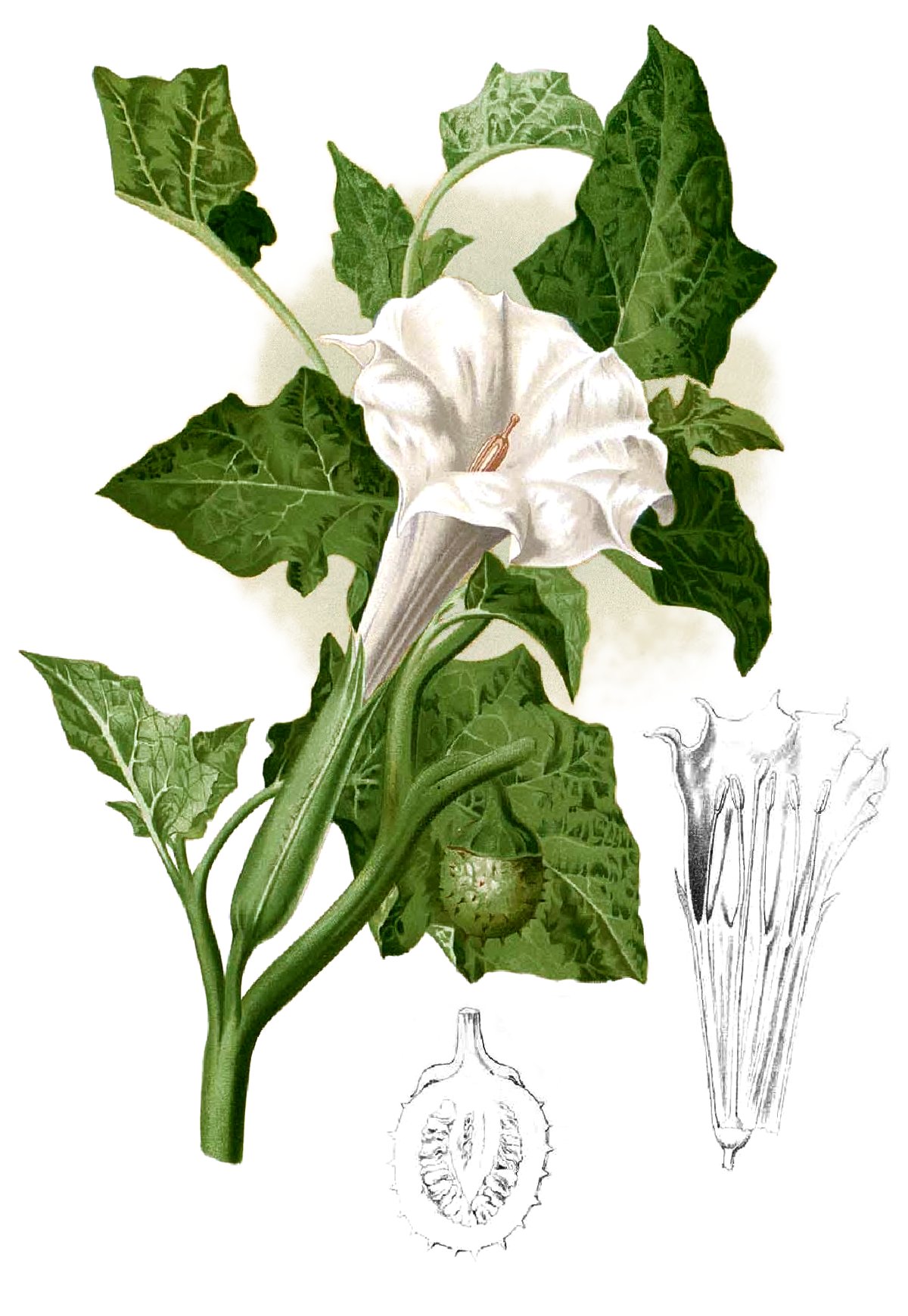

Dhattura is one of the most potent plants named in the old Ayurvedic texts. This entry records the classical tradition for historical interest only. The plant is poisonous, is restricted in the EU and elsewhere, and is not used at home.
- Botanical name
- Datura metel
- Family
- Solanaceae
- Sanskrit
- धत्तूर
- Part used
- Classically the leaf, seed, flower and root, all handled with great caution
- Taste (rasa)
- Bitter and pungent (tikta, katu)
- Quality (guna)
- Light, dry and sharp (laghu, ruksha, tikshna)
- Energy (virya)
- Warming, very strongly so (ushna)
- After digestion (vipaka)
- Pungent (katu)
- Action (karma)
- A warming substance the texts placed among the most potent (ushna virya)
- Best known for
- A potent, restricted plant of the old texts, recorded but no longer used
A note before you read
This entry is here to record what the classical texts say about Dhattura, for tradition and history. It is not a how-to. Dhattura is a poisonous plant. It is restricted or banned in the European Union and in many other places. It has no part in home Ayurveda, and nothing on this page should be read as an invitation to find, prepare or take it. Modern practice has moved away from it and reaches for gentler plants instead.
What it is
Dhattura is a tall, weedy plant of the nightshade family, Datura metel. It grows on waste ground and field edges across much of India and the warm parts of the world. It is easy to recognise by its large, white, trumpet-shaped flowers and its spiny, rounded seed pods. The English names, thorn apple and devil’s trumpet, both come from those features.
The classical texts knew it well and treated it with a respect that bordered on fear. It belongs to a small class of plants the old writers called the most potent of all, the ones that demanded the most skilled and careful hand. The very texts that describe Dhattura also dwell, again and again, on the danger of getting the amount wrong.
How the old texts placed it
Dhattura appears in the classical herbals, including the Bhavaprakasha Nighantu, and among the powerful substances of the foundational texts. Wherever it is named, the same theme returns: this is a plant of exceptional strength, to be approached with the greatest caution and never used casually.
The tradition described it as bitter and pungent in taste, light, dry and sharp in quality, and very strongly warming in potency. In the old framework, that sharp, penetrating heat is what marked it as both powerful and risky. The same texts that record its qualities also record the rule that governed plants like it: the smallest possible amount, prepared and given only by an experienced physician, and only with other substances to temper it.
Why it is not used today
What the old texts handled with extreme caution, modern practice handles by setting aside. The plant carries potent compounds, and the amount in any given plant shifts with where and how it grew, which made safe use difficult even in skilled hands. Modern Ayurvedic teaching reflects this. Most practitioners substitute milder, nourishing plants such as Ashwagandha, Shatavari or Bala, which the tradition uses for the dry, restless Vata states without the danger.
In Europe, Datura plants are restricted, and the plant has no place in everyday Ayurvedic care. This entry stands as a record of the tradition, not a recommendation.
Good to know
Dhattura sits in Ayurveda as an example of how the old system thought about potent substances. It documented them carefully, ringed them with rules, and reserved them for the most experienced hands. The modern conclusion, that the safest course is simply not to use them, follows the same spirit of caution the texts themselves urged.
This entry describes the classical Ayurvedic tradition for historical interest only. It is not medical advice and not a guide to use. Dhattura is poisonous and restricted; do not seek it out or use it.
Frequently asked
Is Dhattura used in Ayurveda today? Not in any ordinary sense. It is a restricted, poisonous plant, and modern practice substitutes gentler herbs. This page is a historical record, not a recommendation.
Why did the old texts include such a dangerous plant? Classical Ayurveda documented the whole of its materia medica, including the most potent substances, and surrounded them with strict rules about who could use them and in how small an amount. The caution was part of the knowledge.
What is used instead? For the dry, cold, restless states the tradition links to Vata, gentler and nourishing plants such as Ashwagandha, Bala and Shatavari are the usual choices, used safely over a course of time.
The most potent substances ask for the most careful hand: a grain too much undoes the whole.
Classical tradition, on potent drugs
Frequently asked questions
What is Dhattura in Ayurveda?
Dhattura, Datura metel, is a powerful trumpet-flowered plant of the classical Ayurvedic texts, bitter and pungent and classed among the most potent, warming substances, or ushna virya. It is recorded here for tradition and study only. It is restricted in Europe and is not for home use in any form, under any circumstances.
Is Dhattura poisonous?
Yes. Dhattura, or Datura metel, is a highly toxic plant, which is exactly why the classical texts placed it among the most potent substances and why it is restricted in Europe. It is recorded here purely for tradition and study. It is not safe for home use in any preparation and must never be self-administered.
Can you use Dhattura at home?
No. Dhattura is a potent, restricted plant recorded but no longer used in ordinary practice. It is not for home use in any form. This article documents its place in the old texts for historical and educational purposes only. Nothing here is a recipe or a recommendation, and the plant should never be handled or taken at home.
Is Dhattura legal in Europe?
Dhattura, or Datura metel, is restricted in Europe and is not available or permitted for home use. This entry records the plant only for the tradition and for study. It should be understood as historical and educational, never as guidance to obtain or use it. For anything relating to it, defer to the law and to medical authorities.
Why is Dhattura mentioned in the classical texts?
The classical Ayurvedic texts recorded Dhattura because early physicians catalogued even the most potent and dangerous plants, classing it by its bitter, pungent taste and intensely warming ushna virya. Its inclusion is a matter of historical completeness. Modern practice does not use it, and this article preserves that record for study only, not for any practical use.
References
- Bhavaprakasha Nighantu, on the description and properties of Dhattura.
- Sushruta Samhita, on potent substances and the care their use demands.
- Ashtanga Hridayam, on substances of strong virya.