Materia Medica · Dravyaguna
Atibala
Abutilon indicum · Malvaceae
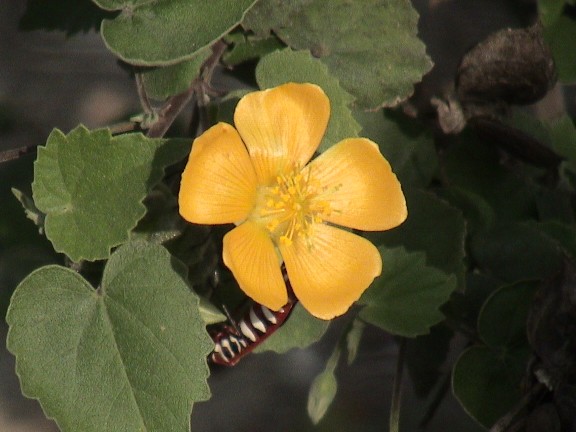

Atibala is a roadside herb of the mallow family, soft and slightly slimy when crushed. Ayurveda uses it as a gentle, cooling tonic, one that soothes heat and quietly builds strength.
- Botanical name
- Abutilon indicum
- Family
- Malvaceae
- Sanskrit
- अतिबला
- Part used
- Leaf, root and seed
- Taste (rasa)
- Sweet, with a faint bitter edge (madhura, tikta)
- Quality (guna)
- Oily and heavy (snigdha, guru)
- Energy (virya)
- Cooling (shita)
- After digestion (vipaka)
- Sweet (madhura)
- Action (karma)
- Soothes and cools, builds strength, settles Pitta and Vata
- Best known for
- A gentle, cooling herb used to soothe and to build strength
What is Atibala?
Atibala is a soft, weedy plant of the mallow family, Abutilon indicum, that grows along roadsides and in waste ground across the warmer parts of India. It is a humble plant to look at: knee-high, with soft heart-shaped leaves and small yellow flowers. The leaves, the root and the seeds are all used, and the leaves give a faint slipperiness when crushed, the sign of the mucilage the herb is valued for.
The name tells you its reputation. Ati means beyond, and bala means strength. So Atibala is “the one beyond strength,” and it sits in the texts beside its close relative Bala, the two of them named together as the gentle strengthening herbs.
What Ayurveda uses it for
Atibala belongs to two of the classical groups at once. It is a balya herb, which means strengthening, and it is held to be cooling and soothing, the quality that settles the heat the texts call Pitta. That pairing is unusual and is the whole point of the herb. It builds the body up while it cools it down.
So the tradition reaches for it when someone is both depleted and overheated, when the simple warming tonics would be too much. Its slippery, soothing quality made it a herb the texts named for the soft and sensitive tissues, and its gentle nature meant it could be taken over a long stretch without unsettling the body.
Its qualities, in plain words
Ayurveda describes each herb by a short list of qualities, and for Atibala they read clearly. It is sweet, with only a faint bitter edge, and a sweet taste in Ayurveda means it nourishes and builds. It is oily and slightly heavy, so it soothes and lubricates rather than drying. And it is cooling, which is why it suits hot, irritated states.
Put together: a herb that cools, soothes and builds at once. It finishes sweet after digestion as well, and that sweet finish is the mark of a tissue-building herb. This is why the texts treat it as gentle enough for long use, and why it is so often chosen where a stronger herb would overheat.
How it is taken
The leaf or the whole herb is usually dried and powdered, and the powder is taken with warm water, with honey, or with milk. A common measure is a small spoonful once or twice a day. The fresh leaf can also be simmered into a kashayam, a water decoction, and the soothing oils made with it are used in abhyanga, the daily oil massage, especially in the warm seasons.
Because it is cooling and slightly heavy, the tradition is more cautious with it in the cold and damp, and pairs it then with a little warming spice such as ginger to keep it balanced.
Good to know
Atibala is a quiet herb, not a dramatic one. It belongs to the slow, building side of Ayurveda, taken as a course over weeks rather than as a single dose. It is classically favoured in the warm seasons and in hot, dry constitutions, where its cooling and soothing nature is most at home.
This entry describes the classical Ayurvedic understanding of the herb. It is not medical advice, and anyone with a health condition should speak to a qualified practitioner.
Frequently asked
Is Atibala the same as Bala? No, but they are close relatives and close in use. Both are gentle strengthening herbs of the mallow family, and the texts often name them together. Atibala is the more cooling and soothing of the two.
Which part of the plant is used? Mostly the leaf, though the root and the seeds are used as well. The leaf is the part most often dried and powdered for daily use.
Why is it called cooling? Because its qualities, sweet, oily and cool, settle the heat the texts call Pitta. This is what sets it apart from the warming tonics and makes it a herb for hot, irritated states.
Atibala is sweet and cooling; it settles the heat and lends strength to the body.
After the Bhavaprakasha Nighantu, on the cooling herbs
Frequently asked questions
What is Atibala used for?
Atibala, Abutilon indicum, is a soft, cooling herb of the mallow family used in Ayurveda to soothe heat and to build steady strength. The tradition treats it as balya and cooling, settling Pitta and Vata. It is a close companion to Bala and is valued as a gentle strengthening herb rather than a strong medicine.
What is the difference between Atibala and Bala?
Bala and Atibala are related mallow herbs often paired in the classical texts, both balya, strengthening and Vata settling. Atibala, whose name means great strength, is regarded as the softer, more cooling of the two. They frequently appear together in formulas and groups such as the Balamula preparations. A practitioner chooses between or combines them by need.
What are the benefits of Atibala?
Ayurveda associates Atibala with soothing heat, cooling and settling aggravated Pitta and Vata, and gently building strength (balya) in a depleted body. Its sweet, faintly bitter taste (madhura, tikta) reflects this nourishing, cooling nature. It is a supportive strengthening herb in the classical tradition, used within formulas rather than as a remedy for a named illness.
Which dosha is Atibala good for?
Atibala is chiefly used to settle Pitta and Vata. Its cooling, soothing quality suits heat and irritation (Pitta), while its strengthening, nourishing side steadies the dryness and depletion of Vata. Being sweet and cooling, it can be less suited to high Kapha. An Ayurvedic practitioner matches it to your particular constitution.
How is Atibala taken?
Atibala is used within classical formulas and as a powder or decoction of its root and seeds, chosen to soothe and to strengthen. As a gentle mallow herb it is generally mild, but the right form, dose and pairing depend on your constitution and aim. Let a qualified Ayurvedic practitioner guide how you take it.
References
- Charaka Samhita, Sutrasthana, on the balya (strengthening) group of herbs.
- Sushruta Samhita, on the bala group and the soothing of Pitta.
- Bhavaprakasha Nighantu, on Atibala among the cooling substances.