Materia Medica · Dravyaguna
Apamarga
Achyranthes aspera · Amaranthaceae
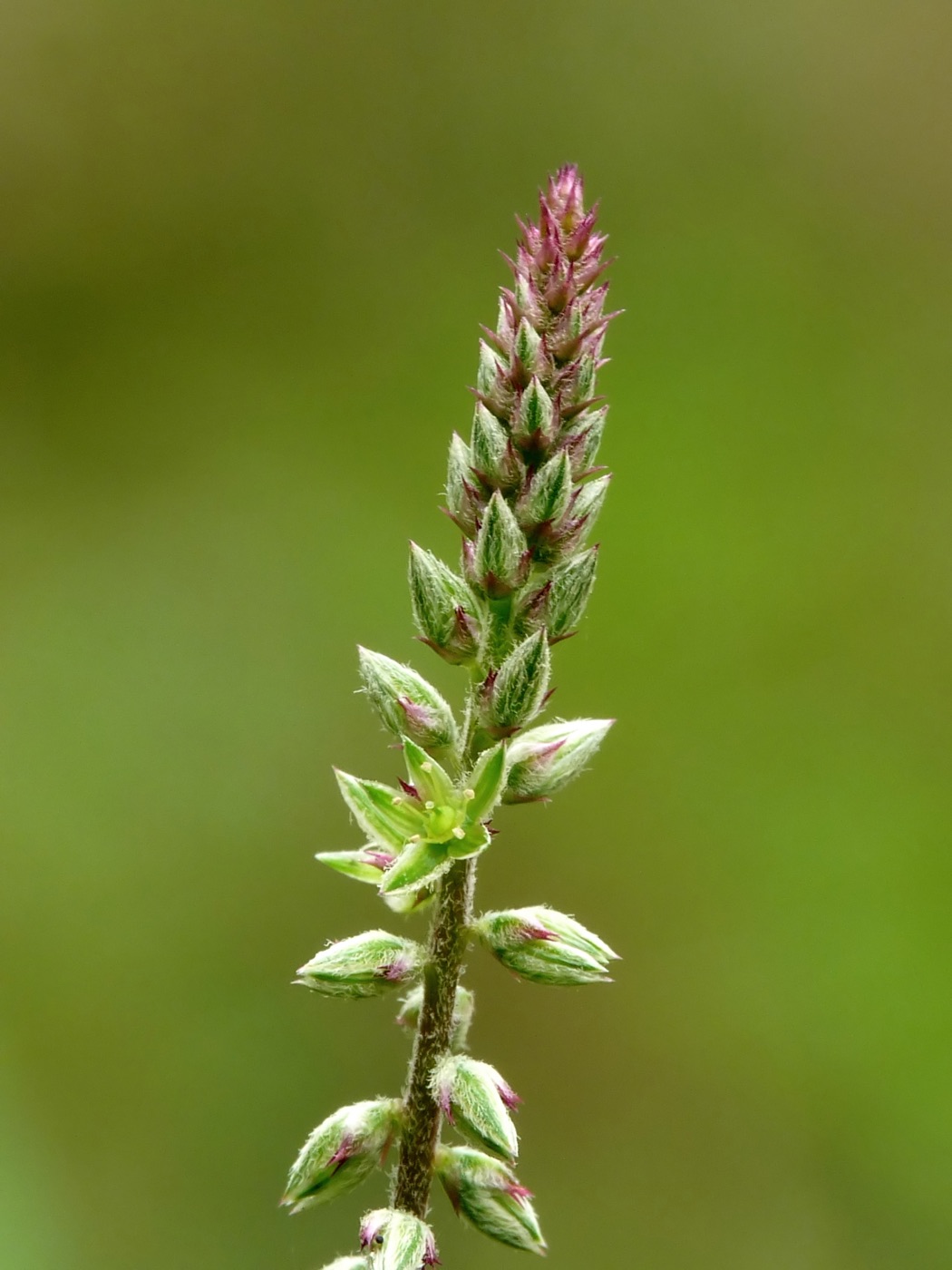

Apamarga is a bristling weed of paths and wasteland, easily known by the backward-pointing bracts that catch on clothing. Pungent, bitter and warming, it is one of the classic sources of kshara, the natural alkaline principle Ayurveda draws from its ash.
- Botanical name
- Achyranthes aspera
- Family
- Amaranthaceae
- Sanskrit
- अपामार्ग
- Part used
- Whole plant, seed, root, and its kshara (ash-alkali)
- Taste (rasa)
- Pungent and bitter (katu, tikta)
- Quality (guna)
- Light, dry and penetrating (laghu, ruksha, tikshna)
- Energy (virya)
- Warming (ushna)
- After digestion (vipaka)
- Pungent (katu)
- Action (karma)
- Kindles digestion, cuts through obstruction, counters krimi (deepana, pachana, chhedana, krimighna)
- Effect on dosha
- Pacifies Kapha and Vata (kapha-vata shamaka)
- Best known for
- The roadside weed prized for its kshara
What is Apamarga?
Apamarga is a bristling weed, Achyranthes aspera, found almost everywhere across India along roadsides, on wasteland and at the edges of fields. It is the kind of plant most people walk past without a glance: an upright, wiry herb of the amaranth family with small greenish flowers arranged along a long, slender spike. What gives it away are the bracts on that spike, which point stiffly backwards and catch on clothing and fur as you brush past. Ayurveda values the whole plant, the seed and the root, but above all the kshara, the alkaline ash prepared from it.
The name records the plant’s habit exactly. Apamarga carries the sense of wiping or sweeping away, and the tradition reads this in more than one direction: the weed that clings and is swept off, and the herb whose cutting, clearing action sweeps through obstruction. Its English names tell the same story from the outside. Prickly chaff flower describes the chaffy, bristling spike, and Devil’s horsewhip the long, whip-like flowering stem. Across the subcontinent it carries a string of vernacular names, among them Chirchita, Latjeera and Nayuruvi, a sign of how common and how long used it has been.
What Ayurveda uses it for
The classical texts give Apamarga a distinct and well-marked place. Charaka names it among the Shirovirechana substances, those used for a classical clearing of the head worked through the nose, and the tradition draws repeatedly on its kshara, the natural alkaline principle prepared from the burnt plant. Sushruta, in his account of the ksharas, counts Apamarga a chief source of that alkaline material. The nighantus describe the herb as deepana and pachana, kindling and completing digestion, chhedana, cutting through what obstructs, and krimighna, countering krimi.
Reading across the classical literature, the plant and its kshara are traditionally described in the following settings, each given in its Sanskrit term with a plain gloss:
- Arsha: haemorrhoids, a classical use of its kshara.
- Shotha: swelling and accumulation, where its light, penetrating quality is named.
- Adhmana: bloating and distension of the abdomen, in which the digestive, cutting action is called upon.
- Kushtha: the broad classical class of skin disorders.
- Krimi: the classical category of worms and small organisms, the herb’s krimighna role.
- Apachi: glandular swellings, for which the kshara is a traditional application.
- Mukharoga: disorders of the mouth, where the pungent, drying herb is mentioned.
- Kandu: itching, in which its drying quality is described.
It is also named in Shirovirechana, the classical clearing of the head worked through the nose.
These are the traditional textual indications recorded in the classical literature. They set out how Ayurveda has long understood the herb and are given for reference and study, not as statements of medical effect or as advice to treat any condition.
Its qualities, in plain words
Ayurveda describes every herb through a short list of qualities, and Apamarga’s read as a set that points one way. Its taste is pungent and bitter, the pair of tastes the tradition links with clearing and drying rather than nourishing. Its nature is light, dry and penetrating, so it moves and scours rather than settling or feeding. Its potency is warming, and after digestion its effect stays pungent.
Put together, this is a warming, drying, penetrating herb, sharp enough that the tradition calls it tikshna. Those qualities are the plain opposite of the heavy, cold and moist character of Kapha, and of the mobile, cold quality of Vata, which is why the texts describe Apamarga as reducing both, a Kapha-Vata shamaka. Standing behind much of its reputation is its kshara, a natural alkaline principle concentrated in the ash of the plant, which the tradition understood as strongly cutting and clearing. In simple terms, this is the sort of herb Ayurveda reaches for to move and clear rather than to nourish or moisten.
How it is taken
Apamarga is used in several classical forms, and the most characteristic of them is its kshara. To make it, the whole plant is dried, burnt to ash, and the ash steeped in water and strained to draw out the alkaline principle, which is then concentrated. This Apamarga Kshara is the plant’s best known preparation, used both internally in careful measure and externally as an alkaline application.
Beyond the kshara, the seed, root and whole plant each have their place. The plant is taken as a decoction, kwatha or kashaya, and the seed and root are used in powdered form. Because the tradition names Apamarga among the Shirovirechana herbs, it also appears in preparations meant to clear the head through the nose. It is the source herb of Apamarga Kshara and of Apamarga Taila, a medicated oil described for the head and ears. Across these forms the theme holds steady: a pungent, warming, cutting herb brought to bear where the tradition sees obstruction, dampness and heaviness.
Good to know
Apamarga is one of the sharp, clearing herbs rather than the slow, building ones, and it belongs firmly to the moving and scouring side of Ayurveda. Its kshara in particular is a concentrated alkaline material, strong by nature, and the classical writers describe it as something to be prepared and measured with care rather than used freely. Because its potency is warming and its whole character drying and penetrating, the tradition uses it with more caution in people of a heated, Pitta constitution, for whom a sharp, warming herb can be less suitable.
This entry describes the classical Ayurvedic understanding of the herb. It is not medical advice, and anyone with a health condition should speak to a qualified practitioner.
Frequently asked
What is kshara, and why is Apamarga linked with it? Kshara is a natural alkaline principle Ayurveda draws from the ash of certain plants. The whole Apamarga plant is burnt, its ash steeped in water and strained, and the liquid concentrated to yield the alkali. Apamarga is one of the classical sources named for this, which is why its name and its kshara are so often mentioned together.
Which part of the plant is used? Several parts. The whole plant, the seed and the root are all described in the classical literature, and the kshara, the ash-alkali prepared from the plant, carries much of its reputation. The part chosen depends on the preparation.
Why is it called Devil’s horsewhip and prickly chaff flower? Both names describe the plant’s flowering spike. It is long and slender like a whip, which gives Devil’s horsewhip, and it is chaffy and bristling with bracts that catch on clothing, which gives prickly chaff flower. The Sanskrit Apamarga, with its sense of sweeping away, reflects the same clinging, brushing habit.
Apamarga is pungent and warming; kindling the digestive fire and cutting through obstruction, it counters Kapha and the worms.
After the Bhavaprakasha Nighantu, on the pungent herbs
Apamarga is placed among the substances used for clearing the head, the Shirovirechana group.
After the Charaka Samhita, on the classification of dravyas
Frequently asked questions
What is Apamarga used for in Ayurveda?
Apamarga (Achyranthes aspera) is a common roadside plant whose whole herb, seed and especially its kshara or ash-alkali Ayurveda values for a pungent, penetrating, cutting character. The texts class its action as deepana, pachana, chhedana and krimighna, so it is associated with kindling digestion, cutting through obstruction and countering krimi. It mainly pacifies Kapha and Vata.
What is Apamarga kshara?
Kshara is an alkaline ash prepared by burning the plant and processing the residue, and Apamarga is one of the herbs most prized for it. This kshara is sharp, penetrating and cutting (chhedana) in action, used in the classical tradition to clear obstruction. Because kshara is caustic and potent, it is strictly a practitioner-prepared and practitioner-directed preparation.
What are the benefits of Apamarga?
Ayurveda associates Apamarga with kindling a weak digestive fire (deepana, pachana), cutting through stagnation (chhedana) and countering worms or krimi (krimighna). Its pungent, bitter taste suits Kapha and Vata conditions marked by heaviness and obstruction. These are classical descriptions of its karma rather than promises to treat any named disease, and potent forms need professional guidance.
Which dosha does Apamarga balance?
Apamarga is classed as Kapha and Vata pacifying (kapha-vata shamaka). Its pungent, penetrating, warming nature clears the cold heaviness of Kapha and moves obstructed Vata. Because it is sharp and heating, it can aggravate Pitta, so it suits Kapha and Vata patterns of stagnation rather than heated, Pitta-dominant states.
Is Apamarga safe to use?
The whole herb has a long traditional use, but Apamarga is sharp and penetrating, and its kshara is caustic and strong. For that reason its potent forms are prepared and dosed by a qualified practitioner rather than used casually at home. Pregnant women in particular should avoid it, and any internal use is best taken only under guidance.
References
- Charaka Samhita, among the Shirovirechana (head-clearing) group of dravyas in the Sutrasthana.
- Sushruta Samhita, in the account of the ksharas, where Apamarga is named a chief source of the alkaline principle.
- Ashtanga Hridayam, on the preparation and use of kshara.
- Bhavaprakasha Nighantu, Guduchyadi Varga, entry on Apamarga.
- Raja Nighantu, entry on Apamarga with its many Sanskrit synonyms.