Materia Medica · Dravyaguna
Arjuna
Terminalia arjuna · Combretaceae
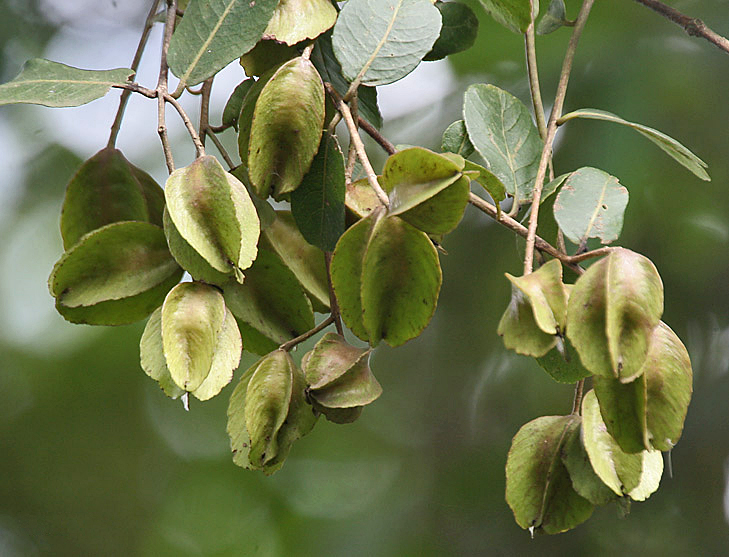

Arjuna is the bark of a tall tree that grows along the rivers of India. Of all the herbs in Ayurveda, it is the one most closely tied to the heart.
- Botanical name
- Terminalia arjuna
- Family
- Combretaceae
- Sanskrit
- अर्जुन
- Part used
- Stem bark (tvak)
- Taste (rasa)
- Kashaya (astringent)
- Quality (guna)
- Laghu, Ruksha (light, dry)
- Energy (virya)
- Shita (cooling)
- After digestion (vipaka)
- Katu (pungent)
- Action (karma)
- Hrdya, Kaphapittahara
- Best known for
- The classical Ayurvedic herb for the heart
Overview
Arjuna is the stem bark of Terminalia arjuna, a large deciduous tree of the Combretaceae family that grows along the rivers and streams of the Indian subcontinent. The bark is the part used. The classical authors place it among the hrdya substances, those described as nourishing and steadying the heart, and it is from this reputation that the herb takes its standing in the materia medica.
The name appears across the classical record. The Bhavaprakasha Nighantu lists Arjuna in the Vatadi varga and records its bark as the medicinal part. The earlier compendia of Charaka and Sushruta group it with the substances that act on the channels of circulation.
Botanical identity
Terminalia arjuna reaches twenty to twenty-five metres, with a wide buttressed trunk and a smooth grey bark that sheds in flakes. It is distinguished from its relative Terminalia bellirica, the Bibhitaki of the Triphala group, by its smooth bark and its riverbank habit. Only the stem bark carries the properties described below; the fruit and leaf are not used in its classical preparations.
Classical properties
In the language of dravyaguna, Arjuna is kashaya (astringent) in taste, laghu and ruksha (light and dry) in quality, shita (cooling) in potency, and katu (pungent) in its post-digestive effect. Its action is hrdya, directed to the heart, and kaphapittahara, reducing Kapha and Pitta. The astringent taste and the cooling potency together account for its classical use where there is heat or laxity in the tissues.
Traditional use
The texts describe Arjuna as the principal herb for the heart and the circulation, and as a support for the integrity of the tissues, the dhatus. It is also named in the treatment of disorders of Pitta and Kapha, and applied externally for its astringent action. These are descriptions of the classical understanding and are recorded here for reference, not as recommendations for self-treatment.
How it is prepared
Arjuna is most often given as a fine powder of the bark, or as a decoction. A classical preparation, Arjunarishta, ferments the bark with other herbs into a self-generated medicinal liquid. The bark is also cooked into medicated ghee and milk preparations, where the cooling and strengthening qualities are carried by the fat.
Frequently asked
Which part of Arjuna is used? The stem bark, known as tvak. The fruit and leaf are not used in its classical formulations.
Is Arjuna the same as Bibhitaki? No. Both belong to the genus Terminalia, but Bibhitaki (Terminalia bellirica) is a fruit used in the Triphala group, while Arjuna is the bark of Terminalia arjuna.
Among the substances that strengthen the heart, Arjuna stands foremost.
Classical dravyaguna tradition, after the Bhavaprakasha Nighantu
Frequently asked questions
What is Arjuna used for in Ayurveda?
Arjuna, from the bark of Terminalia arjuna, is Ayurveda's principal herb for the heart. The classics class it as Hrdya, good for the heart, and Kaphapittahara, settling Kapha and Pitta. For centuries it has been the tradition's chief reach for supporting the heart and circulation, though for any cardiac condition it should be used under a qualified practitioner and your doctor.
How do you take Arjuna bark?
Arjuna is classically taken as a decoction of the bark, as Arjuna churna, or as Arjunarishta, a fermented tonic. A traditional preparation is Arjuna Ksheerapaka, the bark simmered in milk, milk being a nourishing anupana for the heart. Because it acts on the heart, the form and dose are best set by a qualified practitioner.
Which part of the Arjuna tree is used?
The bark of the Arjuna tree, a tall riverside species, is the part used in Ayurveda. It is astringent, kashaya, in taste and is stripped, dried and prepared as powder, decoction or fermented tonic. This bark is what the tradition has relied on as its foremost Hrdya, heart-supporting, remedy for centuries.
Is Arjuna good for the heart and blood pressure?
Ayurveda has long valued Arjuna as its main Hrdya herb, traditionally associated with supporting the heart and steady circulation. Its astringent, Kaphapittahara nature is held to strengthen and cool. It is a supportive traditional measure, not a substitute for medical care, so anyone with a heart condition or raised blood pressure should use it under a doctor's guidance.
Which dosha does Arjuna balance?
Arjuna settles Kapha and Pitta, described as Kaphapittahara, while its astringent taste tones the tissues. This cooling, astringent action suits the heat and congestion the tradition links with the heart and blood. Being astringent and drying, it is used more thoughtfully where Vata and dryness are high, ideally balanced with a nourishing anupana like milk.
References
- Bhavaprakasha Nighantu, Vatadi Varga, entry on Arjuna.
- Charaka Samhita, Sutrasthana, on the hrdya group of substances.
- Sushruta Samhita, Sutrasthana, on the salasaradi gana.
- Ashtanga Hridayam, on kashaya rasa and its action on Kapha and Pitta.