Materia Medica · Dravyaguna
Ashoka
Saraca asoca · Fabaceae
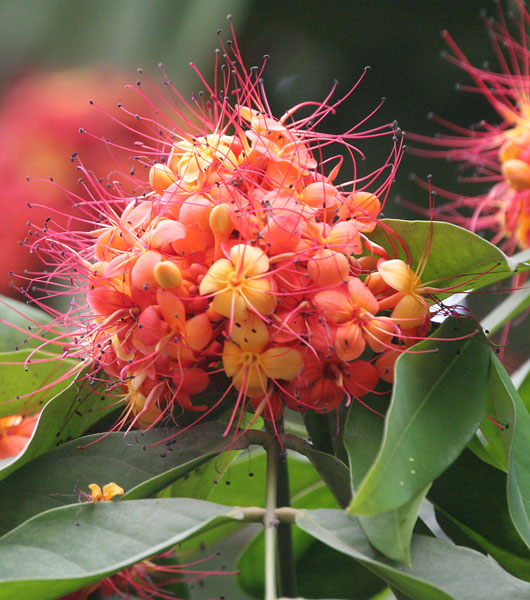
_flowers_in_Kolkata_W_IMG_4146.jpg)
Ashoka is the bark of a small flowering tree that Ayurveda associates above all with women's health. Its name means "without sorrow", and the tradition has reached for it for centuries when the monthly cycle is unsettled.
- Botanical name
- Saraca asoca
- Family
- Fabaceae
- Sanskrit
- अशोक
- Part used
- Bark
- Taste (rasa)
- Astringent and bitter (kashaya, tikta)
- Quality (guna)
- Light and dry (laghu, ruksha)
- Energy (virya)
- Cooling (shita)
- After digestion (vipaka)
- Pungent after digestion (katu)
- Action (karma)
- Steadies and tones, cools heat, settles the cycle
- Best known for
- The classical bark of women's health in Ayurveda
What is Ashoka?
Ashoka is the bark of Saraca asoca, a small tree of the legume family that grows in the forests of central and southern India. It is admired for its flowers, which bloom in dense orange and red clusters straight from the trunk in spring. But it is the bark, dried and powdered or boiled into a decoction, that Ayurveda values as medicine.
The name carries its reputation. A-shoka means “without sorrow”. The classical writers chose the word deliberately, because the bark earned its place in the tradition as a remedy for women, the herb reached for when the monthly cycle brought trouble.
What Ayurveda uses it for
In Ayurvedic terms, Ashoka has a particular affinity for two tissues: rakta, the blood, and artava, the tissue of the female cycle. This is its whole reputation in one phrase. The texts name it again and again in the setting of the menstrual cycle, where bleeding is heavy, irregular, or accompanied by heat and discomfort.
The tradition explains this through its qualities. Ashoka is astringent, which in Ayurveda means it draws tissue together and steadies a flow, the way strong tea puckers the mouth. It is cooling, so it suits conditions the texts read as too much heat in the blood. Put together, a bark that tones and settles rather than stimulates.
Its qualities, in plain words
Ayurveda describes every substance by a short list of qualities, and for Ashoka they form a clear picture.
Its tastes are astringent and bitter, the two tastes most associated with toning tissue and clearing heat. Its nature is light and dry, and its potency is cooling. After digestion it finishes pungent. The overall reading is of a herb that calms an over-active, over-heated state rather than one that nourishes a depleted one. For that reason the tradition pairs it carefully, often with sweeter, more nourishing herbs, so that its dryness is balanced.
How it is taken
The bark is most often prepared in two classical ways. As a kashaya, a decoction, the dried bark is simmered in water until it reduces and is then taken warm. As a churnam, a fine powder, it is stirred into warm water or milk.
Ashoka is also the heart of a famous named preparation, Ashokarishtam, a gently fermented bark tonic in which Ashoka is the principal ingredient. In that form the tradition considers the bark’s action carried and softened by the fermentation.
Good to know
Ashoka is classically a herb for women’s health, and the tradition uses it as a course over the rhythm of the cycle rather than as a single dose. Because it is drying by nature, the texts pair it with milk or with nourishing herbs for anyone of a dry, light constitution.
This entry describes the classical Ayurvedic understanding of the bark. It is not medical advice, and anyone with a health concern, and anyone who is pregnant, should speak to a qualified practitioner.
Frequently asked
What does the name Ashoka mean? It means “without sorrow”. The classical writers used the word because the bark was the tradition’s remedy for women, and the name reflects the relief it was meant to bring.
Which part of the tree is used? The bark. The tree is also loved for its flowers, but it is the bark that is the medicine of the texts.
Why is it so often used for the cycle? Because Ayurveda reads it as astringent and cooling, two qualities that settle a heavy or heated flow. That is the reputation it has carried for centuries.
Ashoka removes the sorrow of women; it steadies the blood and settles the womb.
Classical tradition, after the Bhavaprakasha Nighantu
Frequently asked questions
What is Ashoka used for in Ayurveda?
Ashoka, from the bark of Saraca asoca, is the classical bark of women's health in Ayurveda. Its cool, astringent, settling nature is long turned to for the female cycle. The tradition uses it to steady and tone the tissues and cool heat, which is why it appears in many classical formulas for women.
What are the benefits of Ashoka bark?
In tradition Ashoka is valued for settling the female cycle, cooling excess heat and toning the tissues, thanks to its astringent and bitter nature. It steadies and draws together, a stambhana-like action, which underlies its long reputation in women's health. It is used within classical formulas as a supportive tonic rather than a quick remedy.
How is Ashoka taken?
Ashoka bark is used as a decoction, a Kashayam, as a powder, or within classical formulations such as the well-known Ashoka-based tonics, taken in measured doses. The form and amount are set to the person and the complaint. Because it centres on women's health, it is best taken under a qualified Ayurvedic practitioner.
Which dosha does Ashoka balance?
Ashoka is chiefly cooling and astringent, so Ayurveda uses it to settle Pitta-type heat and to steady and tone tissue. Its stambhana, drawing-together action suits conditions of heat and looseness. Being cooling and drying, very cold, dry, Vata-dominant constitutions usually take it within balanced formulas or under a practitioner's guidance rather than alone.
Is Ashoka safe to take during pregnancy?
Ashoka is a potent women's-health bark used within classical formulas, and anything affecting the female cycle in pregnancy must be handled only under a qualified practitioner and with your doctor's knowledge. Do not self-prescribe it in pregnancy. Speak with an Ayurvedic practitioner and your doctor before using it at any time around conception or pregnancy.
References
- Bhavaprakasha Nighantu, on the bark and qualities of Ashoka.
- Sushruta Samhita, Uttara Tantra, on substances for the female cycle.
- Ashtanga Hridayam, Uttara Sthana, on cooling and astringent barks.