Materia Medica · Dravyaguna
Shallaki
Boswellia serrata · Burseraceae
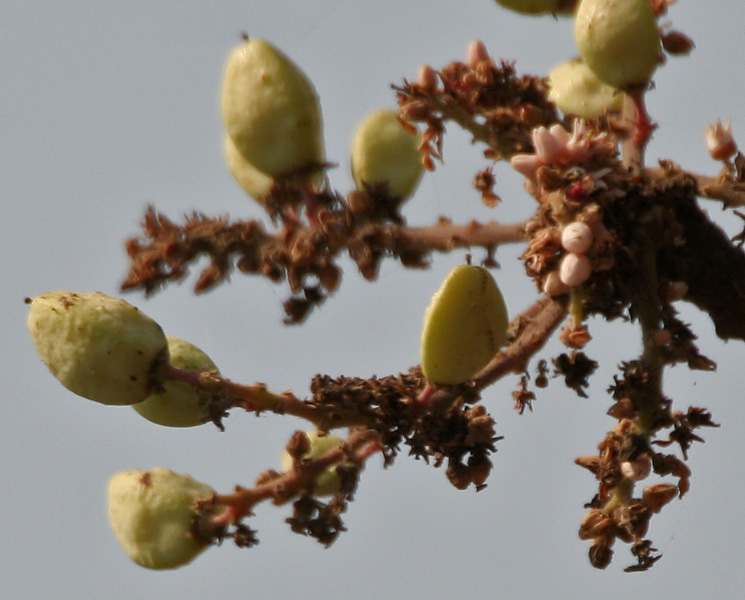
_in_Kinnarsani_WS%2C_AP_W2_IMG_5840.jpg)
Shallaki is the gum resin of a small Indian tree, better known in the West as Indian frankincense. Ayurveda values it above all for the joints, and works it into oils, powders and medicated ghees.
- Botanical name
- Boswellia serrata
- Family
- Burseraceae
- Sanskrit
- शल्लकी
- Part used
- Gum resin
- Taste (rasa)
- Bitter and astringent (tikta, kashaya)
- Quality (guna)
- Light, dry and penetrating (laghu, ruksha, tikshna)
- Energy (virya)
- Warming (ushna)
- After digestion (vipaka)
- Pungent after digestion (katu)
- Action (karma)
- Settles Vata, dries excess, said to favour the joints (vata-shamaka, sandhi)
- Best known for
- The fragrant tree resin Ayurveda turns to for the joints
What is Shallaki?
Shallaki is the gum resin of Boswellia serrata, a modest deciduous tree of the dry forests of central India. The tree itself is easy to overlook, with pale, papery bark that flakes away in thin sheets. Its value lies in the resin. When the bark is cut or wounded, a milky sap seeps out and hardens in the air into small amber-to-golden tears. Those hardened tears are Shallaki.
In the West the same resin is known as Indian frankincense, a cousin of the frankincense burned as incense for thousands of years. Ayurveda knows it by other names too, kunduru among them, and prizes it less for its scent than for what the tradition holds it does inside the body.
What Ayurveda uses it for
Shallaki has one reputation above all others: it is the resin of the joints. The classical texts reach for it where the dry, cold, unsettled quality the tradition calls Vata has lodged in the joints and the structural tissues, leaving them stiff and ill at ease. The texts speak of it favouring the asthi dhatu, the bone and structural tissue, and the sandhi, the joints themselves.
It is also used more broadly as a warming, drying resin, in conditions the tradition reads as cold, damp or stagnant. But it is the joints with which its name is bound.
Its qualities, in plain words
Ayurveda describes every substance by a short list of qualities, and for Shallaki these explain its traditional use plainly.
It is warming, which is why the tradition turns to it for the cold, dry, jittery quality of Vata. It is light and drying, so where there is heaviness or damp it reduces rather than adds. And it is penetrating, which the texts take to mean it reaches into the deeper tissues rather than staying on the surface. It begins bitter and astringent on the tongue and finishes pungent after digestion, a finish the tradition links to its warming, mobilising direction. Put together: a warm, light, reaching resin, well suited to cold and stiff conditions of the joints.
How it is taken
Shallaki is used in several classical forms. As a fine powder, a churnam, it is taken in small measure with warm water, milk or ghee. It is worked into medicated oils for Abhyanga, the Ayurvedic oil massage, where it is applied to the body rather than swallowed. And it appears as a supporting resin in larger named preparations, including medicated ghees of the joint-and-Vata group and the well-known guggulu compounds, where it sits alongside the related resin Guggulu.
Because resins are concentrated, the tradition uses Shallaki in modest amounts and as part of a course rather than a single dose.
Good to know
Shallaki is a warming, drying substance. The texts are careful with warming resins in anyone who already runs hot, and use them most freely where the picture is cold, dry and stiff. It belongs, like much of Ayurveda, to steady use over a stretch of time rather than to a quick fix.
This entry describes the classical Ayurvedic understanding of the resin. It is not medical advice, and anyone with a health condition, and anyone who is pregnant, should speak to a qualified practitioner.
Frequently asked
Is Shallaki the same as frankincense? It is a close relative. Shallaki is the resin of Boswellia serrata, the Indian member of the frankincense family, which is why it is often called Indian frankincense.
How is it different from Guggulu? Both are warming Ayurvedic resins, and they are often combined. They come from different trees, Shallaki from Boswellia serrata and Guggulu from Commiphora, and the tradition links Shallaki especially with the joints.
Which part is used? The gum resin, the hardened sap that forms when the bark is cut. The leaf and wood are not part of its classical preparations.
The resin, warm and drying, is taken where Vata has settled in the joints.
Classical tradition, after the Bhavaprakasha Nighantu
Frequently asked questions
What is Shallaki used for?
Shallaki, Boswellia serrata, is a fragrant tree resin, often called Indian frankincense, that Ayurveda has long used in preparations for the joints and the supporting tissues. The texts class its action as vata shamaka, settling Vata, and drying to excess, and say it favours the joints (sandhi). It is a classical joint herb used under a practitioner.
Is Shallaki, Boswellia, good for joints?
Ayurveda traditionally associates Shallaki with the joints, classing it as vata shamaka and saying it favours the Sandhi, the joints. It is one of the herbs the tradition turns to for stiff, aching, Vata affected joints, used within formulas and as its resin. It is a classical support, not a treatment for any named joint disease.
How do you take Shallaki?
Shallaki is taken as its purified resin (guggula like gum) in powder or tablet form, and also enters medicated oils applied to the joints. It is usually used as a course over some weeks for the joints. Being drying, it suits Vata and Kapha states; a practitioner sets the dose and form for you.
What is the difference between Shallaki and Guggulu?
Both are resins used for the joints, but they come from different trees. Shallaki is the resin of Boswellia serrata, Indian frankincense, particularly linked with the joints and Vata. Guggulu is the resin of Commiphora, used more widely for the joints, fat and channels. They often appear together in classical joint formulas, chosen and combined by a practitioner.
Is Shallaki safe to take long term?
Shallaki is generally well tolerated, but being drying it may aggravate Vata or a sensitive stomach in some, and it is used with care in pregnancy and where interacting medicines are taken. Joint problems have many causes, so use Shallaki as a reviewed course under a qualified Ayurvedic practitioner and alongside your doctor where needed.
References
- Charaka Samhita, on Vata-settling (vata-shamaka) substances.
- Bhavaprakasha Nighantu, on Shallaki and its qualities.
- Ashtanga Hridayam, on warming substances for Vata of the joints.