Materia Medica · Dravyaguna
Shalmali
Bombax ceiba · Malvaceae
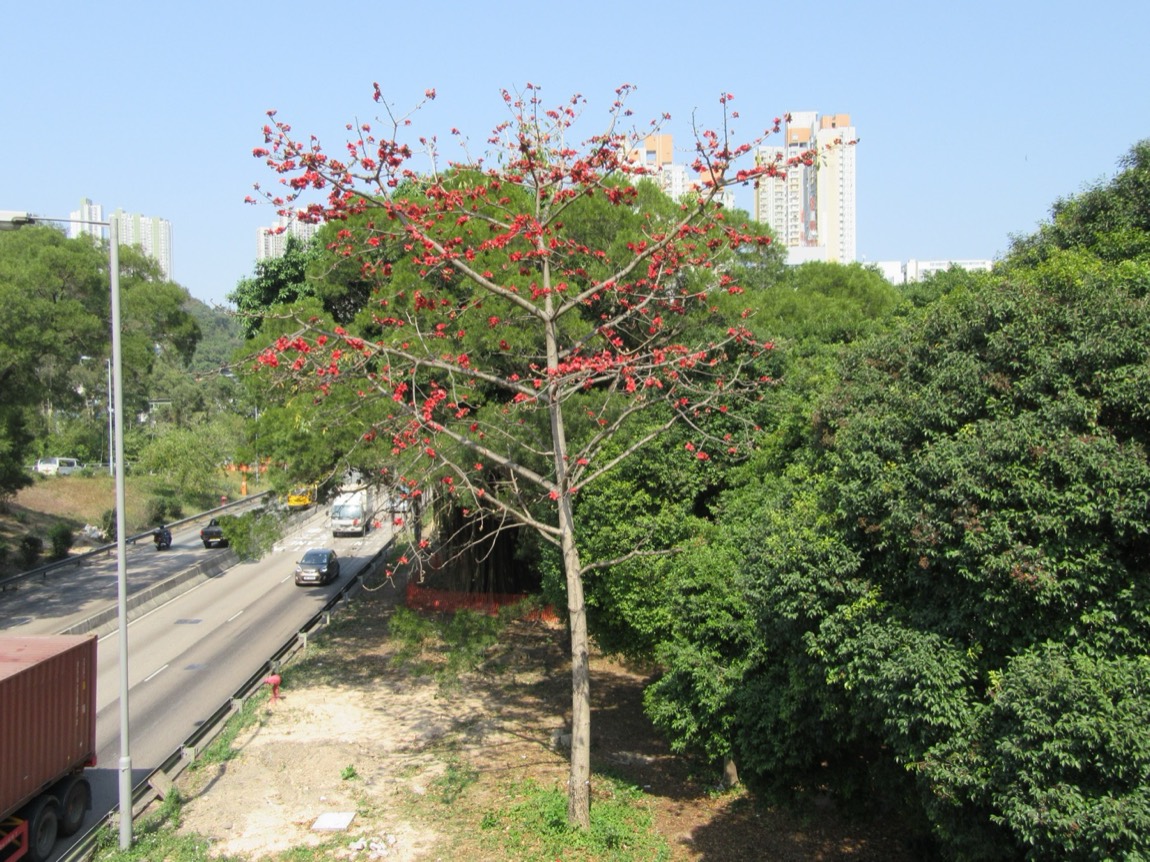

Shalmali is a great thorny tree whose crimson flowers and silky cotton are a familiar sight across India. Its prized part is the dried gum, Mocharasa, which Ayurveda values as a cooling, binding remedy for loose motions and bleeding, while the young root is counted a strengthening tonic.
- Botanical name
- Bombax ceiba
- Family
- Malvaceae
- Sanskrit
- शाल्मली
- Part used
- Gum (Mocharasa), root, flower and young thorns
- Taste (rasa)
- Sweet and astringent (madhura, kashaya)
- Quality (guna)
- Heavy, unctuous and slimy (guru, snigdha, pichchhila)
- Energy (virya)
- Cooling (sheeta)
- After digestion (vipaka)
- Sweet (madhura)
- Action (karma)
- Binds and checks the flow, strengthens, settles Pitta and Vata (grahi, stambhana, vrishya, balya)
- Best known for
- A cooling gum that binds the flow and settles bleeding
What is Shalmali?
Shalmali is a great forest tree, Bombax ceiba, known in older books by the names Salmalia malabarica and Bombax malabaricum. It belongs to the mallow family, the Malvaceae, though the earlier botanists set it in a family of its own, the Bombacaceae. It is one of the tallest and most striking trees of the Indian countryside, its trunk and young branches armed with hard, conical thorns, its bare branches blazing with large crimson flowers before the leaves return, and its pods bursting open to release the soft, silky cotton that gives it its English name.
Ayurveda values several parts of this tree, but its most famous drug is the gum, the reddish exudate that seeps and hardens on the bark. This gum is called Mocharasa, and also Shalmali niryasa, the “juice of Shalmali.” The tender root of the young tree is prized too, known as Semul musli, the “Semul root.” In everyday speech the tree is called Semal or Simal in the north of India, and English speakers know it as the red silk cotton tree or the kapok tree, after the cotton in its pods.
What Ayurveda uses it for
In the classical texts Shalmali is prized above all for its gum, Mocharasa, which the dravyaguna writers place among the herbs that check and bind the flow. Its nature is grahi and stambhana, binding and staying, so it was understood to hold back what is running loose and to settle unwanted bleeding. Its sweet, cooling and unctuous quality made it a remedy the tradition turned to when there was heat and burning alongside that loss. The young root, by contrast, is counted among the strengthening and reproductive tonics, described as vrishya and balya, so the same tree offers both a binding gum and a building root.
Within that role the classical literature describes Shalmali and its gum as traditionally indicated in a familiar set of conditions, each named here in its classical Sanskrit term with a plain gloss:
- Atisara: loose motions and diarrhoea, the gum’s foremost and best known use. The dravyaguna texts place Mocharasa among the grahi substances that bind the loose flow of the bowel, and this is the traditional indication most often recorded for it. It is set out here for reference and study, not as a statement of medical effect.
- Raktatisara: diarrhoea carrying blood, where the gum’s cooling and astringent nature is called upon to both bind and settle. The classical writers describe Mocharasa as suited to loose motions that are hot and bloody, joining its binding action to its power over bleeding. This is the traditional textual indication, given for reference only.
- Pradara and Raktapradara: excessive menstrual and other uterine flow, a classical use of the astringent gum. The nighantu tradition records Mocharasa among the remedies for immoderate bleeding of this kind, drawing on its staying, stambhana quality. It is noted here as recorded in the literature, not as advice to treat any condition.
- Raktapitta: the classical bleeding tendency in which blood is said to leave its proper course, understood as an aggravation of Pitta. The texts count the sweet, cooling Shalmali gum among the substances that soothe this state. This is the traditional understanding preserved in the classical sources, offered for study alone.
- Daha: burning sensation, whether of the body’s surface or its passages, which the cooling sheeta virtue of the gum was held to relieve. The classical writers describe Mocharasa as pacifying such heat, in keeping with its power to settle Pitta. It is given here for reference, not as a medical claim.
- Shukra-daurbalya: weakness of reproductive vitality, addressed through the tender root rather than the gum. The classical tradition counts the young Semul root a vrishya tonic, a strengthener of this vitality, which is why the root is gathered separately from the exudate. This is the traditional indication recorded for the root, set down for reference alone.
- Vrana: wounds and their healing, for which the binding, soothing gum is described in the surgical literature. Sushruta names Mocharasa among the substances applied to settle a raw surface, joining its astringent, unctuous nature to the work of closing a wound. It is recorded here as a classical use, given for study and not as advice.
These are the traditional textual indications recorded in the classical literature. They set out how Ayurveda has long understood the tree and its parts, and are given for reference and study, not as statements of medical effect or as advice to treat any condition.
Its qualities, in plain words
Ayurveda describes every herb by a short list of qualities, and for Shalmali they line up neatly behind its reputation as a cooling binder.
Its taste is sweet, with an astringent edge, and in Ayurveda astringency is the very taste that draws together and holds. It is heavy, unctuous and slimy, the last of these, the quality the texts call pichchhila, describing the soft, mucilaginous feel of the gum, which coats and soothes rather than scours. It is cooling, which is why it suits the heat and burning the tradition links to Pitta. And it finishes sweet after digestion, a sign that it feeds and settles rather than wearing the body down. Put together, these qualities describe a soft, cool, binding substance, which is why the tradition settles most firmly on its power to check the flow and calm bleeding. Because that sweet, unctuous, cooling nature soothes both the heat of Pitta and the dryness of Vata, those are the two doshas the sources agree it pacifies.
How it is taken
The usual form is the dried gum, Mocharasa, gathered from the bark and used as a fine powder. Because its action is binding and cooling, it was often given in a little warm water, or stirred into a suitable vehicle, and taken over the course of a complaint rather than as a single dose. The tender root, when it is the reproductive tonic that is wanted, is prepared separately and dried before use.
From the gum the classical writers made a range of binding and soothing preparations. Mocharasa appears by name in the group of astringent, flow-checking substances the texts assemble for loose motions and bleeding, and it was combined with other cooling, binding herbs in powders and confections for these purposes. The flower and the young thorns are described in the classical literature too, gathered in their season and put to their own traditional uses, so that in all the tree yields several distinct drugs from a single plant.
Good to know
Shalmali is a tree of many parts, and the tradition is careful to keep them distinct: the binding, cooling gum Mocharasa for loose motions and bleeding, and the tender root as a separate strengthening tonic. It belongs, on the whole, to the settling and soothing side of Ayurveda rather than the clearing side. One point of character is worth remembering: the tree guards itself behind a trunk of hard thorns, a plain reminder that its gentle gum is drawn from a formidable plant.
This entry describes the classical Ayurvedic understanding of the herb. It is not medical advice, and anyone with a health condition should speak to a qualified practitioner.
Frequently asked
What is Mocharasa? Mocharasa is the dried gum of the Shalmali tree, the reddish exudate that seeps from the bark and hardens there. It is the tree’s most famous drug, valued for its binding, cooling nature, and it is also called Shalmali niryasa, the “juice of Shalmali.”
Which part of the plant is used? Several parts. The gum, Mocharasa, is the best known and is the part named for checking loose motions and bleeding. The tender root, the Semul musli, is gathered separately as a strengthening tonic, and the flower and young thorns are described in the classical literature with their own traditional uses.
Is Shalmali cooling or warming? Cooling. Its sweet, astringent, unctuous gum has a sheeta or cooling virtue, which is why the tradition reaches for it when there is heat and burning alongside a loose or bleeding complaint, and why it is counted among the herbs that soothe Pitta.
The gum of Shalmali is sweet, astringent and cooling; it binds the flow, checks bleeding and soothes the burning of Pitta.
After the Bhavaprakasha Nighantu, on Mocharasa
The tender root gives strength and steadies the body, counted among the reproductive tonics.
After the classical nighantu tradition, on the Semul root
Frequently asked questions
What is Shalmali used for in Ayurveda?
Shalmali (Bombax ceiba) is a tall, thorny forest tree whose dried gum Ayurveda values as a cooling, binding remedy. It is used to check loose motions and to settle unwanted bleeding. Its action is classed as grahi, stambhana, vrishya and balya, so it binds and checks the flow while strengthening the body.
What is Mocharasa?
Mocharasa is the classical name for the dried gum or exudate of the Shalmali tree, and it is the part Ayurveda most values. This cooling, astringent gum is the binding, flow-checking remedy used in loose motions and bleeding tendencies. When texts speak of Shalmali as a medicine, they usually mean Mocharasa, its gum.
Is Shalmali good for loose motions?
In the classical tradition, yes. Shalmali gum (Mocharasa) is grahi and stambhana, meaning it binds and checks an over-loose flow, which is why Ayurveda uses it in diarrhoea-type conditions and to settle unwanted bleeding. It is presented as traditional support and is best used under a qualified practitioner where symptoms persist.
Which dosha does Shalmali balance?
Shalmali settles Pitta and Vata. Its cooling nature suits the heat Ayurveda links to Pitta, while its binding, holding action steadies the flow. Its sweet and astringent tastes (madhura, kashaya) give it both a nourishing and a checking quality, which is why it both strengthens (balya, vrishya) and binds (grahi).
How is Shalmali gum taken?
The dried gum (Mocharasa) is used in small measures, often with milk or in classical compound formulas for loose motions and bleeding tendencies. Because its use centres on checking flow, the amount and combination are best set by a qualified Ayurvedic practitioner rather than self-prescribed, especially where bleeding or persistent diarrhoea is involved.
References
- Charaka Samhita, Sutrasthana, among the herbs that check the flow and settle bleeding disorders (the grahi and raktapitta context).
- Sushruta Samhita, where Mocharasa, the gum of Shalmali, is named among the binding and wound-settling substances.
- Bhavaprakasha Nighantu, entry on Shalmali and its gum Mocharasa, with properties and uses.
- Raja Nighantu, listing the many Sanskrit synonyms of Shalmali and the young root known as Semul musli.
- Dhanvantari Nighantu, on the cooling and astringent virtues of the Shalmali gum.