Materia Medica · Dravyaguna
Shigru
Moringa oleifera · Moringaceae
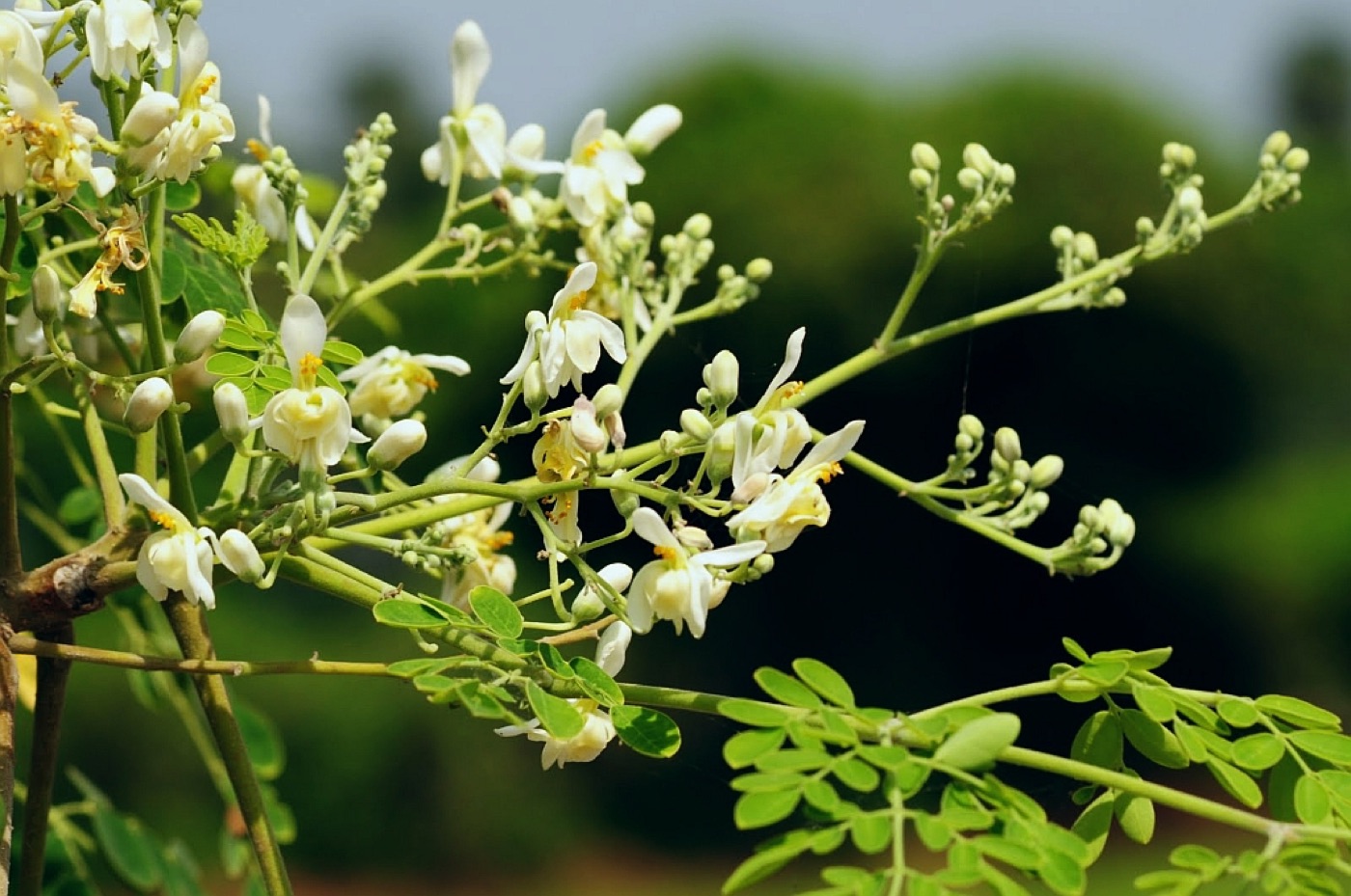

Shigru is the tree that gives the familiar drumstick pod. Ayurveda knows it as a sharp, warming herb whose leaf, pod, bark and root-bark are used to lighten heaviness and reduce swelling, and it is one of the classic scraping, kindling plants of the materia medica.
- Botanical name
- Moringa oleifera
- Family
- Moringaceae
- Sanskrit
- शिग्रु
- Part used
- Leaf, pod and seed, bark, and root-bark
- Taste (rasa)
- Pungent and bitter (katu, tikta)
- Quality (guna)
- Light, dry and penetrating (laghu, ruksha, tikshna)
- Energy (virya)
- Warming (ushna)
- After digestion (vipaka)
- Pungent (katu)
- Action (karma)
- Kindles digestion, clears worms, reduces swelling and scrapes away heaviness, settles Kapha and Vata (deepana, krimighna, shothahara, lekhana, kapha-vata-hara)
- Effect on dosha
- Settles Kapha and Vata (kapha-vata-hara)
- Best known for
- A warming, scraping herb for swelling and heaviness
What is Shigru?
Shigru is one of the fastest-growing trees of the Indian countryside, Moringa oleifera, a slender tree with feathery leaves, cream-coloured flowers, and long, ribbed pods that hang down like drumsticks. Almost every part of it is put to use. The young pods and leaves are a common food, while the leaf, the pod and seed, the bark and the root-bark all appear in the classical materia medica.
The Sanskrit name carries the sense of something sharp and swift. Shigru suggests quickness and a piercing, pungent quality, which fits a tree whose root-bark bites the tongue with a heat close to horseradish. That likeness is why English speakers call it the horseradish tree, alongside the plainer drumstick tree, named for its pods. Across India it is widely known as Sahijan and, in the south, as Munaga. The tradition also recognises a second type, Shweta Shigru, the white-flowered kind, described alongside the common tree in the classical texts.
What Ayurveda uses it for
In the classical texts Shigru belongs to the pungent, warming herbs that kindle digestion and lighten the body. Its sharp, dry, penetrating nature was understood to cut through heaviness and accumulation, an action the tradition calls lekhana or scraping, and to settle the cold, sticky quality of Kapha together with the mobile quality of Vata. The texts group it among the plants reached for when tissue swells or matter gathers where it should not.
Within that role the dravyaguna texts describe the tree as traditionally indicated in a familiar set of conditions, each named here in its classical Sanskrit term with a plain gloss:
- Shotha: swelling, the tree’s best-known classical use, given its reducing, draining action.
- Medoroga: the classical condition of excess fatty tissue, where its scraping, lightening quality is called upon.
- Gulma: firm masses or distension felt in the abdomen.
- Krimi: the classical category of intestinal worms, for which the leaf, seed and bark are named.
- Vrana: wounds, where the bark and leaf are described in external applications.
- Apachi and Gandamala: glandular swellings of the neck, a use the texts note for the bark and root-bark.
- Vidradhi: the classical term for an abscess, treated in the tradition with its warming, dispersing action.
These are the traditional textual indications recorded in the classical literature. They set out how Ayurveda has long understood the herb and are given for reference and study, not as statements of medical effect or as advice to treat any condition.
The seed is a further feature worth noting. Alongside its internal uses, the crushed seed and the oil pressed from it, sometimes called ben oil, are described in external and topical applications. This is recorded here as a point of botanical fact and places the classical herb in its wider context.
Its qualities, in plain words
Ayurveda describes every herb by a short list of qualities, and for Shigru they line up plainly behind its reputation as a sharp, clearing tree.
Its taste is pungent, with a bitter edge, and in Ayurveda a pungent taste is the taste of heat and movement that kindles digestion and disperses what is stuck. It is light, dry and penetrating, so rather than feeding or grounding the body it lightens it and reaches into the tissues, the way a sharp, warming spice does. It is warming, which is why the tradition sets it against the cold heaviness of Kapha and the coldness of Vata. And it finishes pungent after digestion, a sign that it keeps its dry, scraping character all the way through. Put together, these qualities describe a hot, dry, mobile herb, which is why the sources agree so firmly on its Kapha and Vata settling action. Because that same heat and dryness can be a little sharp for Pitta, it is the Kapha and Vata role that the texts hold to.
How it is taken
The classical writers used several parts of the tree, chosen to match the aim. The bark and root-bark, being the most pungent and penetrating, appear most often in the reducing and dispersing preparations. The leaf and the pod are the gentler, more everyday parts, taken as food as much as medicine, while the seed and its pressed oil are turned mostly to external use.
From these parts the tradition made a range of preparations. Shigru is a common ingredient in medicated decoctions, the kashaya, where its bark is boiled with other warming, clearing herbs. It also appears in lepa, the medicated pastes applied to the skin over a swelling. The seed yields an oil that carries the herb into topical applications. As a warm, dry herb it was typically paired with other pungent and bitter plants that share its lightening direction, rather than with the sweet, heavy tonics.
Good to know
Shigru sits firmly on the clearing, lightening side of Ayurveda rather than the nourishing side. It is a warm, dry, mobile herb, and the tradition treats it as one of the scraping plants reached for when there is heaviness, swelling or accumulation, not as a building tonic. Because of that same heat and dryness, the texts are more cautious about it where there is already excess Pitta or marked dryness in the body, and they favour it where cold and heaviness dominate.
This entry describes the classical Ayurvedic understanding of the herb. It is not medical advice, and anyone with a health condition should speak to a qualified practitioner.
Frequently asked
Why is it called the horseradish tree? Because the root-bark has a sharp, biting heat much like horseradish, a pungency the Sanskrit name Shigru itself points to. The other common English name, drumstick tree, comes instead from its long, ribbed pods.
Which parts of the tree are used? Several. The bark and root-bark are the most pungent and appear most often in the reducing preparations; the leaf and pod are the gentler parts, taken as food as well as medicine; and the seed and its pressed oil are used mostly in external applications.
Is there more than one kind of Shigru? Yes. The classical texts describe a second type, Shweta Shigru, the white-flowered kind, recognised alongside the common tree, though the ordinary drumstick tree is the one the preparations most often call for.
Shigru is pungent, bitter and warming; it kindles the digestive fire, clears worms and reduces swelling, and settles Kapha and Vata.
After the Bhavaprakasha Nighantu, on Shigru
The pungent, penetrating tree lightens heaviness and is counted among the herbs that scrape away accumulation.
After the classical Nighantu tradition, on the scraping herbs
Frequently asked questions
What is Shigru used for in Ayurveda?
Shigru, from Moringa oleifera, is a fast-growing tree whose leaf, pod, bark and root-bark Ayurveda values as a warm, penetrating, scraping herb. The texts class it as deepana, krimighna, shothahara and lekhana, so it is traditionally used to kindle digestion, clear worms, reduce swelling and scrape away heaviness, settling Kapha and Vata as it does so.
What does lekhana mean for Shigru?
Lekhana means scraping, the action of paring away excess and heaviness from the tissues. Shigru is classed as lekhana because its warm, dry, penetrating nature is held to scrape away accumulated Kapha and heaviness. This is why the tradition reaches for it in swollen, heavy, Kapha-laden states, and why it lightens the body rather than building it.
Which dosha does Shigru balance?
Shigru settles Kapha and Vata, in keeping with its pungent and bitter taste and its warm, penetrating, scraping nature. Its lightening, drying action suits cold, heavy, swollen states. Being warming and sharp, it is used with more care where Pitta is high, since its heat can aggravate that Dosha if taken freely.
Is Shigru the same as drumstick or moringa?
Yes. Shigru is the Sanskrit name for Moringa oleifera, known in English as the drumstick tree and in India as Sahijan, and it is also called Shobhanjana in the texts. All these point to the same fast-growing tree whose leaf, pod, bark and root-bark Ayurveda uses as a warming, scraping herb for swelling and heaviness.
Is Shigru good for swelling?
Traditionally, yes. The texts class Shigru as shothahara, a herb that reduces swelling or Shotha, drawing on its warm, penetrating, scraping nature and its lekhana action. It is used to lighten heavy, swollen, Kapha-laden states as part of a wider plan rather than for any named disease, and is best used under the guidance of a practitioner.
References
- Charaka Samhita, Sutrasthana, among the Shakavarga (leafy vegetables) and the pungent, Kapha-reducing group of herbs.
- Sushruta Samhita, among the Shigrvadi and Varunadi gana, the groups used for swelling and accumulation.
- Bhavaprakasha Nighantu, entry on Shigru with its two types and properties.
- Raja Nighantu, listing the many Sanskrit synonyms of the tree, including Shobhanjana and Akshiva.
- Kaiyadeva Nighantu, on the qualities and uses of Shigru.