Materia Medica · Dravyaguna
Pushkarmool
Inula racemosa · Asteraceae
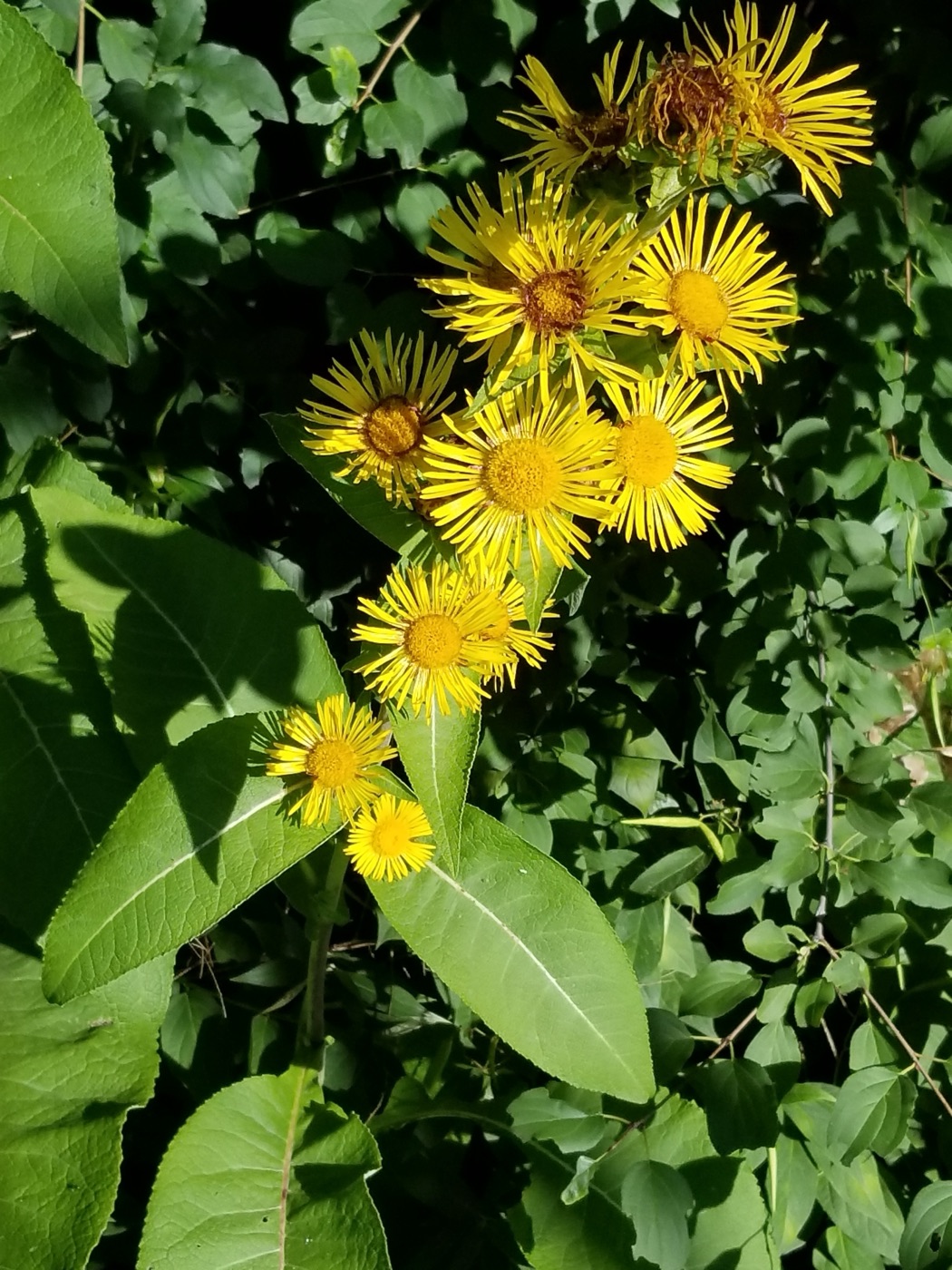

Pushkarmool is the root Ayurveda turns to for the chest and the region of the heart. Warming and penetrating, it is the herb the classical texts place first when there is pain in the sides and trouble with the breath.
- Botanical name
- Inula racemosa
- Family
- Asteraceae
- Sanskrit
- पुष्करमूल
- Part used
- Root
- Taste (rasa)
- Bitter and pungent (tikta, katu)
- Quality (guna)
- Light, penetrating and dry (laghu, tikshna, ruksha)
- Energy (virya)
- Warming (ushna)
- After digestion (vipaka)
- Pungent (katu)
- Action (karma)
- Settles the breath and cough, good for the region of the heart, settles discomfort (shwasahara, kasahara, hridya, vedanasthapana)
- Effect on dosha
- Pacifies Kapha and Vata (kapha-vata-hara)
- Best known for
- A warming root the texts link with the chest and the region of the heart
What is Pushkarmool?
Pushkarmool is the root of Inula racemosa, a tall, robust herb of the daisy family that grows in the cool, high country of the western Himalaya, Kashmir among its homes. Above ground it is an upright plant with broad leaves and yellow flower-heads. What Ayurveda values lies below: a thick, aromatic root with a bitter, slightly biting taste. It is that root, dried and prepared, that the tradition has long used.
The name points to the root itself. Mool means root, and Pushkara is the older name of the plant, so Pushkarmool is simply “the root of Pushkara.” The texts also call it Paushkara and Kashmira, the latter after the region where it is at home. In English it is usually called Indian elecampane, a nod to its likeness to the European elecampane, a related herb of the same family. Of all the herbs in the classical materia medica, this is the one the texts most closely link with the chest and the region of the heart.
What Ayurveda uses it for
In the classical texts Pushkarmool is counted chiefly among the herbs that settle the breath and the cough, an action the tradition calls shwasahara and kasahara, and it is described as hridya, favourable to the region of the heart. Its bitter, pungent and warming nature was understood to meet the cold, heavy quality of aggravated Kapha in the chest and the drying, unsteady quality of Vata, which is why the sources place it first when the breath is laboured and the sides are painful.
Within that role the dravyaguna texts describe the root as traditionally indicated in a familiar set of conditions, each named here in its classical Sanskrit term with a plain gloss:
- Parshvashula: pain in the sides and the chest, the root’s foremost classical use.
- Hridroga: complaints of the region of the heart in the classical sense, where its hridya action is called upon.
- Kasa and Shwasa: cough and laboured breathing, the pairing the texts return to most often.
- Hikka: hiccough, the persistent, catching kind the classical writers describe alongside the breath.
- Jwara: fever, where its warming, penetrating quality is put to use.
- Kaphaja disorders: the broad class of complaints arising from aggravated Kapha, given its clearing, drying action on the chest.
These are the traditional textual indications recorded in the classical literature. They set out how Ayurveda has long understood the herb and are given for reference and study, not as statements of medical effect or as advice to treat any condition.
Its qualities, in plain words
Ayurveda describes every herb by a short list of qualities, and Pushkarmool’s explain its long standing as a herb for the chest.
Its taste is bitter, with a pungent edge, a profile the texts associate with clearing and drying rather than nourishing. It is light, penetrating and dry, so the tradition sees it reaching into congested, heavy places in the chest and getting things moving. It is warming, which is why it suits the cold, sluggish quality of Kapha and the cold, mobile quality of Vata rather than the heat of Pitta. And it finishes pungent after digestion, another sign of a clearing rather than a building herb. Put together, these qualities describe a warm, light, drying root, which is why the sources agree it settles Kapha and Vata together while it does its work on the breath and the sides.
How it is taken
Pushkarmool is used both on its own and in formulas. On its own the classical routes are the familiar ones: the dried root as a powder, or churna, taken with a warm vehicle, and a decoction of the root for the chest and the breath. Because it is a warming, clearing herb, the tradition favours warm vehicles that carry its action into the region it is meant to reach.
In the classical preparations the root is combined with other warming, breath-settling herbs so that the whole does more than any single part. It appears by name in formulas built for the chest and the breath, and the older texts describe it worked into powders and decoctions for cough and laboured breathing and for pain in the sides. As with the other clearing herbs, it is the dried, prepared root that is used throughout.
Good to know
Pushkarmool is a warming, drying herb, and the tradition matches it to the cold, heavy, congested picture of Kapha in the chest and the cold, unsteady picture of Vata, rather than to heat. The classical writers note that where there is clear heat in the body, the Pitta picture, a warming and drying herb is used more carefully or set aside for a cooling one. Being a light, drying root, it belongs to the clearing rather than the nourishing side of Ayurveda, and it is used as part of a considered course rather than casually.
This entry describes the classical Ayurvedic understanding of the herb. It is not medical advice, and anyone with a health condition should speak to a qualified practitioner.
Frequently asked
Why is Pushkarmool linked so closely with the chest and the heart? Because the classical texts place it first among the herbs for the region, describing it as hridya, favourable to the region of the heart, and reaching for it where there is pain in the sides and trouble with the breath. Of all the herbs in the materia medica, this is the one the tradition most closely associates with the chest.
Which part of the plant is used? The root. The name itself, Pushkarmool, means “the root of Pushkara,” and it is the dried, prepared root that is named for all of its classical preparations.
Why is a warming herb used for the breath and the cough? Because Ayurveda reads much of the trouble in the chest as a cold, heavy Kapha problem, or a cold, dry Vata one, rather than a hot one. A warming, penetrating root meets that coldness and congestion with its opposite. Where the trouble is genuinely hot instead, the tradition would choose differently.
Pushkarmool is bitter and warming; it settles the breath and the cough, eases pain in the sides, and favours the region of the heart.
After the Bhavaprakasha Nighantu, on the herbs for the chest and the breath
For pain in the sides and for laboured breathing, Pushkara is held foremost among the settling herbs.
Classical tradition, after the Charaka Samhita on the Shwasa-settling herbs
Frequently asked questions
What is Pushkarmool used for?
Pushkarmool, the bitter warming root Inula racemosa, is named in Ayurveda as the herb most closely linked with the chest, the breath and the region of the heart, and is used above all for pain in the sides. The texts class it as shwasahara, kasahara, hridya and vedanasthapana, settling the breath and cough and easing discomfort. It pacifies Kapha and Vata.
Is Pushkarmool good for the chest and breathing?
Ayurveda ties Pushkarmool more closely to the chest and breath than almost any other root, classing its action as shwasahara and kasahara, settling breath and cough. Its bitter, pungent, warming nature clears Kapha and eases the chest, and the texts also call it hridya, good for the region of the heart. Clinical use is best guided by a qualified practitioner.
Which dosha does Pushkarmool pacify?
Pushkarmool pacifies Kapha and Vata, described as kapha-vata-hara. Its bitter and pungent rasa and warming quality clear the damp, heavy Kapha that congests the chest, while settling the Vata that unsettles the breath. This Kapha-Vata direction underlies its classical role for cough, breathing and the region of the heart, and pain in the sides.
Is Pushkarmool and Pushkara the same?
Yes. Pushkara is a short classical name for Pushkarmool, the root, or mula, of Inula racemosa, sometimes called Indian elecampane. Both names refer to the same bitter, warming root that Ayurveda links with the chest, the breath and the region of the heart. The full name Pushkarmool simply emphasises that it is the root that is used.
How is Pushkarmool taken for cough?
In the classical tradition Pushkarmool is used for cough and the breath as a powder or decoction of the root, or within chest-directed formulas, drawing on its shwasahara and kasahara action. The right form and dose depend on the person, so it is best used under a qualified Ayurvedic practitioner, and a doctor seen for any persistent chest complaint.
References
- Charaka Samhita, Sutrasthana, which names Pushkarmool among the herbs that settle cough and laboured breathing.
- Charaka Samhita, Chikitsasthana, on the management of Hikka and Shwasa, where Pushkara is described.
- Sushruta Samhita, among the substances that favour the chest and the breath.
- Bhavaprakasha Nighantu, entry on Pushkarmool with its synonyms and properties.
- Raja Nighantu, listing the Sanskrit synonyms of the plant, including Pushkara and Paushkara.