Materia Medica · Dravyaguna
Musta
Cyperus rotundus · Cyperaceae
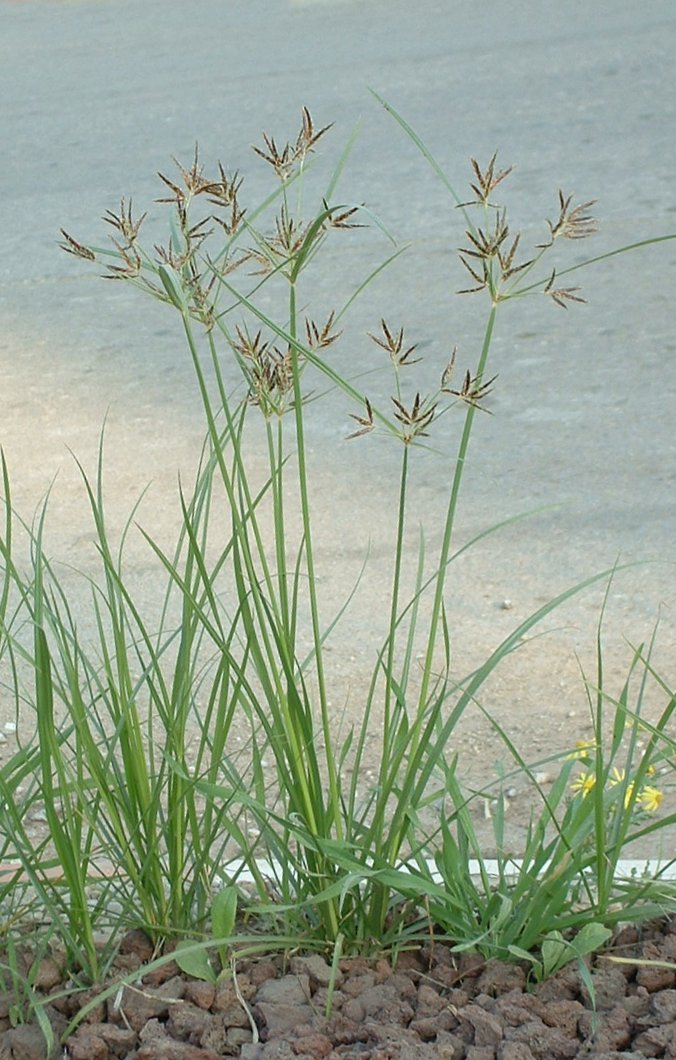

Musta is the dried root of a common sedge, used in Ayurveda to steady the digestion. It is one of the classic remedies reached for when the stomach is sluggish, bloated or overheated.
- Botanical name
- Cyperus rotundus
- Family
- Cyperaceae
- Sanskrit
- मुस्ता
- Part used
- Root (the dried tuber)
- Taste (rasa)
- Bitter, astringent and pungent (tikta, kashaya, katu)
- Quality (guna)
- Light and dry (laghu, ruksha)
- Energy (virya)
- Warming (ushna)
- After digestion (vipaka)
- Pungent (katu)
- Action (karma)
- Kindles digestion, settles the stomach (deepana, pachana, grahi)
- Best known for
- Steadying the digestion and cooling the heat of a disturbed stomach
What is Musta?
Musta is the root of a small, hardy sedge, Cyperus rotundus, that grows like a weed in damp ground and field margins across India. Above ground it is unremarkable, a tuft of narrow, grass-like leaves on a three-sided stem. What Ayurveda values lies below: the small, dark, knotty tubers strung along its roots, dried and powdered for use.
The plant is so common, and so stubborn in a field, that it is little loved by farmers. But that very abundance has made Musta one of the most widely used roots in the Ayurvedic store cupboard, reached for again and again across two thousand years of practice.
What Ayurveda uses it for
Musta is, above all, a digestive root. The texts place it among the Deepaniya herbs, the group that kindles Agni, the digestive fire. So the tradition reaches for it when digestion has grown sluggish, when food sits heavy, and when the belly feels bloated and full.
It does this in an unusual way. Most herbs that kindle the digestion are hot and sharp, and can stir up heat in a body already overheated. Musta kindles without that fierce heat. It carries a bitter, astringent, drying quality that the texts describe as cooling the disordered, overheated stomach even as it gets the digestion moving again. That balance, warming the fire while cooling the inflammation, is exactly why the classical writers prized it.
Its qualities, in plain words
Ayurveda describes Musta as light and dry. Those two qualities tell most of its story: it dries up the damp, heavy, stagnant quality the texts call Kapha, which is the quality behind a sluggish gut, bloating, and excess moisture in the body.
Its taste is bitter, astringent and a little pungent, none of them sweet, which is why it does not build the body but rather clears and tightens it. The bitter and astringent edge is what makes it settling and steadying for a loose, disturbed stomach. And while it is gently warming in its power, the tradition still counts it among the herbs that calm a heated, irritated Pitta, the principle of fire and metabolism, because by setting the digestion right it stops trouble building in the first place.
How it is taken
The simplest way is as a powder of the dried root, a small measure stirred into warm water or a little honey, taken before or after food to settle the digestion.
More often Musta appears within named preparations. It is a member of Trikatu-like digestive blends, a frequent ingredient in cooling decoctions, and it sits in many of the classical Kashayam recipes for the stomach. Its reliability and gentleness make it a quiet workhorse of the materia medica rather than a headline herb.
Good to know
Because Musta is light, dry and clearing, the tradition suits it best to heavy, damp, sluggish states rather than to dryness or depletion. A person who is already dry and run down is given it, if at all, balanced with nourishing herbs.
This entry describes the classical Ayurvedic understanding of the herb. It is not medical advice, and anyone with a health condition should speak to a qualified practitioner.
Frequently asked
Which part of the plant is used? The small dried tubers from the root. The leaves and stems are not the part Ayurveda values.
Is it the same as the nut grass that grows as a weed? Yes. The very plant farmers struggle to clear from their fields is the source of this classical root, which is part of why it has always been so widely available.
Why is it used both to kindle digestion and to cool the stomach? Because it does both at once. It is warming and drying enough to get a sluggish digestion moving, yet bitter and astringent enough to settle and cool an irritated, overheated stomach. That combination is unusual and is the reason the texts return to it so often.
Musta kindles the digestive fire, dries excess moisture, and quiets the disordered stomach.
After the Bhavaprakasha Nighantu, on the qualities of Musta
Frequently asked questions
What is Musta used for?
Musta (Cyperus rotundus), a small grassy root, is used in Ayurveda to settle the digestion, ease bloating and cool the heat of a disturbed stomach. Classed as deepana, pachana and grahi, it kindles a gentle Agni while it steadies loose or over-heated digestion. Bitter, astringent and pungent in taste, it is a classic go-to for a sluggish, hot or unsettled gut.
What are the benefits of Musta?
Ayurveda associates Musta with clean, steady digestion. It is traditionally used to digest Ama, ease bloating and gas, cool a heated stomach and bind a loose digestion (grahi). Being bitter and mildly astringent it also has a cooling, clearing quality valued in fevers and for the blood. It is a versatile digestive root that both kindles Agni and settles it.
Is Musta good for digestion and bloating?
Yes, digestion is Musta's main sphere. Classed as deepana and pachana, it kindles Agni and helps digest the undigested residue (Ama) that Ayurveda sees behind bloating and gas, and its grahi action steadies a loose gut. It offers traditional digestive support rather than a cure for any named condition, so persistent digestive trouble should still be reviewed by a qualified practitioner.
How do you take Musta?
Musta is usually taken as a powder (Churna) or as a decoction (Kwatha), often in a small measure with warm water before or after food for the digestion. It also appears in many classical digestive and fever formulas. Because the right form and dose depend on your Agni and constitution, they are best set by a qualified practitioner.
Which dosha does Musta balance?
Musta chiefly settles Kapha and Pitta: its bitter, astringent and pungent taste and light, drying quality clear damp Kapha congestion in the gut while cooling excess Pitta heat. This is why it suits heavy, sluggish or over-heated digestion. Being drying, it is used a little more carefully where Vata and dryness are already high.
References
- Charaka Samhita, Sutrasthana, on the Deepaniya group of digestive herbs.
- Bhavaprakasha Nighantu, Haritakyadi Varga, entry on Musta.
- Sushruta Samhita, on the bitter and astringent substances.