Materia Medica · Dravyaguna
Tejpatra
Cinnamomum tamala · Lauraceae
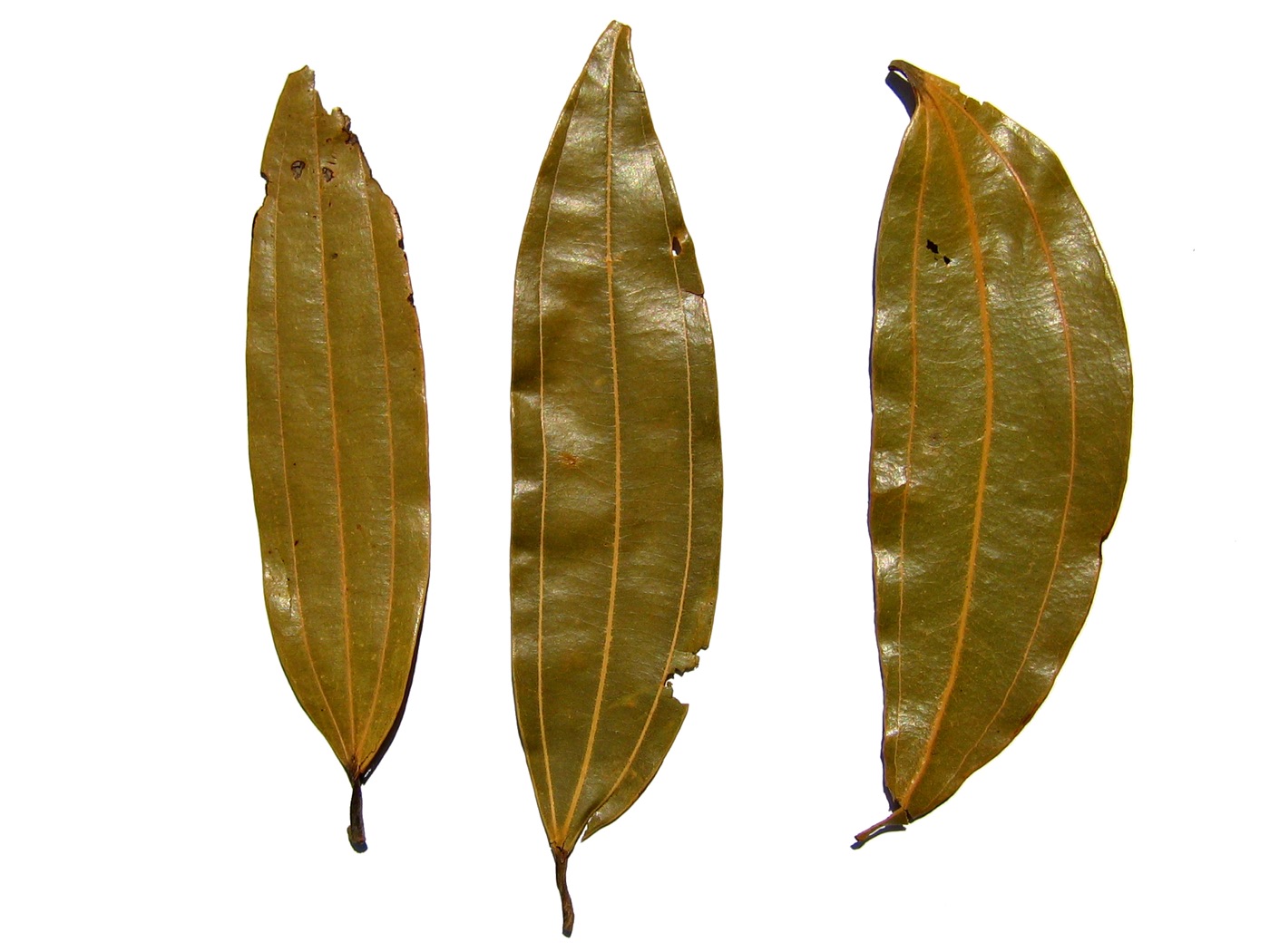

Tejpatra is the fragrant dried leaf of a cinnamon relative, the Indian bay leaf that Ayurveda keeps among its everyday warming spices. It is one of the three aromatics of the Trijataka, reached for to kindle the digestive fire and to lend warmth and relish to a great many classical preparations.
- Botanical name
- Cinnamomum tamala
- Family
- Lauraceae
- Sanskrit
- तेजपत्र
- Part used
- Leaf (the bark is also aromatic)
- Taste (rasa)
- Pungent, sweet and bitter (katu, madhura, tikta)
- Quality (guna)
- Light, dry and penetrating (laghu, ruksha, tikshna)
- Energy (virya)
- Warming (ushna)
- After digestion (vipaka)
- Pungent after digestion (katu)
- Action (karma)
- Kindles digestion and is good for the heart (deepana, pachana, hridya)
- Effect on dosha
- Settles Kapha and Vata
- Best known for
- A warming aromatic leaf that kindles the digestion
What is Tejpatra?
Tejpatra is the dried leaf of Cinnamomum tamala, a small evergreen tree of the laurel family and a close relative of the cinnamon whose bark is so familiar. It is often called Indian bay leaf, though it is not the bay of the Mediterranean kitchen but a cinnamon in its own right. The leaf is easy to recognise once you know it: broad, leathery and marked by three prominent veins that run its length, with a warm, faintly sweet aroma when it is crushed. It is this leaf, whole or ground, that Ayurveda uses, and the bark of the same tree is aromatic too.
The name carries its own sense. Tejpatra joins the idea of brightness or sharpness with patra, a leaf, while the older Sanskrit names Tamalapatra and Patraka simply mark it out as the leaf. What sets Tejpatra apart in the classical pharmacy is the company it keeps. Together with the bark of true cinnamon, Twak, and the pods of cardamom, Ela, it forms the Trijataka, the group of three sweet aromatics that season and warm so many preparations. When the flower-like Nagakeshara is added, the group of three becomes the Chaturjataka, the four sweet aromatics.
What Ayurveda uses it for
In classical terms Tejpatra is a warming aromatic spice, a deepana and pachana substance: deepana meaning it kindles agni, the digestive fire, and pachana meaning it helps that fire do its work so food is digested comfortably rather than sitting heavy. The dravyaguna texts also count it among the hridya substances, those regarded as favourable to the heart, and its light, dry, penetrating nature was understood to settle the cold, heavy quality of Kapha and the cold, dry quality of Vata.
Within that role the old texts return to the leaf in a clear set of settings, each given here in its Sanskrit term with a plain gloss:
- Agnimandya: a weak digestive fire, which its warming, kindling nature is called upon to stir.
- Aruchi: loss of taste and appetite, for which the aromatic is said to lend relish to food.
- Adhmana: bloating and distension of the belly.
- Pinasa: a blocked, running nose, of the kind the texts group with cold and congestion.
- Hrillasa: nausea and a turning of the stomach.
- Kasa: the cough that the texts group under this term.
- Shula: the colic and griping pain named by this term.
These are the traditional textual indications recorded in the classical literature. They set out how Ayurveda has long understood the herb and are given for reference and study, not as statements of medical effect or as advice to treat any condition.
Beyond these named settings, the wider importance of Tejpatra lies in its membership of the Trijataka and Chaturjataka. These small groups of sweet aromatics are folded into a very large number of classical churnas and confections, where the leaf lends warmth, fragrance and its digestion-kindling character to the whole.
Its qualities, in plain words
Ayurveda sets out every herb by a short list of qualities, and for Tejpatra they line up neatly with the way it is used.
Its taste is pungent, with a sweet turn and a bitter note behind it, and pungent flavours are the ones the tradition ties to kindling and stirring rather than to cooling. It is warming, which is why it settles the cold, heavy quality the texts call Kapha and the cold, dry quality called Vata. It is light, dry and penetrating, so it does not weigh the body down but moves and reaches through it. And it finishes pungent even after digestion, keeping its warming, stirring character all the way through. Put together, that is a warm, light, aromatic spice that wakes the digestion up, which is why the tradition names it among the deepana substances and, for its steadying, agreeable nature, among those said to favour the heart.
How it is taken
The plainest use is the oldest one: the whole or powdered leaf, a churna, folded into cooking and into warm, aromatic preparations. As a fragrant spice it is rarely used alone. Its natural place is alongside its companions, the cinnamon bark and cardamom of the Trijataka, with which it is measured out together.
Beyond the kitchen, Tejpatra is a component of many classical compound preparations. As one of the three or four sweet aromatics it is carried into a broad range of churnas and medicated confections, the avaleha and lehya type preparations in which sweet spices are set into a rich base. There it works less as a single remedy than as part of a warming, fragrant group, lending its own digestion-kindling and heart-favouring character to formulas built for many purposes.
Good to know
Tejpatra sits on the everyday, culinary and aromatic side of the Ayurvedic pharmacy rather than the slow tonic side, and it is most at home taken with food and within compound preparations rather than as a single dose. Because it is ushna, warming, and tikshna, penetrating, the classical writers treat it as a warming spice best used in moderation by those of a heated constitution. It is worth keeping in mind, too, that the Indian bay leaf of this entry is a cinnamon relative and not the Mediterranean bay of European cooking, though the two share a name in English.
This entry describes the classical Ayurvedic understanding of the herb. It is not medical advice, and anyone with a health condition should speak to a qualified practitioner.
Frequently asked
Is Tejpatra the same as the bay leaf in European cooking? No. Tejpatra, the Indian bay leaf, is the leaf of Cinnamomum tamala, a relative of cinnamon, and it carries a warm, faintly sweet, cinnamon-like aroma. The bay of the Mediterranean kitchen is a different plant altogether. The two share the English name “bay leaf” but are not the same herb.
What is the Trijataka? It is the classical group of three sweet aromatics: the bark of true cinnamon, Twak, the pods of cardamom, Ela, and the leaf described here, Patra or Tejpatra. When the aromatic Nagakeshara is added, the three become the Chaturjataka, the four sweet aromatics. These small groups season and warm a great many classical preparations.
Which part of the plant is used? Chiefly the leaf, whole or ground to a powder. The bark of the same tree is aromatic as well, but it is the three-veined leaf that Ayurveda names as Tejpatra.
Tejpatra is pungent and warming; it kindles the digestive fire, helps food to be digested and is counted among the substances that favour the heart.
After the Bhavaprakasha Nighantu, Karpuradi Varga
Cinnamon bark, cardamom and this leaf together make the group of three sweet aromatics.
After the classical description of the Trijataka
Frequently asked questions
What is Tejpatra used for in Ayurveda?
Tejpatra is the dried, three-veined leaf of a cinnamon relative, Cinnamomum tamala, an aromatic Ayurveda names for kindling the digestive fire and settling the belly. It is one of the three sweet spices of the Trijataka. The texts class it as deepana, pachana and hridya, so it kindles digestion and is held good for the heart.
What is the Trijataka?
The Trijataka is a classical Ayurvedic trio of three sweet, aromatic spices, cinnamon bark, cardamom and the Indian bay leaf Tejpatra. Together they are used to add warmth and fragrance to formulas and to kindle the digestion. Tejpatra brings its warming, digestion-kindling leaf, deepana and pachana, to this well-known group of spices.
How is Tejpatra used?
Tejpatra, the Indian bay leaf, is used as a warming culinary and medicinal spice, added to food and to classical formulas, or taken as a powder in small amounts to kindle digestion. It suits cooking and everyday warming use as much as formulas. The amount is modest given its aromatic, heating nature. Use as your practitioner or recipe advises.
What are the benefits of Tejpatra?
In tradition Tejpatra is valued for kindling the digestive fire, settling the belly and supporting the heart, being deepana, pachana and hridya. Its pungent, sweet and bitter aromatic leaf makes it both a spice and a mild digestive. It is used as a warming, everyday aromatic rather than a potent single remedy, and settles Kapha and Vata.
Which dosha is Tejpatra for?
Tejpatra settles Kapha and Vata through its warming, pungent and aromatic nature, which suits the cold, sluggish digestion Ayurveda links with those Doshas. Being warming, it can add heat, so those who run hot or Pitta-dominant use it in modest amounts. Its gentle character makes it a well-tolerated everyday digestive spice.
References
- Charaka Samhita, Sutrasthana, among the aromatic and digestion-kindling substances that flavour the classical churnas.
- Sushruta Samhita, among the aromatic Eladi and related groups of warming, fragrant substances.
- Bhavaprakasha Nighantu, Karpuradi Varga, entry on Tejpatra (Tamalapatra) with its properties and its place in the Trijataka.
- Ashtanga Hridayam, on the Eladi and aromatic groups and the sweet spices used in confections.
- Raja Nighantu, listing the Sanskrit synonyms of Tamalapatra and Patraka.