Materia Medica · Dravyaguna
Priyangu
Callicarpa macrophylla · Lamiaceae
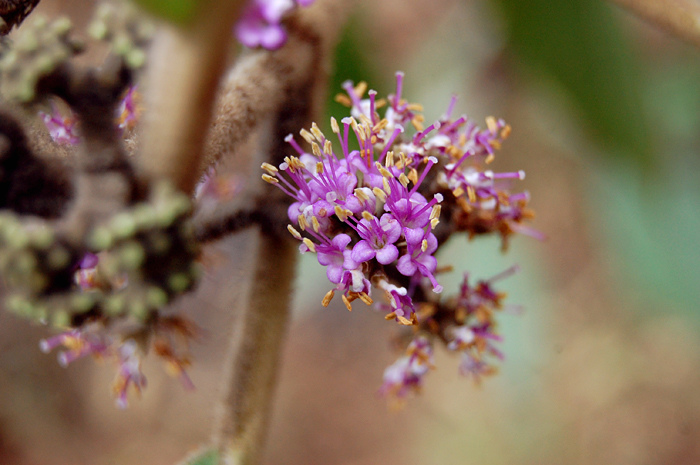

Priyangu is a flowering shrub whose flowers and fruit Ayurveda values for their cooling, drawing-together quality. It is reached for when there is heat in the body or trouble on the skin.
- Botanical name
- Callicarpa macrophylla
- Family
- Lamiaceae
- Sanskrit
- प्रियङ्गु
- Part used
- Flowers and fruit
- Taste (rasa)
- Bitter and astringent (tikta, kashaya)
- Quality (guna)
- Light and dry (laghu, ruksha)
- Energy (virya)
- Cooling (shita)
- After digestion (vipaka)
- Pungent (katu)
- Action (karma)
- Cools, draws tissue together, settles Pitta (stambhana, raktaprasadana)
- Best known for
- Its cooling, astringent action on the skin and on heat in the body
What it is
Priyangu is the flowering shrub Callicarpa macrophylla, known in English as the beautyberry for its clusters of small, bright violet fruit. It grows across the warm forests of the Indian subcontinent and is easy to recognise when the berries are on the branch.
Ayurveda uses the flowers and the fruit. The name priyangu is an old one, carried in the classical herb lists for centuries, and it points to a herb prized less for its strength than for its gentle, settling character.
What Ayurveda uses it for
Priyangu is, above all, a cooling and astringent herb. Astringent in Ayurveda means a quality that draws tissue together and checks excess flow, the sensation you get from strong tea or unripe fruit. Combined with its coolness, this is what gives Priyangu its place in the tradition.
The texts reach for it in two main settings. The first is the skin, where it appears in pastes and oils meant to soothe and dry. The second is heat in the body, which Ayurveda links to the quality it calls Pitta. Priyangu’s cool, astringent nature is the natural opposite of that heat, and the classical writers describe it as calming the heat of the blood.
Because it both cools and gathers in, it is also named among the herbs that steady things that are overflowing or running too freely.
Its qualities, in plain words
Ayurveda describes each herb by a short list of qualities, and for Priyangu they hang together neatly.
It is bitter and astringent in taste, the two tastes the tradition most associates with cooling and cleansing. It is light and dry, so it does not add heaviness or moisture. And its potency is cooling, which is the heart of the matter: this is a herb the texts turn to when something needs to be cooled and settled rather than warmed and stirred.
Put together, Priyangu suits the hot, sharp, spreading quality of Pitta, and it is best used where there is heat rather than cold. Its drying side means it is used thoughtfully in those who are already dry or light, the quality the texts call Vata.
How it is taken
Priyangu is mostly used as part of a mixture rather than alone. For the skin it goes into medicated oils and into pastes applied to the surface. Internally it appears in powders and decoctions alongside other cooling and astringent herbs, where its job is to lend its settling, cooling note to the whole.
The flowers and fruit are dried and kept for these preparations, and the herb is valued as a steady supporting member of a formula rather than a headline ingredient.
Good to know
Priyangu belongs to the cooling, astringent group of the materia medica. It is at home in the warm season and in conditions of heat, and it is used with more care in cold, dry states. Its work is gentle and is usually felt as part of a larger preparation rather than on its own.
This entry describes the classical Ayurvedic understanding of the herb. It is not medical advice, and anyone with a health condition should speak to a qualified practitioner.
Frequently asked
Why is it called beautyberry? Because the shrub carries dense clusters of vivid violet fruit, which is also where the genus name comes from. Ayurveda values these flowers and fruit for their cooling, astringent quality.
What does astringent mean here? It is the drawing-together, slightly puckering quality you taste in strong tea or unripe fruit. In Ayurveda this quality checks excess flow and, with Priyangu’s coolness, helps settle heat.
Which part of the plant is used? Mainly the flowers and the fruit, dried and used within mixtures for the skin and for cooling the body.
Priyangu is cooling and astringent, and it calms the heat of the blood.
After the Bhavaprakasha Nighantu, on cooling herbs
Frequently asked questions
What is Priyangu used for?
Priyangu (Callicarpa macrophylla), a cooling astringent herb of the beautyberry shrub, is used in Ayurveda mainly for the skin and for settling heat. Classed as stambhana and raktaprasadana, it cools, draws tissue together and settles Pitta. Bitter and astringent in taste, it is traditionally applied for hot, irritated skin and used internally where heat has disturbed the blood.
What are the benefits of Priyangu?
Ayurveda associates Priyangu with cooling and binding. Its astringent, Pitta-settling nature is traditionally used for the skin, to soothe heat and irritation, and for conditions where excess Pitta has disturbed the blood (Rakta). Being a stambhana dravya it also has a holding, draining-checking quality. It is a classic cooling herb for hot, reactive, Pitta-predominant states, used both externally and internally.
Is Priyangu good for skin?
Yes, the skin is one of Priyangu's main uses. Its cooling, astringent action (stambhana, raktaprasadana) makes it a traditional choice for hot, irritated or reactive skin, often applied as a paste and also taken internally to settle heat in the blood. It is classical supportive care for the complexion rather than a cure for any named condition, so lasting problems merit qualified guidance.
Which dosha does Priyangu balance?
Priyangu chiefly settles Pitta, the hot Dosha, through its cooling and astringent qualities, and its stambhana action also has a checking, holding quality on excess flow. This makes it well suited to heat-driven states, irritated skin and disturbed Rakta. Being cooling and drying, it is less suited to cold, Vata-heavy conditions, where warmer herbs are preferred.
How is Priyangu used in Ayurveda?
Priyangu is used both externally, ground into a cooling paste (Lepa) for hot or irritated skin, and internally, as a powder or in decoctions and classical formulas that settle heat and the blood. Because its qualities are cooling, astringent and specific, the internal dose and its suitability for you are best guided by a qualified practitioner.
References
- Bhavaprakasha Nighantu, on the cooling and astringent flowering herbs.
- Sushruta Samhita, on Priyangu in pastes for the skin.
- Charaka Samhita, Sutrasthana, among the substances that cool and stop excess flow.