Materia Medica · Dravyaguna
Manjistha
Rubia cordifolia · Rubiaceae
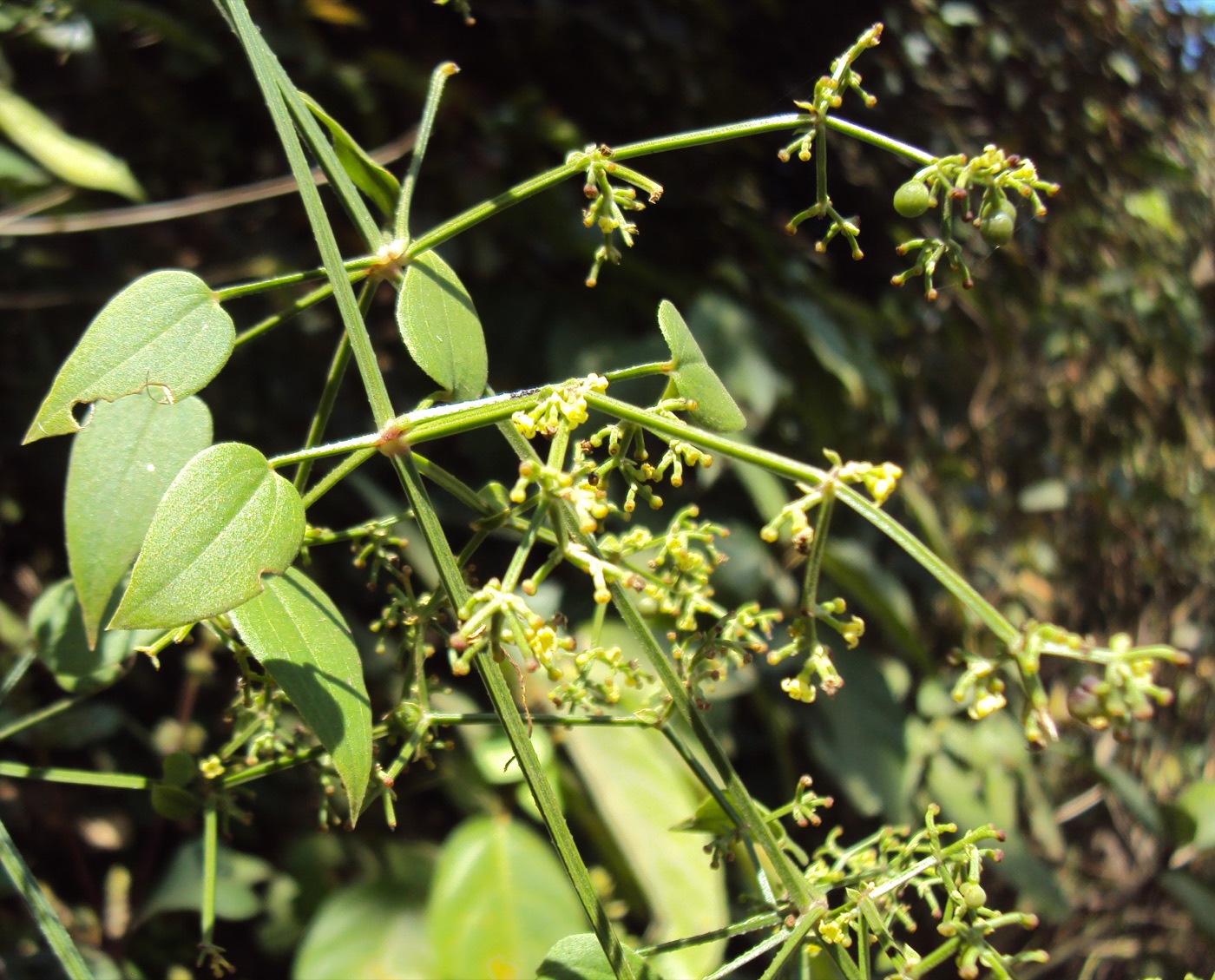

Manjistha is a climbing plant with a deep red root. Ayurveda counts it as the first of the herbs that cleanse the blood, and reaches for it above all for the skin.
- Botanical name
- Rubia cordifolia
- Family
- Rubiaceae
- Sanskrit
- मञ्जिष्ठा
- Part used
- Root and the lower stem
- Taste (rasa)
- Bitter, astringent and sweet (tikta, kashaya, madhura)
- Quality (guna)
- Heavy and dry (guru, ruksha)
- Energy (virya)
- Warming (ushna)
- After digestion (vipaka)
- Pungent (katu)
- Action (karma)
- Cleanses the blood, clears the complexion (raktashodhaka, varnya)
- Best known for
- Cleansing the blood and clearing the complexion
What it is
Manjistha is the root of a climbing plant, Rubia cordifolia, that scrambles over hedges and shrubs across much of India. The plant itself is unassuming, with rough square stems and small leaves in whorls. It is the root that matters, and the root is striking: a deep, lasting red that has been used to dye cloth for as long as it has been used as a herb.
That red is part of how Ayurveda reads the plant. The tradition often sees a likeness between a substance and the part of the body it serves, and a root this red was naturally linked to rakta dhatu, the blood. The name Manjistha itself points to the colour. In English the plant is called Indian madder.
The root and the lower stem are dug, dried and either powdered or simmered into a decoction.
What it is used for
Manjistha is the classical example of a raktashodhaka herb, a cleanser of the blood. Where Ayurveda judges that the blood has grown impure or overheated, this is the root it names first. Charaka places it among the varnya herbs, the ones that give a clear complexion, and that is its most familiar use of all: a herb taken to settle and brighten the skin from within.
Its reputation, then, runs along two joined lines. It is a blood herb and a skin herb, and in the classical understanding those are the same line, because the texts trace the state of the skin back to the state of the blood beneath it. Manjistha is used internally for this and also worked into oils applied to the skin directly.
Its qualities, in plain words
Ayurveda sets out each herb by a short list of qualities, and Manjistha’s explain its particular character.
It carries three tastes at once: bitter, astringent and a quieter sweet. The bitter and astringent are the cleansing, toning side of the herb; the sweet keeps it from being harsh. It is warming, which sets it apart from many cooling skin herbs and lets it move the blood and stir the circulation. And although it begins warm, it is not heating in the fierce way. After digestion it finishes pungent, a quality the tradition links to keeping things moving and clear. The overall picture is a herb that cleanses and tones while gently warming, which is why it suits long, steady use.
How it is taken
The classic preparation is a decoction, kashaya: the dried root is simmered in water until the liquid reduces and draws out the colour and the strength of the root. It is also taken as a simple powder, churnam, stirred into warm water.
Manjistha is the lead herb in several named preparations, among them Manjishthadi, a group of formulas built around it. For the skin specifically, the root is infused into sesame oil and applied, so that its action reaches the surface directly as well as from within.
Good to know
Manjistha is a herb of the slow, cleansing side of Ayurveda, taken as a course rather than a single dose. Because it is drying, the tradition often softens it for a person who is already dry or wind-disturbed by pairing it with a warming, moistening companion. Its strong red colour is natural to the root and is part of how its quality has always been judged.
This entry describes the classical Ayurvedic understanding of the herb. It is not medical advice, and anyone with a health condition should speak to a qualified practitioner.
Frequently asked
Why is Manjistha linked with the blood? Partly through use and partly through the Ayurvedic habit of reading likeness. The root is a deep red, and the tradition connects red substances with rakta dhatu, the blood tissue, and treats Manjistha as the chief herb for cleansing it.
Which part is used? The root and the lower stem. These hold the colour and the strength the tradition values.
Is it used on the skin or taken inside? Both. It is taken internally as a powder or decoction, and it is also infused into oil and applied to the skin, because Ayurveda treats the skin and the blood beneath it as one concern.
Manjistha cleanses the blood and brings clarity to the complexion.
After the classical nighantu tradition, on Manjistha
Frequently asked questions
What is Manjistha used for?
Manjistha, Rubia cordifolia, is a deep red root Ayurveda treats as its leading blood cleanser, used to clear the complexion and steady the skin. The texts class it as raktashodhaka, purifying the blood, and varnya, improving the complexion. It is the herb the tradition turns to first for the blood and skin, both taken internally and applied outwardly.
Is Manjistha good for skin and the complexion?
Ayurveda holds Manjistha to be a foremost herb for the skin, classing it as varnya, improving the complexion, through its action on the blood as a raktashodhaka. By cleansing the blood the tradition links it with clearer, steadier skin and an even complexion. It is a classical skin and blood herb, its results varying with each person.
How do you take Manjistha?
Manjistha is taken as a powder or decoction of the root, often with warm water or honey, and is also applied externally in pastes and medicated oils for the skin. It is usually used as a course over some weeks. The dose and form are best set by an Ayurvedic practitioner for your constitution.
What does Manjistha do for the blood?
Ayurveda regards Manjistha as its chief raktashodhaka, a herb that cleanses and cools the blood. The tradition links a clean, cooled blood (Rakta Dhatu) with clear skin, a steady complexion and settled heat in the body. This blood cleansing action is why Manjistha appears in so many classical skin and Pitta formulas.
Which dosha is Manjistha for?
Manjistha chiefly settles Pitta and works on the blood, which Ayurveda closely links to Pitta. Its bitter, astringent and sweet taste (tikta, kashaya, madhura) is cooling and cleansing, suiting heat conditions and skin trouble. It is less drying than some bitters, but a practitioner still matches it to your particular constitution and needs.
References
- Charaka Samhita, Sutrasthana, where Manjistha is placed among the complexion-giving herbs.
- Sushruta Samhita, on herbs for the blood and the skin.
- Bhavaprakasha Nighantu, entry on Manjistha.